
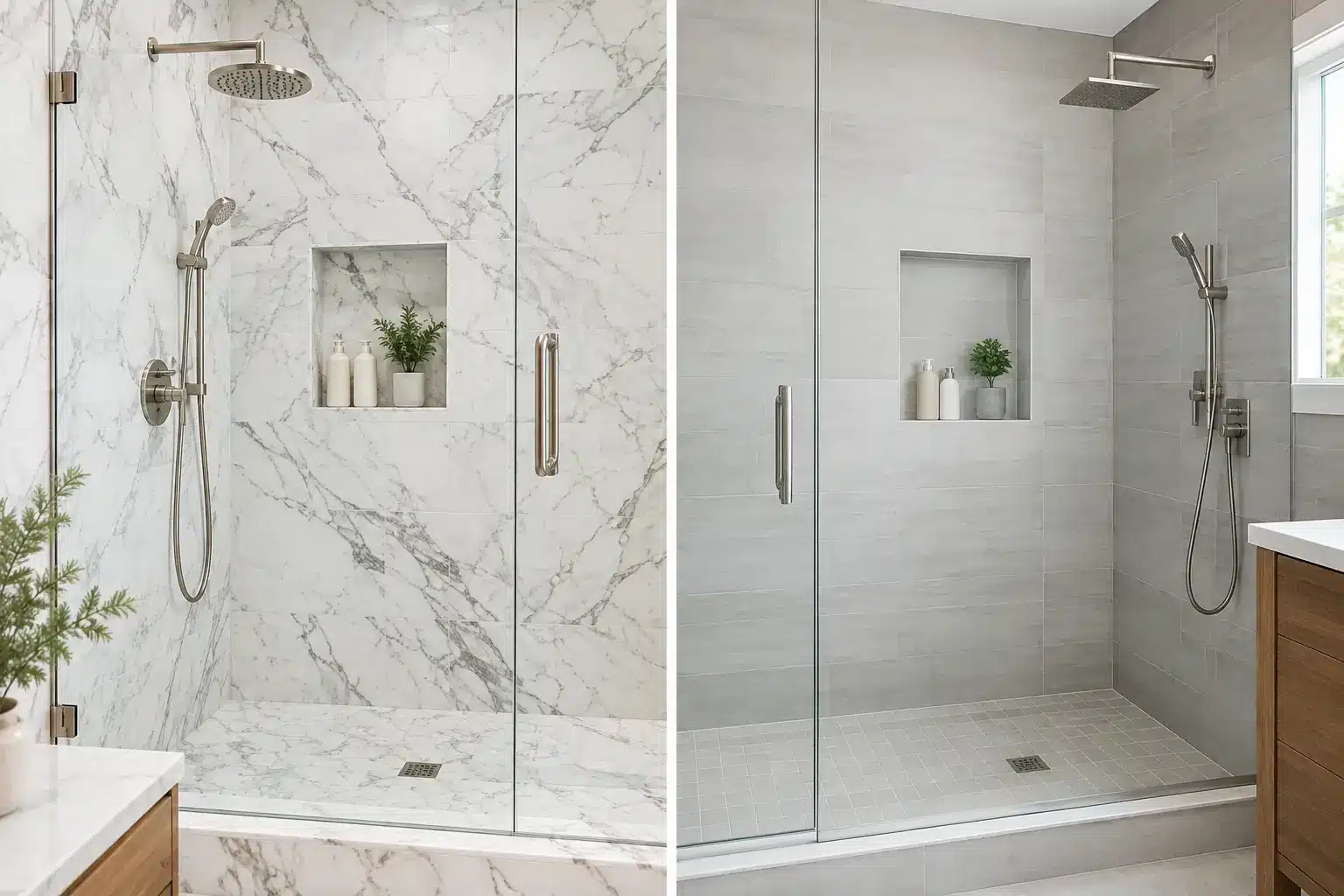
A shower can look perfect on installation day and still become a source of regret two years later. The difference is often not the layout or fixture selection – it is whether the tile material matches the household’s expectations for care, wear, and aging. When comparing marble vs. porcelain tile in a shower, beauty, maintenance, and long-term cost need to be considered together, not as separate decisions.
Marble offers a natural depth that manufactured materials work hard to imitate. Porcelain offers consistency, resilience, and a lower-maintenance daily routine. Neither is automatically the better choice. The right answer depends on how the shower will be used, the level of visual perfection you expect over time, and whether regular material care feels reasonable or burdensome.
Marble vs. Porcelain Tile in a Shower
At a glance, marble is the more expressive material. Every piece is formed by nature, with veining, tonal variation, and movement that can make a primary bathroom feel custom and layered. Porcelain is the more practical material. Modern porcelain can convincingly reproduce the character of Calacatta, Carrara, and other marbles while providing a much more forgiving surface.
That distinction matters in a shower, where water, shampoo, body products, mineral deposits, and frequent cleaning are part of normal use. Tile selection should support the way the room will actually function, not just the way it photographs.
The beauty of real marble
Real marble has a visual softness that is difficult to duplicate exactly. Its veining is not printed in a repeated pattern, and its surface can develop subtle character as it ages. In a well-designed bathroom, marble can create a refined, high-value result, especially when the slabs or tile selections are carefully laid out to control vein direction and color variation.
It also demands a more accepting mindset. Marble is a calcite-based stone, which means it can etch when exposed to acidic products. Etching is a change in the stone’s surface sheen, often seen as a dull mark or light spot. It is not always a stain, and sealing will not prevent it. A homeowner who expects marble to remain visually unchanged may be disappointed, particularly in a heavily used family shower.
Honed marble is often a more sensible shower choice than polished marble. Its matte finish is less likely to show etching, water spots, and minor surface wear. It also tends to provide better traction underfoot. That said, honed stone still needs proper care and periodic sealing.
The advantages of porcelain
Porcelain tile is fired at high temperatures and has extremely low water absorption. It does not need sealing, resists staining well, and handles ordinary shower cleaners more easily than natural stone. For busy homes, guest bathrooms, rental properties, and showers used by children or multiple family members, this can be a substantial advantage.
Porcelain also provides more control over the finished look. Tile can be selected for a consistent field of color, a precise marble-inspired pattern, or a large-format design with fewer grout joints. It is available in finishes ranging from polished to textured, allowing the design team to balance visual impact with slip resistance.
The trade-off is authenticity. High-quality porcelain can look exceptionally convincing, but it will not have the mineral depth or one-of-one movement of actual stone. Repeating faces can also become visible if the tile is installed without careful mixing and layout planning. A skilled installer will open multiple boxes, distribute patterns intentionally, and avoid placing duplicate faces side by side.
Maintenance Is Where the Decision Usually Changes
Maintenance is not simply a matter of effort. It affects how confidently a homeowner can use and clean the shower every day.
Marble should be cleaned with a pH-neutral stone cleaner or another product approved for natural stone. Harsh acids, abrasive powders, and many common bathroom cleaners can dull or damage the finish. Spills from personal-care products should be rinsed promptly, and the stone should be sealed on a schedule that reflects its actual use and the specific stone’s porosity.
Even with excellent maintenance, marble can show change over time. Some homeowners see that patina as part of the appeal. Others see it as damage. There is no wrong preference, but it is better to make that choice before the material is installed.
Porcelain needs routine cleaning, but the tile itself is uncomplicated. A non-abrasive bathroom cleaner and regular rinsing are generally enough to keep it in good condition. The grout still needs attention, particularly on shower floors and in light-colored installations, but porcelain removes the special-care requirements associated with natural stone.
In Los Angeles, hard-water buildup can affect either material, especially on glass, fixtures, and tile near the showerhead. Regular squeegeeing and ventilation will reduce mineral residue. With marble, those habits are even more valuable because aggressive descaling products are not an appropriate fallback.
Long-Term Cost Goes Beyond the Tile Price
Marble often carries a higher initial material cost, though pricing varies significantly by variety, tile size, finish, and availability. Installation can also cost more because natural stone requires careful sorting, cuts, layout decisions, and close attention to lippage. Vein-matched designs, bookmatched slabs, and detailed mosaics add labor as well as visual impact.
Porcelain usually offers a broader range of price points and more predictable material availability. It can still be a premium finish, especially in large-format panels or designer collections, but it generally provides a clearer path to a polished look within a controlled budget.
The installation budget should never be reduced by compromising the shower assembly behind the tile. Tile and grout are finish materials, not the waterproofing system. Whether the surface is marble or porcelain, a durable shower requires proper substrate preparation, waterproof membrane installation, drain integration, correct slope to the drain, and detailed waterproofing at corners, niches, benches, and penetrations.
This is particularly important with marble. Moisture moving behind or through a stone installation can contribute to discoloration, mineral deposits, or long-term failures that are far more expensive than the tile itself. A properly built shower protects the investment in either material.
Over the years, porcelain generally has the lower ownership cost because it needs no sealing and is less vulnerable to stains and etching. Marble may require resealing, professional refinishing, or occasional repair if the finish becomes damaged. Yet long-term value is not purely a maintenance calculation. In the right home, a thoughtfully designed marble bathroom can contribute to the sense of quality and architectural character that buyers notice.
Design and Safety Details That Matter
Large-format marble or porcelain can make shower walls look calm and expansive because there are fewer grout lines. On the floor, however, smaller tiles are often the better technical choice. More grout joints can improve traction and allow the tile to follow the slope toward the drain more accurately.
Finish is equally important. Highly polished tile may look striking under showroom lighting but can be slick when wet. A honed stone, matte porcelain, or shower-floor mosaic with an appropriate slip-resistance rating often creates a safer and more practical result.
Grout color should be selected with maintenance in mind. Bright white grout can create a crisp, tailored look, but it reveals discoloration more readily than a soft gray or warm neutral. Epoxy grout can improve stain resistance in many applications, although material compatibility and installation conditions should be reviewed carefully, particularly around natural stone.
Choose marble when character is the priority
Marble makes sense for homeowners who want authentic natural material, appreciate variation, and are prepared to use stone-safe cleaning products. It is especially compelling in a primary suite where the shower is part of a larger, carefully considered design and the users understand that natural stone will evolve.
Choose porcelain when ease and consistency are the priority
Porcelain is often the stronger choice for households that want a sophisticated shower without special maintenance requirements. It is well suited to active family bathrooms, secondary baths, guest suites, and properties where dependable day-to-day performance matters as much as visual impact.
A third option is a balanced approach: use real marble as an accent, vanity backsplash, or dry-area feature, and use marble-look porcelain inside the shower. This preserves much of the desired aesthetic while placing the most practical surface where water exposure is greatest.
The best shower material is the one you will still be happy to see after years of daily use. Precise Building and Restoration can help you evaluate tile, waterproofing, layout, and finish details as one coordinated bathroom remodeling plan. Call Us Now at 310-606-2222 to discuss your project.