The shower floor is where a bathroom’s visual impact meets its most demanding technical requirement: moving water safely and reliably toward the drain. When comparing large-format tile vs. mosaic tile for a shower floor, the better option is rarely just a matter of style. Tile size affects the shower pan slope, traction, grout maintenance, drain selection, installation labor, and the long-term performance of the waterproofed assembly below.
For Los Angeles homeowners planning a high-end bathroom remodel, the right choice depends on the shower layout, the tile material, the drain configuration, and how much daily upkeep you are comfortable with. A beautiful floor should also feel secure underfoot and be installed precisely enough to protect the home from moisture damage.
Why Tile Size Matters on a Shower Floor
Every properly built shower floor slopes toward its drain. Traditional center-drain showers typically require a consistent slope from every wall and corner, while linear drains create a single-plane slope in one direction. That geometry is the main reason mosaics have long been the practical standard for shower floors.
Small tile sheets flex across the changing angles of a sloped shower pan. Their many grout joints also add traction. Large-format tile, by comparison, needs more carefully planned cuts and flatter planes between the tile edges. It can absolutely work, but it demands a compatible design and experienced installation.
This is not a place to cut corners. The tile is the finished surface, but waterproofing, drain placement, substrate preparation, and slope are what determine whether the shower performs as intended for years.
Mosaic Tile for a Shower Floor
Mosaic tile generally refers to small tiles mounted on mesh sheets, commonly in sizes from 1 to 4 inches. Porcelain, ceramic, natural stone, and glass mosaics are widely available in penny rounds, hexagons, squares, basketweave patterns, and contemporary geometric designs.
The practical advantage: easier drainage
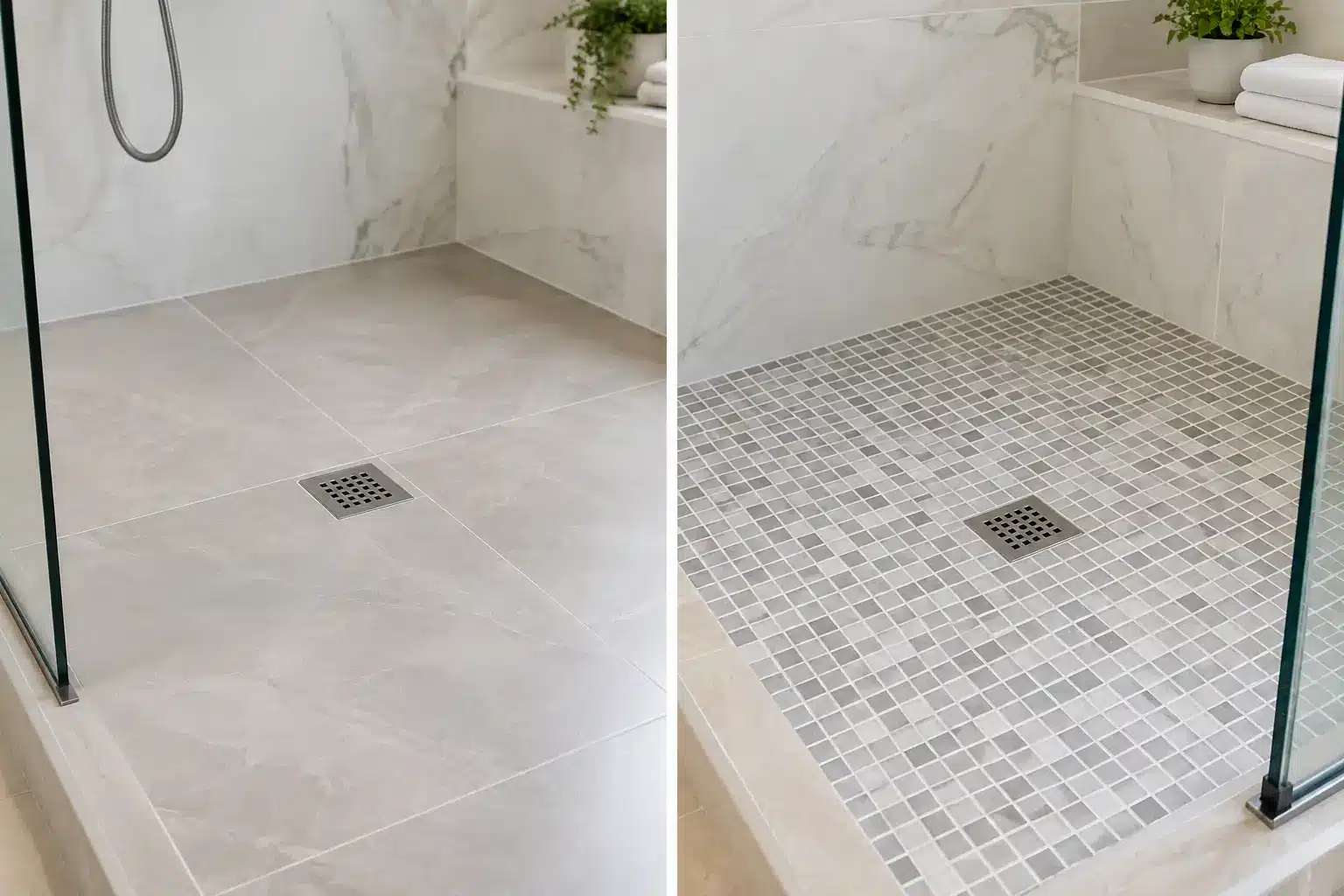
Mosaic tile conforms naturally to the multiple angles of a conventional shower pan. This makes it especially well suited to a centered square or round drain. Rather than forcing a large tile to bend across changing planes, the installer uses the grout joints between small pieces to accommodate the slope.
This usually means better drainage with fewer awkward cuts. It also gives designers more freedom when working with curbless showers, benches, niches, and irregular layouts.
More grout can mean more grip
Grout joints provide texture underfoot, which can improve slip resistance in a wet environment. This is valuable for family bathrooms, aging-in-place renovations, rental properties, and any shower where safety is a top priority.
That does not mean every mosaic is automatically slip resistant. Highly polished stone, smooth glass, and certain glossy finishes can still be slick when wet. A professional should confirm that the selected tile is appropriate for shower-floor use rather than relying on appearance alone.
The trade-off: grout maintenance
The drawback to mosaics is straightforward: more pieces mean more grout lines. Grout needs proper installation, sealing when required by the product, and routine cleaning. Light grout can show discoloration over time, especially where hard-water minerals, body products, and soap residue accumulate.
A quality grout selection can reduce maintenance concerns. Many homeowners prefer stain-resistant grout in a mid-tone shade that complements the tile without highlighting every joint. Proper ventilation and regular cleaning also make a meaningful difference.
Large-Format Tile for a Shower Floor
Large-format tile creates a clean, tailored look with fewer visual interruptions. It can make a shower feel larger and more architectural, especially when the floor tile coordinates with wall tile or continues from the bathroom floor into a curbless shower.
Porcelain slabs and larger rectangular tiles are popular in contemporary homes throughout Beverly Hills, Brentwood, Santa Monica, and other design-conscious Los Angeles neighborhoods. Still, a large-format shower floor is not a universal upgrade. Its success depends on planning the drain and slope before materials are ordered.
A linear drain makes large tile more practical
Large-format tile works best when paired with a linear drain placed at one end of the shower or against the back wall. With this layout, the shower floor can slope in one continuous direction. The tile can then be installed in larger pieces with fewer cuts and a more refined visual result.
A center drain introduces multiple planes. Large tiles can still be used, but the layout may require diagonal cuts or smaller cut pieces around the drain. If those cuts are not planned with precision, the finished floor can look busy, hold water, or create uncomfortable edges underfoot.
Fewer joints, but not necessarily less risk
With fewer grout lines, large-format tile may be easier to wipe clean and can create a more continuous appearance. However, it does not eliminate maintenance. The grout joints that remain still need to be properly filled, and the tile surface must be suitable for wet-floor use.
Large tiles can also be less forgiving during installation. Even a slight inconsistency in the shower pan or thin-set coverage can lead to lippage, hollow spots, or drainage problems. Proper substrate preparation and full mortar support are essential, particularly with porcelain panels and natural stone.
Traction requires closer attention
Because there are fewer grout joints, large-format tile offers less natural texture underfoot than a mosaic floor. This can be addressed through tile selection. Matte, textured, or honed finishes generally provide better traction than polished surfaces.
For a primary bathroom intended to support long-term use, it is wise to prioritize the tile’s wet-area performance over a showroom sample’s appearance. A floor that looks elegant but feels slippery after shampoo and body wash hit the surface is not a successful design decision.
Large-Format Tile vs. Mosaic Tile for a Shower Floor: Key Decisions
The choice often becomes clear once the shower design is established. A centered drain, compact footprint, or shower with several angles generally favors mosaic tile. A rectangular shower with a linear drain and a modern, minimal design can be an excellent candidate for large-format tile.
Budget also plays a role, though the answer is not always obvious. Mosaic materials range from affordable porcelain to premium handmade stone or glass, while large-format porcelain may cost more per piece and require specialized handling. Labor for mosaics can increase because there are more joints and sheets to set. Labor for large-format tile can increase because the floor must be exceptionally flat, cuts must be exact, and the installer may need specialized equipment.
The most reliable way to compare costs is to evaluate the full shower system, not only the tile price. Drain type, waterproofing method, shower pan preparation, tile layout, curb or curbless transition, and finish materials all contribute to the final investment.
Questions to Answer Before Selecting Tile
Before committing to a material, confirm where the drain will sit and whether the floor will use a center drain or linear drain. Review a full-size layout so you can see where cuts will fall, especially at the drain, walls, and doorway. Ask about the tile’s recommended use for wet floors and its finish under bare feet.
It is also worth considering cleaning habits honestly. If you prefer a low-joint, streamlined surface and your shower design supports a linear drain, large-format tile may be the right direction. If you want dependable traction, versatile pattern options, and easy accommodation of a center drain, porcelain mosaic remains a smart and time-tested choice.
Natural stone deserves additional consideration. It can deliver a distinctive, elevated finish, but many stones require more ongoing care than porcelain. The right sealer, grout, cleaning products, and maintenance expectations should be discussed before installation, not after the shower is complete.
Make the Floor and Shower System Work Together
The best shower floor is not selected in isolation. It should coordinate with the waterproofing system, drain, wall tile, glass enclosure, lighting, and the way your household uses the bathroom. A well-designed mosaic floor can look sophisticated and intentional. A well-executed large-format floor can create a striking, calm foundation. Either can fail visually and functionally if the installation details are overlooked.
At Precise Building and Restoration, we help homeowners evaluate shower layouts, finish options, drainage, and constructability before work begins, with clear communication through each stage of the bathroom remodeling process. For guidance on a shower floor that balances design, safety, and lasting performance, call us at 310-606-2222.