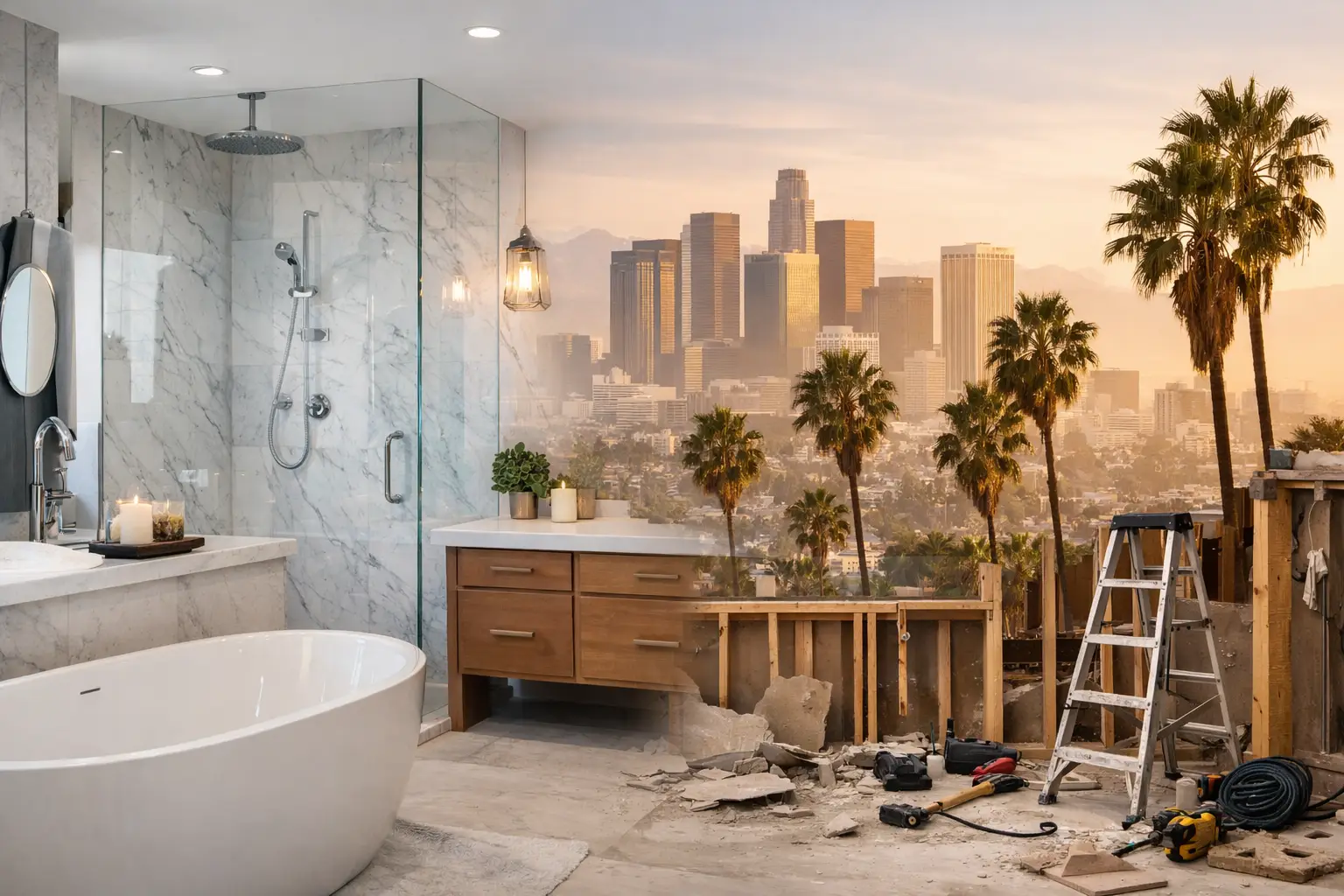
A Los Angeles bathroom remodel can cost $25,000 for a focused update or well over $100,000 for a fully custom primary bath. So, how much does a bathroom remodel cost in Los Angeles in 2026? The honest answer depends on the room’s size, the condition behind the walls, whether plumbing moves, the level of finish materials, and how much design and permitting work is required before construction begins.
For homeowners, the most useful number is not the lowest quote. It is a realistic investment range that accounts for quality labor, proper waterproofing, licensed trade work, city requirements, and the details that make a bathroom perform as well as it looks.
How Much Does a Bathroom Remodel Cost in Los Angeles in 2026?
For 2026 planning, these ranges are practical starting points for professionally managed bathroom remodels in Los Angeles:
- A cosmetic bathroom refresh typically runs from $25,000 to $40,000.
- A mid-range hall or guest bathroom remodel commonly falls between $40,000 and $70,000.
- A high-end primary bathroom renovation often starts around $70,000 and can reach $120,000 or more.
- A luxury, fully reconfigured primary suite with custom millwork, stonework, premium fixtures, and extensive layout changes can exceed $150,000.
These ranges assume licensed construction, quality materials, and a complete approach rather than isolated patchwork. A smaller bathroom is not always dramatically less expensive because labor-intensive work such as demolition, plumbing, electrical, waterproofing, tile installation, and inspections is still required.
What Is Included in a Professional Bathroom Remodel?
A complete remodel is far more than a new vanity and tile. Once demolition starts, the project may involve framing repairs, plumbing adjustments, electrical upgrades, ventilation, wallboard, waterproofing, flooring, tile, cabinetry, countertops, glass, paint, fixtures, and final trim.
In older Los Angeles homes, the existing conditions matter just as much as the finish selections. A bathroom may have outdated galvanized pipes, limited electrical capacity, inadequate ventilation, prior water damage, or uneven framing hidden behind the walls. Addressing these issues is not glamorous, but it protects the value of the finished space.
A reliable contractor should define the scope clearly before work begins. That means identifying what is included in the construction agreement, what allowances apply to materials, and what circumstances could require a change order. Transparent planning gives homeowners control without pretending that every hidden condition can be predicted before demolition.
The Biggest Factors That Affect Bathroom Remodeling Costs
Layout Changes and Plumbing Relocation
Keeping the toilet, shower, and vanity in their current locations usually helps control cost. Moving them can require new supply lines, drain lines, venting, structural access, and additional inspections. In a slab-on-grade home or a condominium, that work can become more involved quickly.
A simple shower replacement may fit within a moderate budget. Converting a tub to a curbless shower, relocating the toilet, or expanding the bathroom into an adjacent closet is a different level of construction. The result can be transformative, but the budget should reflect the added coordination and labor.
Tile, Stone, and Waterproofing
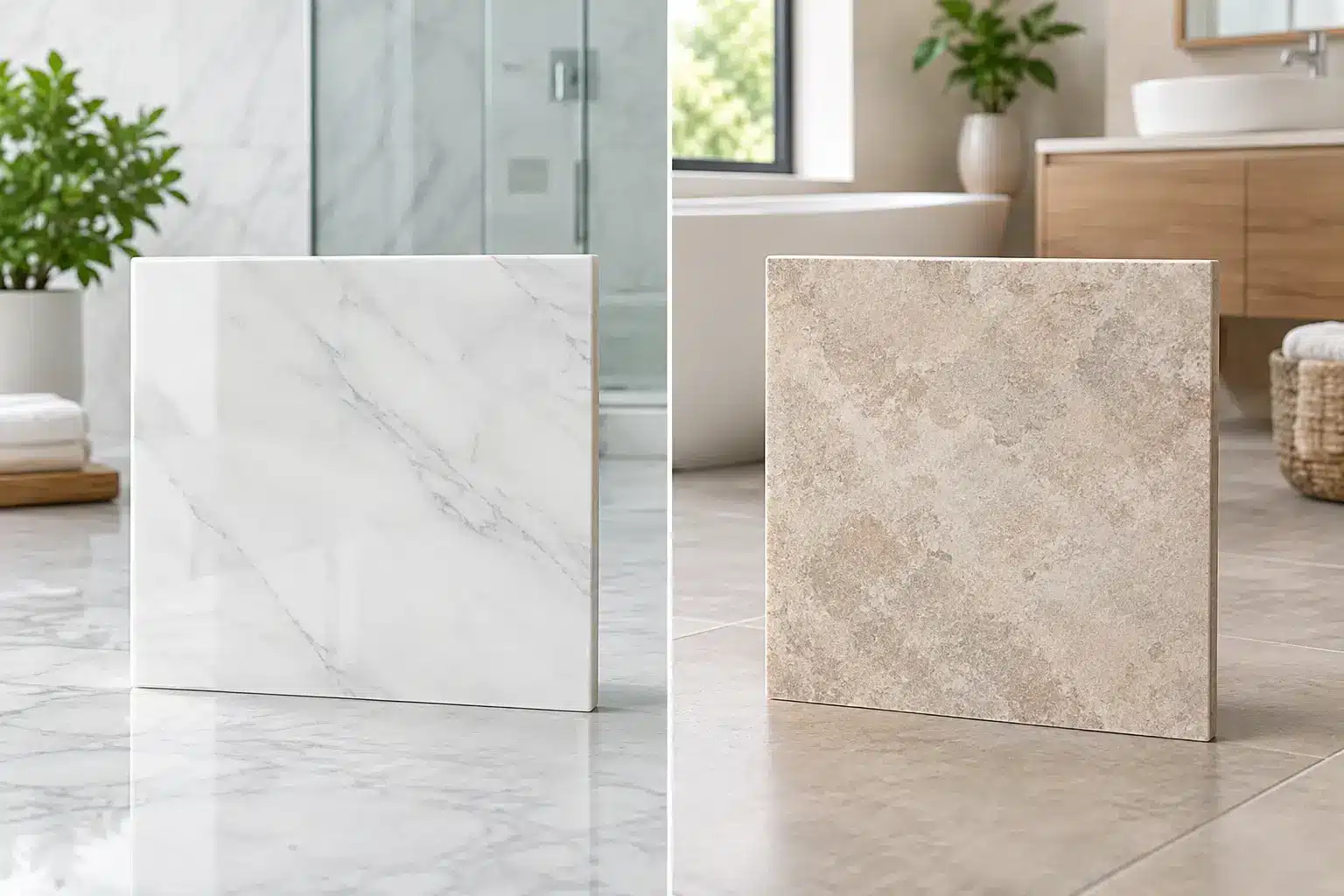
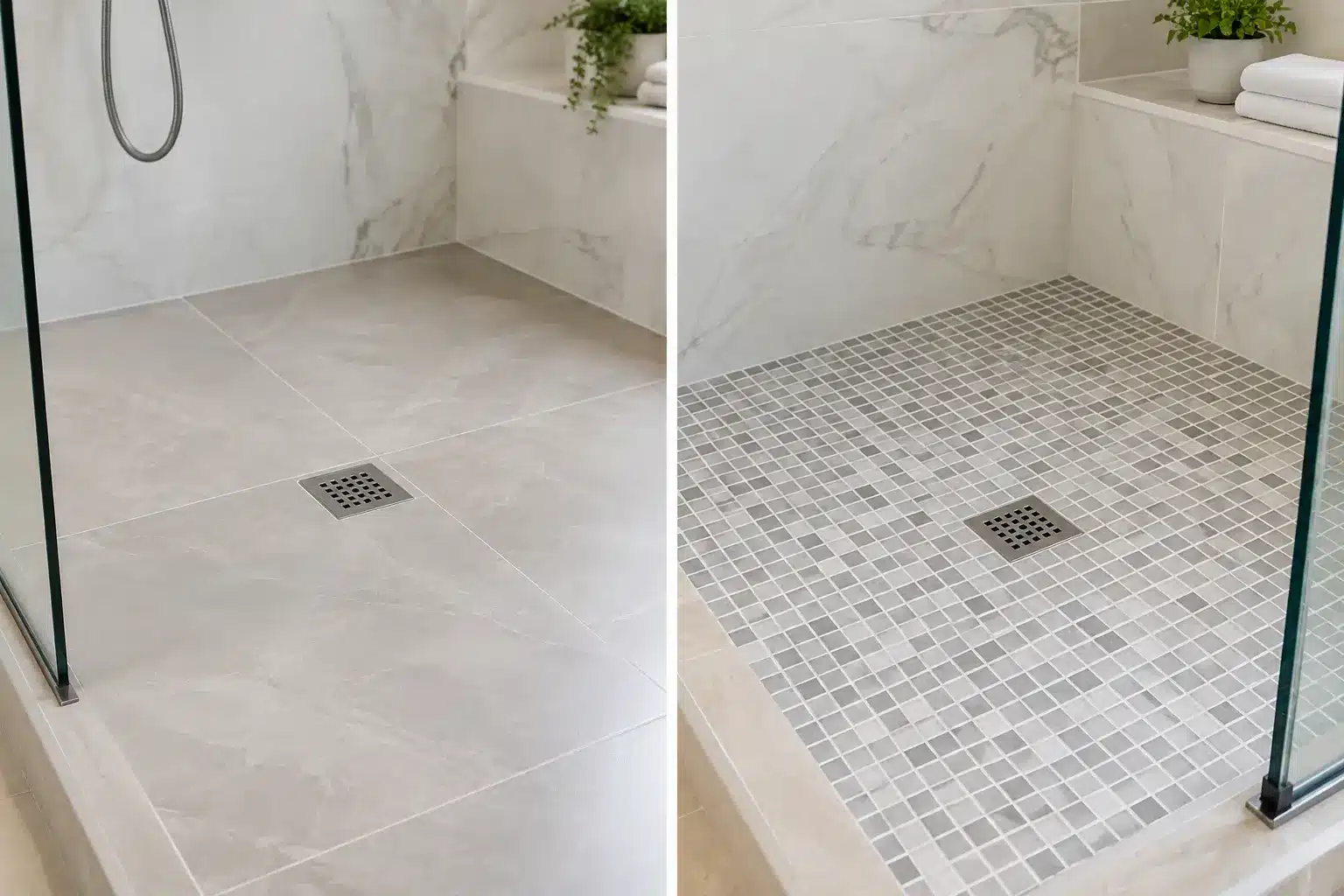
Tile is one of the most visible cost drivers, yet the material price is only part of the equation. Large-format porcelain, handmade tile, natural stone, mosaics, niches, miters, and intricate patterns all require more installation time and skill.
The work underneath the tile is equally important. A properly built shower requires a tested waterproofing system, correct slope to the drain, carefully treated corners and penetrations, and suitable backing materials. Saving money on hidden preparation can lead to expensive water damage later. This is an area where cutting corners rarely pays off.
Fixtures, Cabinetry, and Glass
There is a wide price gap between builder-grade fixtures and premium plumbing collections. A homeowner may choose a practical $300 faucet or a designer fixture that costs several times more. The same is true for toilets, freestanding tubs, shower systems, vanities, medicine cabinets, and hardware.
Custom cabinetry and stone countertops add another level of investment, especially when a design includes floating vanities, integrated lighting, multiple sink stations, or specialized storage. Frameless shower glass is also priced by size, configuration, hardware, and the complexity of the opening. An angled panel, oversized enclosure, or custom transom costs more than a straightforward shower door.
Electrical, Lighting, and Ventilation
Well-planned lighting makes a bathroom feel polished and functional. Recessed lights, vanity lighting, dimmers, illuminated mirrors, heated floors, and dedicated electrical circuits can all improve daily use. They also require qualified electrical work and may trigger upgrades to meet current code.
Ventilation deserves the same attention. A quiet, properly sized exhaust fan helps manage moisture and protects finishes. In bathrooms without an existing duct route to the exterior, adding compliant ventilation may require more work than homeowners expect.
Permits and Approvals in Los Angeles
Many bathroom remodels require permits when they involve plumbing, electrical, mechanical work, wall changes, or significant alterations. Permit needs vary according to the project scope, property type, and jurisdiction. Homes in Los Angeles may also be subject to local requirements, while condos can involve HOA review, work-hour restrictions, insurance documentation, and coordination with building management.
Permitting adds time and cost, but it is not a detail to avoid. Proper permits and inspections help verify that critical work is performed safely and to code. They also protect homeowners when selling, refinancing, insuring, or maintaining the property.
For larger renovations, early design and CAD planning can reduce uncertainty. A clear plan helps the homeowner evaluate layout options, establish material allowances, and identify potential issues before crews arrive on site. It is especially valuable when creating a new primary bath, altering walls, or combining two smaller rooms.
Why Los Angeles Pricing Can Be Higher
Los Angeles construction pricing reflects skilled labor costs, high demand for licensed trades, material delivery logistics, permit processes, and the complexity of working in established neighborhoods. Access also affects the budget. A bathroom on the second floor of a hillside home, a unit with limited elevator access, or a property with narrow parking and strict job-site rules requires more planning than a ground-level room with easy access.
Luxury neighborhoods can also involve elevated finish expectations. A remodel in Beverly Hills, Brentwood, Santa Monica, or Pacific Palisades may call for custom stone fabrication, detailed cabinetry, premium fixtures, and exacting finish work that would not be part of a basic remodel. Higher cost does not automatically mean better value, however. The goal is to invest where it improves durability, function, and the way the room supports your home.
How to Set a Realistic Bathroom Remodel Budget
Start by deciding what must change and what would simply be nice to have. If the existing layout works, retaining it may allow more budget for a better shower system, tile, vanity, lighting, or storage. If the room is cramped or poorly configured, layout changes may be worth the added investment.
Next, separate construction costs from finish selections. Homeowners often focus on tile and fixtures first, but those selections must fit within a complete project budget that includes demolition, labor, rough plumbing, electrical, waterproofing, permits, and project management. A detailed estimate should make that relationship clear.
It is also wise to hold a contingency for unforeseen conditions, particularly in homes built decades ago. A reasonable contingency is not a sign of poor planning. It is a practical safeguard against hidden damage, outdated systems, or site conditions discovered during demolition.
Choosing Value Over the Lowest Bid
The lowest bid can be tempting, but it may leave out essentials that appear later as extra charges or compromised work. Compare proposals based on scope, not just the final number. Ask whether demolition, permits, waterproofing, plumbing, electrical, tile preparation, cleanup, and inspections are included. Confirm who is responsible for scheduling trades, protecting the home, and resolving issues if conditions change.
A design-build team can simplify that process by coordinating design, permitting, construction, and finish work under one accountable contractor. Precise Building & Restoration helps Los Angeles homeowners plan bathrooms with clear scopes, thoughtful design support, and hands-on project oversight from the first concept through completion.
A well-built bathroom should feel effortless long after construction ends. Plan for the work behind the walls, choose finishes that suit your daily routine, and work with a licensed team that communicates clearly from day one. For a detailed bathroom remodel consultation, call Precise Building & Restoration at 310-606-2222.