
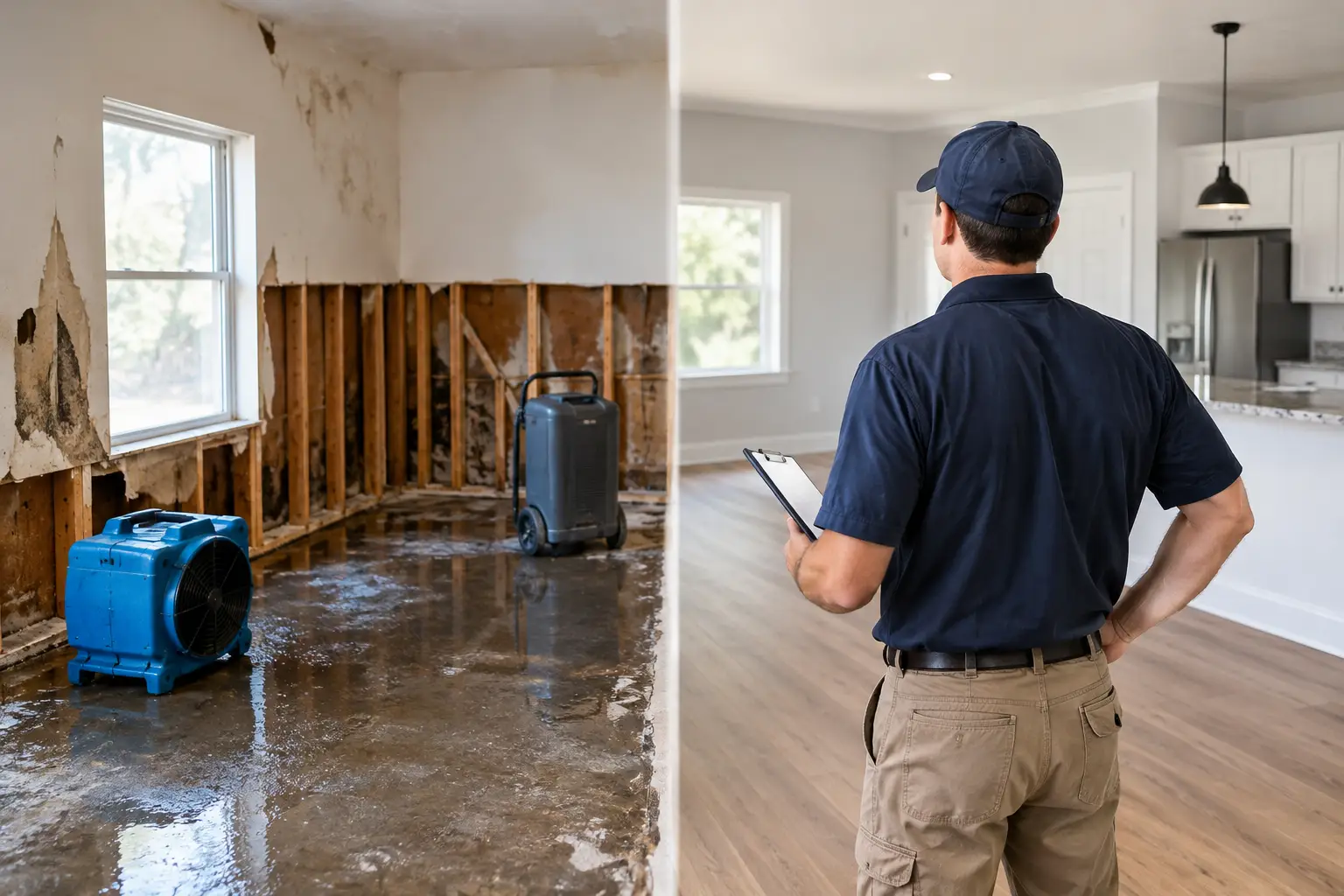
A bathroom supply line can leak for hours behind a vanity without looking catastrophic from the room itself. By the time moisture reaches the baseboards, flooring, or ceiling below, the question is no longer simply how to dry the area. The real question is: water-damage restoration vs. remodeling: when is reconstruction necessary? The answer depends on what the water touched, how long materials stayed wet, and whether the home’s structure or finishes can still perform as intended.
For Los Angeles homeowners, a proper assessment prevents two expensive mistakes: rebuilding areas that could have been safely restored, or trying to save materials that will later fail, harbor mold, or compromise a polished remodel.
Restoration addresses the damage. Reconstruction restores the home.
Water-damage restoration is the immediate recovery process. Its purpose is to stop the source of water, remove standing water, dry affected assemblies, clean surfaces, and document moisture levels. A restoration scope may also include removing wet drywall, insulation, carpet, padding, baseboards, or damaged cabinet components so the structure can dry properly.
Remodeling is different. It is a planned improvement to the layout, finishes, function, or appearance of a space. You may choose to remodel after water damage, but a renovation is not automatically required because water entered the house.
Reconstruction is the bridge between the two. It becomes necessary when damaged building materials must be replaced to return the property to a safe, functional, finished condition. That can mean patching a section of drywall and reinstalling baseboards. It can also mean rebuilding a shower surround, replacing flooring across connected rooms, reconstructing cabinetry, or addressing framing and subfloor damage.
The scope should follow the evidence, not the appearance of the first visible stain.
Start with the source and category of water
Not all water losses are equal. A clean-water leak from a supply line generally creates a more straightforward recovery than a backed-up drain, sewer line, or floodwater intrusion. Water that has contacted contaminants requires more extensive removal and cleaning because porous materials can retain contamination even after they look dry.
The duration matters just as much. A refrigerator line discovered quickly may affect only a small section of flooring. A slow leak beneath a shower pan can saturate framing, subflooring, drywall, and adjacent finishes over weeks or months. In that situation, drying alone does not restore materials that have already swollen, delaminated, deteriorated, or lost structural integrity.
A qualified contractor should identify the cause before reconstruction begins. Replacing damaged finishes without correcting a failed pipe connection, roof flashing issue, shower waterproofing detail, or drainage condition invites the same problem back.
Dry does not always mean undamaged
Moisture readings are essential, but they are only one part of the decision. Some materials can be dried successfully. Others permanently change shape or performance after becoming saturated.
Solid wood framing can often be dried and retained if it has not decayed or been structurally compromised. Drywall usually needs removal when it has absorbed significant water, particularly near the bottom edge or after exposure to contaminated water. Particleboard cabinets, MDF trim, laminate flooring, and engineered wood products frequently swell or separate once water reaches their core.
Tile may appear unaffected after a leak, but the setting bed, grout joints, waterproofing membrane, or wood subfloor below may not be. If water originated from a failed shower assembly, rebuilding the shower correctly is often more responsible than replacing a few visible tiles.
When reconstruction is necessary after water damage
Reconstruction is warranted when the home cannot be returned to its pre-loss condition through drying, cleaning, and limited repair. In practical terms, that often means one or more of the following conditions are present:
- Structural elements such as framing, subflooring, or roof sheathing show rot, loss of strength, or persistent moisture.
- Drywall, insulation, flooring, trim, or cabinetry has swollen, warped, delaminated, or cannot be properly cleaned.
- Mold growth is visible, suspected behind finishes, or likely because materials stayed wet for an extended period.
- A plumbing, roofing, or waterproofing failure requires opening walls, floors, or shower assemblies for a permanent repair.
- Matching existing finishes is no longer realistic, making a broader replacement necessary for a consistent result.
The last point deserves careful consideration. A small repair can become a larger reconstruction project when original flooring, stone, cabinetry, or paint finishes are discontinued. Homeowners should understand the difference between necessary demolition and a design decision to extend new finishes through the room or adjoining areas. Both can be good choices, but they affect cost, schedule, and insurance discussions differently.
Restoration versus remodeling: make the decision in the right order
After an unexpected water event, it is tempting to turn disruption into an immediate renovation. A damaged bathroom may seem like the perfect reason to change the layout, upgrade the shower, or replace aging cabinetry. Sometimes that is a smart investment. But the order of operations matters.
First, stop the water source and document the loss. Next, dry and remove unsalvageable materials. Then determine what must be reconstructed to make the space sound and code-compliant. Only after that baseline scope is clear should you decide whether to add elective remodeling work.
This approach creates a cleaner separation between required repairs and desired upgrades. For example, replacing a damaged vanity with a comparable new vanity may be part of reconstruction. Moving plumbing, adding a larger walk-in shower, changing the floor plan, or installing premium custom cabinetry is a remodeling choice beyond the original condition.
A design-build contractor can coordinate both scopes so the project does not feel fragmented. The benefit is not simply convenience. When one team manages demolition, building repairs, design decisions, permits when required, finish selections, and final installation, the sequence is easier to control and there are fewer gaps between trades.
A partial repair is not always the most economical repair
The least expensive initial scope is not always the best value. Saving a water-affected cabinet box or patching a floor around it may reduce today’s invoice while creating a visible mismatch, weak material, or future maintenance issue. On the other hand, replacing an entire kitchen after a localized supply-line leak may be unnecessary if moisture testing and material condition support a targeted repair.
The right decision balances safety, durability, visual continuity, and your longer-term plans for the property. If you expect to remodel a dated room within the next year or two, it may make sense to combine the necessary reconstruction with a more comprehensive upgrade. If the goal is to return a recently remodeled room to its original condition, focused restoration may be the better path.
What a sound reconstruction plan should include
A reconstruction proposal should explain what is being removed, what is being retained, and why. It should also identify the underlying repair that prevents recurrence. Vague scopes create problems later, especially when concealed damage becomes visible during demolition.
For a bathroom water loss, a complete plan may address plumbing repairs, subfloor condition, wallboard replacement, shower waterproofing, tile work, cabinetry, flooring transitions, paint, and fixture reinstallation. For a ceiling leak below an upstairs bathroom, the plan should not stop at repairing the ceiling. It should confirm whether the upstairs plumbing, toilet seal, tub drain, or shower enclosure caused the issue.
Permits may be needed when the work includes significant plumbing, electrical, structural changes, or alterations that trigger local requirements. In Los Angeles, permit coordination can add complexity, particularly in older homes where opening walls reveals outdated construction. A licensed general contractor can evaluate the work early and help avoid building repairs that need to be redone for compliance.
At Precise Building and Restoration, the goal is to give homeowners a clear path from damage assessment to finished reconstruction, with direct communication and attention to the details that protect the investment long after the walls are closed.
Questions to ask before approving the work
Before committing to a repair or remodel, ask how moisture was verified, which materials are considered unsalvageable, and what caused the loss. Ask whether the proposed scope restores the original condition or includes elective upgrades. You should also understand who will coordinate plumbing, electrical, waterproofing, permits, finish work, and final quality control.
If the answer to a major question is “we will figure it out later,” pause. Water-damage projects can reveal hidden conditions, but a professional team should still provide a logical process for handling them, documenting changes, and keeping you informed before additional work moves forward.
A well-managed reconstruction does more than erase visible signs of water damage. It corrects the source, rebuilds affected assemblies properly, and gives you confidence that the repaired area belongs in the rest of your home. For a clear evaluation and a construction plan tailored to your property, call Precise Building and Restoration at 310-606-2222.