A flooring sample can look perfect under showroom lighting and feel entirely different after a busy week of kids, pets, wet towels, and direct California sun. When comparing luxury vinyl plank vs. engineered hardwood vs. porcelain tile, the best choice is rarely the material with the highest price tag. It is the one that fits the room, the existing subfloor, your design priorities, and how you actually live in the home.
For a Los Angeles renovation, flooring also affects construction sequencing, door clearances, transitions between rooms, acoustic requirements in condos, and the overall value perception of the finished space. Each of these materials can deliver a high-end result when it is selected and installed for the right conditions.
Luxury Vinyl Plank vs. Engineered Hardwood vs. Porcelain Tile: The Real Differences
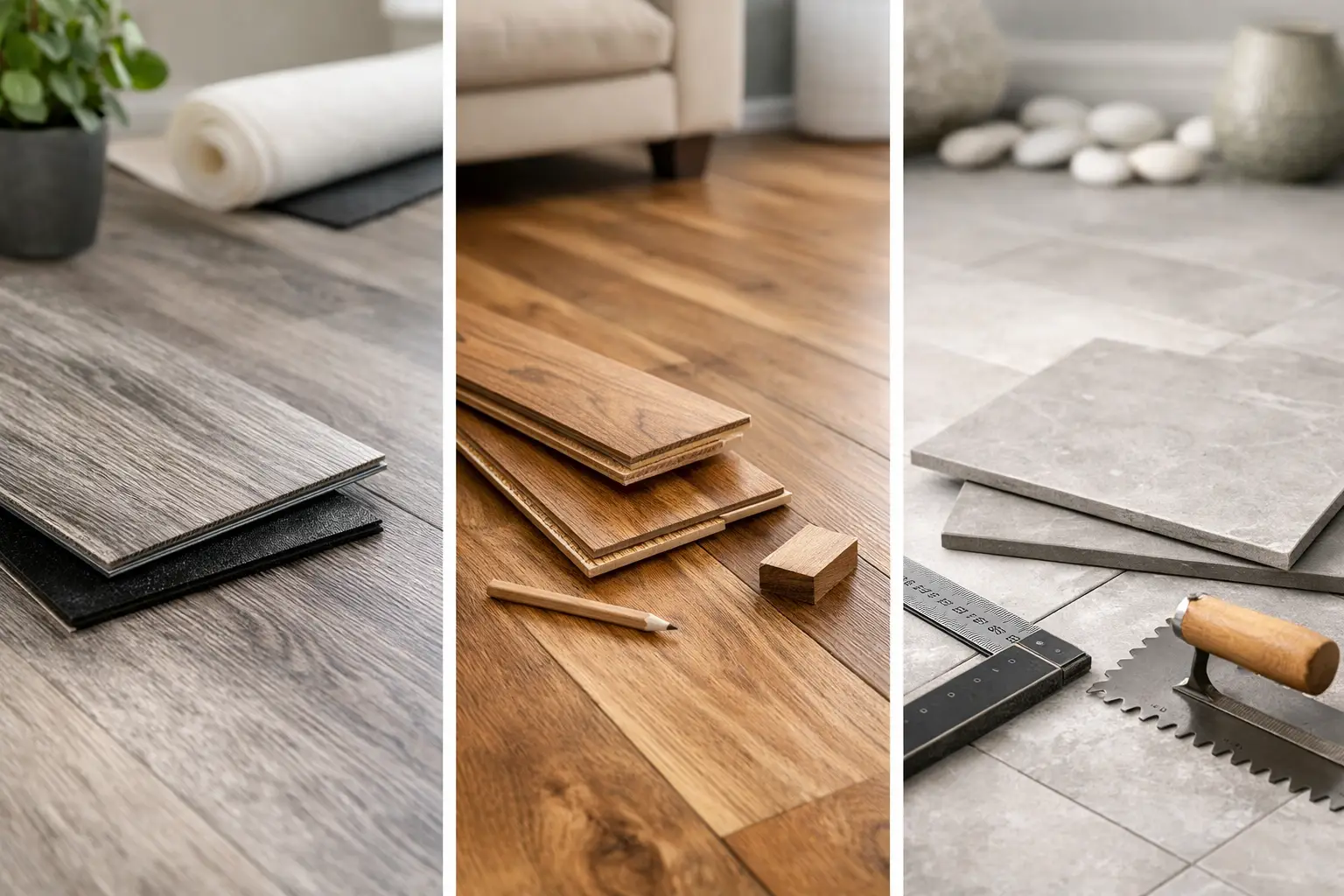
Luxury vinyl plank, commonly called LVP, is a resilient plank floor made with layered synthetic materials. Higher-quality products have realistic wood visuals, textured surfaces, and a rigid core that helps the flooring perform over minor subfloor variation. It is often selected for renovations where homeowners want the warmth of a wood look with easier maintenance and stronger water resistance.
Engineered hardwood is real wood flooring. Its top layer is hardwood veneer, bonded over a stable core. That construction makes it more dimensionally stable than traditional solid hardwood, particularly over concrete slabs or in areas with moderate humidity changes. It delivers the natural grain, depth, and variation that vinyl can imitate but not fully duplicate.
Porcelain tile is fired at very high temperatures and is exceptionally dense. It can resemble stone, concrete, or wood, but it is fundamentally a hard tile surface with grout joints. It is a strong choice for wet areas, high-traffic spaces, and homes where long-term durability matters more than softness underfoot.
The practical question is not which material is universally best. It is whether you need a warm and forgiving surface, authentic natural material, or maximum resistance to water and wear.
When Luxury Vinyl Plank Makes Sense
LVP is often a smart fit for laundry rooms, family areas, rental properties, garage conversions, and lower-level spaces where moisture exposure or day-to-day wear is a concern. Most quality LVP products are water resistant, and many are marketed as waterproof. That means the plank itself is unlikely to swell from a spill, but it does not mean the entire floor assembly is immune to water damage. Moisture can still reach the subfloor, walls, baseboards, or cabinets through edges and openings.
Its comfort is a major advantage. Luxury vinyl plank is quieter and warmer underfoot than tile, making it appealing in open living spaces and bedrooms. It can also be installed faster than many hard-surface options, depending on the product and site conditions.
The trade-off is longevity and visual authenticity. LVP can scratch, dent, or gouge, especially from moving furniture or sharp pet claws. Damaged planks can sometimes be replaced, but the floor cannot be refinished like wood. Direct sun exposure also deserves attention in homes with expansive windows in Santa Monica, Brentwood, or the Pacific Palisades. A stable, quality product and appropriate window treatments help reduce the risk of fading or movement.
Not all LVP performs the same. Wear-layer thickness, locking system quality, core construction, backing, and manufacturer specifications all affect the result. The least expensive option may look acceptable on day one but can reveal joint failure, pattern repetition, or surface wear much sooner than a premium product.
Why Engineered Hardwood Remains a Premium Choice
Engineered hardwood creates a finish that feels established rather than manufactured. Every plank has natural variation, and the surface develops character over time. For living rooms, dining rooms, hallways, primary bedrooms, and design-forward full-home renovations, it remains one of the most effective ways to create a refined, cohesive interior.
Its core construction makes engineered hardwood suitable for many homes built on concrete slabs, which is common across Southern California. However, proper moisture testing and subfloor preparation are still essential. Wood flooring should not be installed over an untested slab simply because it is engineered. Excess moisture can compromise adhesives, cause cupping, and lead to gaps or movement at the joints.
The thickness of the hardwood veneer matters. A thicker wear layer may allow the floor to be refinished in the future, while thinner options usually have less room for repair. This is one reason two engineered wood floors with similar colors can have very different long-term value.
Engineered hardwood is not the best material for every room. It is vulnerable to standing water and is generally a poor fit for full bathrooms, shower-adjacent areas, or homes where frequent wet-mopping is expected. It can work in a carefully managed kitchen, but homeowners should be realistic about spills, pet bowls, and routine maintenance. Felt pads under furniture, prompt cleanup, and manufacturer-approved cleaners protect the finish.
For homeowners who prioritize authentic material and resale appeal, engineered hardwood often justifies its higher initial investment. The installation must be equally premium. Flatness, moisture control, layout planning, adhesive selection, and clean transitions all shape whether the floor looks intentional or simply installed.
Where Porcelain Tile Performs Best
Porcelain tile is difficult to beat in bathrooms, mudrooms, laundry spaces, patios, kitchens, and high-traffic entries. It resists water, staining, scratching, and temperature changes better than wood or vinyl. Properly installed porcelain can serve a home for decades.
It is also exceptionally versatile from a design perspective. Large-format tiles can create a clean, contemporary appearance with fewer grout lines. Wood-look porcelain offers a more durable alternative in locations where real wood would be impractical. Stone-look porcelain provides the visual weight of natural stone without the same level of sealing and maintenance.
Its limitations are physical rather than cosmetic. Tile is hard, cool, and less forgiving when a glass or dish falls. It can also feel less comfortable in bedrooms and living areas unless it is paired with area rugs or radiant heat. In a bathroom remodel, heated flooring beneath porcelain can make a major difference in comfort, particularly in a primary suite.
Grout requires planning as well. Light grout can show dirt, while heavily textured grout can be harder to clean. Large-format tile minimizes joints but demands a very flat substrate and experienced installation. Uneven floors can create lippage, where one tile edge sits higher than the next. Correcting the substrate before tile installation is not an optional upgrade. It is part of doing the work properly.
For wet areas, slip resistance should be considered alongside appearance. A polished tile may look striking on a wall but may not be appropriate for a shower floor or exterior entry. The right tile finish depends on where it will be used.
Cost Is More Than the Material Price
Flooring budgets often start with a square-foot material cost, but the installed price depends on much more. Demolition, disposal, moisture mitigation, subfloor leveling, underlayment, floor preparation, baseboards, transitions, stair details, and furniture moving can significantly change the final scope.
LVP generally has the lowest installed cost of the three when the existing floor is reasonably flat and dry. Engineered hardwood tends to cost more because of the material itself and the precision required during installation. Porcelain tile can range widely. A straightforward tile installation may be competitive with hardwood, while large-format tile, intricate patterns, waterproofing, and extensive substrate preparation can make it the most labor-intensive option.
Homeowners should be cautious about selecting a flooring system based only on an initial allowance. An accurate proposal identifies the conditions that are visible and explains how hidden substrate issues will be handled if they are uncovered. That transparency prevents a finish decision from becoming an unexpected budget problem midway through construction.
Match the Flooring to the Room, Not a Trend
A whole-home flooring plan does not require one material everywhere. In fact, the strongest renovations often use materials strategically. Engineered hardwood may anchor the main living areas, while porcelain protects bathrooms and laundry rooms. LVP may be the practical solution for an ADU, a rental unit, or a converted garage where resilience and budget control carry more weight.
Continuity still matters. Coordinate plank color, tile undertones, transition profiles, and floor heights before installation begins. A beautiful floor can lose impact when it meets an awkward threshold, a poorly planned cabinet toe kick, or a door that no longer clears the finished surface.
The right selection comes from evaluating the home as a complete system, not from choosing the most popular sample. Bring the material decision into the design and planning phase, when it is still possible to address floor height, moisture, layout, and the details that make a renovation feel finished.
For clear guidance on flooring selections and renovation planning, call Precise Building & Restoration at 310-606-2222. A well-planned floor should support the way your home is used for years, not just look good at the final walkthrough.