A well-planned accessory dwelling unit can change more than the footprint of a Los Angeles property. It can create rental income, house family members comfortably, and make a home more flexible for the next buyer. But does building an ADU increase property value in Los Angeles? In many cases, yes. The amount of value added depends on the site, the quality of the build, the neighborhood, the finished layout, and whether the numbers make sense for your specific property.
For homeowners in high-value areas, an ADU is rarely just a small construction project. It is a major property decision that deserves the same careful planning as a full-home renovation or new addition.
Does Building an ADU Increase Property Value in Los Angeles?
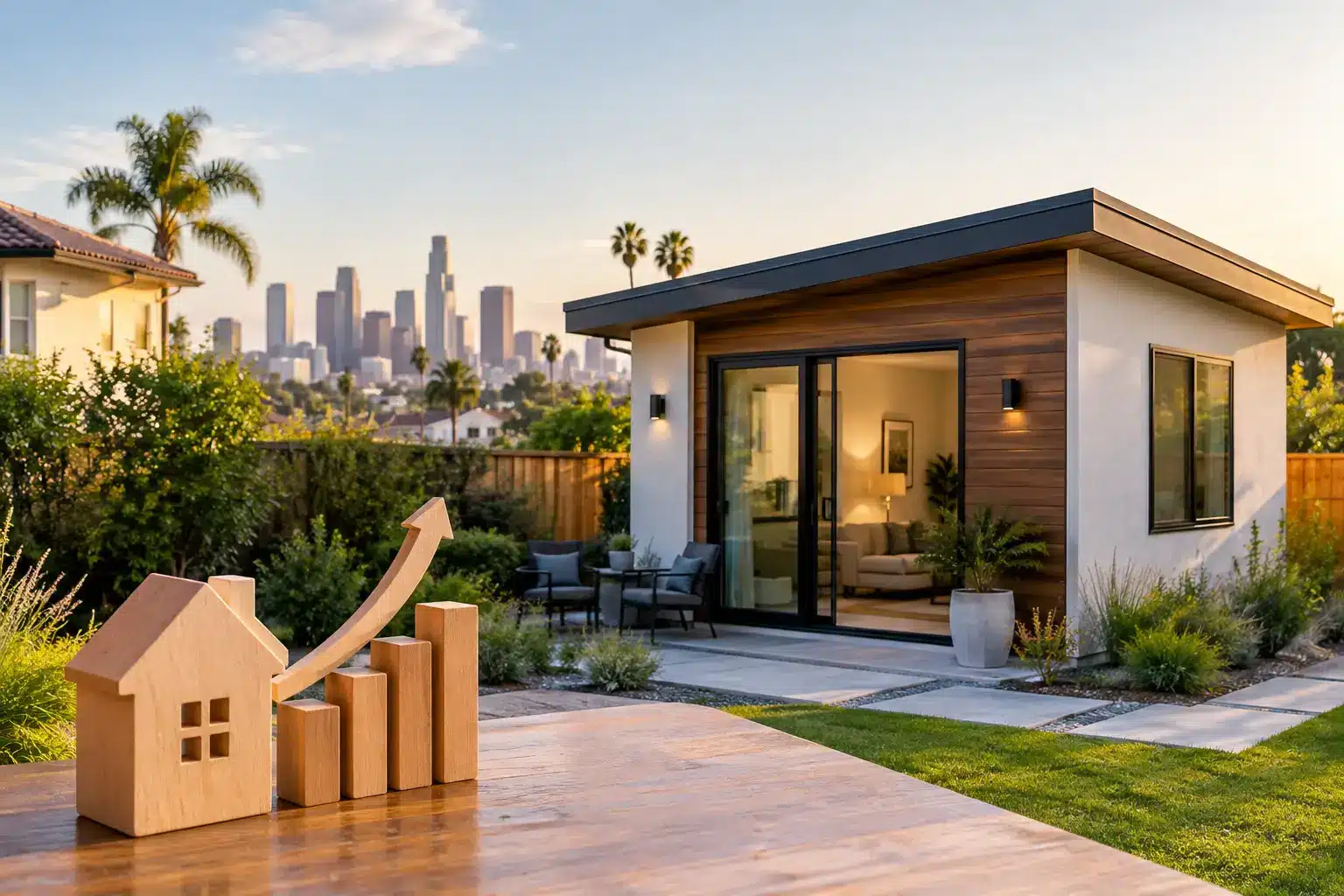
An ADU can increase a property’s market value because it adds legal, usable living space and broadens the property’s appeal. A detached backyard unit, a thoughtfully converted garage, or a well-designed addition can serve buyers who want room for extended family, a private guest suite, a home office, or a source of rental income.
Los Angeles buyers often place a premium on flexibility. A property with a permitted, move-in-ready ADU offers options that a standard single-family home may not. That can be especially meaningful in neighborhoods where housing is scarce and multigenerational living is common.
Still, added value is not always equal to construction cost. An owner might spend substantially on an ADU because of hillside conditions, utility upgrades, limited access, premium finishes, or complicated site work. The home may become more valuable, but the resale increase may not fully reimburse every dollar spent immediately. For many clients, the stronger financial picture comes from a combination of resale value, rental potential, and years of practical use.
Why appraisers and buyers may see more value
Appraisers evaluate ADUs differently depending on the property, local comparable sales, unit size, condition, permits, and market demand. A legally built, completed unit with a full kitchen, bathroom, separate entrance, and strong finishes generally carries more weight than an informal conversion with unclear documentation.
Buyers also make decisions emotionally and practically. A bright, private one-bedroom ADU with its own laundry, outdoor area, and parking strategy can feel like an entirely separate opportunity. It may help a buyer justify a higher offer because the property can support aging parents, adult children, live-in help, guests, or a long-term tenant.
The best-performing ADUs feel intentional. They do not look like leftover space squeezed behind the main house. Good ceiling heights, natural light, storage, durable materials, comfortable circulation, and privacy between the main residence and unit all shape how buyers perceive the result.
Rental Income Can Strengthen the Investment Case
Rental income does not automatically translate dollar-for-dollar into appraised value, but it can make an ADU more attractive to buyers and more useful while you own the home. In Los Angeles, a permitted ADU may provide a dependable long-term rental option in a market where housing demand remains high.
Before treating projected rent as guaranteed return, consider the real operating picture. You may have financing costs, insurance changes, maintenance, utilities, property management, vacancy periods, and applicable local rental rules. If you plan to rent the unit, confirm current requirements before construction begins rather than designing around assumptions.
For some owners, the best use is not rental at all. A family ADU can avoid the disruption and expense of off-site care or create a private space for relatives returning home. That value is personal, but it can still be significant. The right decision starts with defining how you intend to use the unit over the next five to ten years.
What Has the Biggest Effect on ADU Value?
The location and condition of the main home remain central to property value. An ADU is most effective when it complements the overall property rather than exposing deferred maintenance or creating an awkward backyard arrangement.
A few project decisions tend to have an outsized effect:
- Permitted construction: Complete plans, approvals, inspections, and final documentation reduce uncertainty for buyers and lenders.
- A practical layout: A compact unit can still live well when the kitchen, bath, storage, bedroom area, and laundry are carefully planned.
- Privacy and access: Separate entries, thoughtful window placement, clear paths, fencing, and outdoor areas help both homes feel more independent.
- Utility planning: Electrical capacity, sewer connections, water service, gas needs, and HVAC should be evaluated early, not treated as late-stage details.
- Finish quality: Durable flooring, solid cabinetry, reliable plumbing fixtures, attractive lighting, and cohesive design support a stronger perception of value.
In premium Los Angeles neighborhoods, the relationship between the ADU and the main residence matters even more. A high-end home paired with a visibly budget-built unit can feel inconsistent. The ADU does not need to duplicate every finish in the primary home, but it should meet the same standard of thoughtful workmanship.
Detached ADU, Attached ADU, or Garage Conversion?
Each approach can add value, but each has different trade-offs.
A detached ADU often provides the strongest sense of separation and privacy. It can be ideal for tenants, guests, or family members who need an independent living environment. It may also require more extensive site work, new utility connections, foundation work, and backyard planning.
An attached ADU can be efficient when an existing structure or addition creates a logical opportunity. It may preserve more outdoor space and simplify certain construction elements. However, sound control, access, and the relationship to the main home need careful attention.
A garage conversion may offer a faster path to added living space when the existing garage is structurally suitable. The critical question is whether the conversion creates a genuinely comfortable unit while addressing insulation, plumbing, electrical upgrades, ceiling height, egress, ventilation, and parking considerations. A converted garage that feels dark or improvised will not command the same response as a polished, permitted residence.
Permits and Site Conditions Affect the Real Return
Los Angeles ADU rules have made it easier for many homeowners to pursue a secondary unit, but “easier” does not mean effortless. Every property has its own constraints. Setbacks, lot configuration, fire access, hillside conditions, coastal requirements, trees, existing utility lines, drainage, and sewer capacity can all affect design, schedule, and cost.
The permitting process also influences value indirectly. Buyers prefer certainty. When the ADU is built through proper plans, city approvals, and inspections, the owner can present a clearer record of what was built. That helps avoid questions during resale and gives future buyers more confidence in the home’s legal living area.
This is where early feasibility work matters. A preliminary site review and CAD concept can identify whether your preferred unit size and layout are realistic before you commit to construction. It is far less expensive to adjust a plan on paper than after demolition, excavation, or framing has started.
How to Build an ADU That Supports Resale
The goal is not simply to add square footage. It is to add a unit that functions well, looks right on the property, and holds up over time. Start with a design that solves a real need. If the intended use is for an aging parent, prioritize accessible circulation and a comfortable bathroom. If it is for a tenant, focus on privacy, storage, laundry, and a defined outdoor area. If it is for guests or a home office, consider flexible room arrangements.
Avoid overbuilding for the neighborhood, but do not underbuild the details buyers notice every day. Cheap windows, poor ventilation, weak sound control, limited storage, and awkward kitchen layouts can undermine an otherwise promising project. A balanced budget should protect the structural, mechanical, waterproofing, and finish decisions that influence daily comfort and long-term maintenance.
An experienced design-build team can coordinate the project from feasibility and design through permitting, construction, finishes, and final site completion. That single point of accountability is valuable when an ADU requires multiple trades, city coordination, and careful integration with an occupied home.
The Better Question to Ask Before You Build
Rather than asking only whether an ADU will raise your sale price, ask whether it will improve the way your property works for you now and remain compelling to future buyers. If the answer is yes, the project may deliver value well beyond a single appraisal figure.
Precise Building and Restoration helps Los Angeles homeowners evaluate ADU and garage conversion opportunities with clear planning, detailed craftsmanship, permitting support, and direct project communication. Call 310-606-2222 to discuss your property and make the next construction decision with a complete picture of the costs, opportunities, and long-term value.