A bathroom floor can look pristine at installation and still disappoint a few years later if the tile was not selected for the room, the substrate, and the household using it. When homeowners ask, porcelain vs. ceramic bathroom tile: which is more durable?, porcelain is usually the stronger choice for wet, high-traffic bathroom floors. But that does not make ceramic a poor material. The right answer depends on where the tile will go, the finish you want, and how carefully it will be installed.
For a bathroom remodel, durability is more than resisting scratches. It includes water resistance, strength under daily foot traffic, resistance to chips, ease of cleaning, and the ability to perform well over a properly prepared floor. Tile is only as reliable as the surface beneath it.
Porcelain vs. ceramic bathroom tile: which is more durable?
Both porcelain and ceramic tiles are made from clay and fired in a kiln. Porcelain is made with finer, denser clay and fired at higher temperatures. That process creates a less porous tile with very low water absorption. To meet the porcelain standard, a tile must absorb 0.5% water or less.
Ceramic tile is also durable, but it generally has a higher water absorption rate and is less dense than porcelain. In a dry wall application, that difference may have little practical effect. On a primary bathroom floor, in a shower, or near a tub used every day, porcelain’s density gives it a meaningful advantage.
Porcelain is typically better able to handle moisture, repeated cleaning, dropped grooming tools, and the steady wear of a busy household. It is also less likely to crack from minor impacts than a comparable ceramic tile, though no tile is immune to damage from a hard object or movement in the subfloor.
Where porcelain performs best
Porcelain is a particularly smart investment for bathroom floors, shower walls, shower floors, tub surrounds, and bathrooms connected to outdoor spaces. In Los Angeles homes, it is also commonly selected for indoor-outdoor transitions where a bathroom or pool bath opens toward a patio. Its low absorption rate helps it perform consistently where water, humidity, and frequent cleaning are part of everyday use.
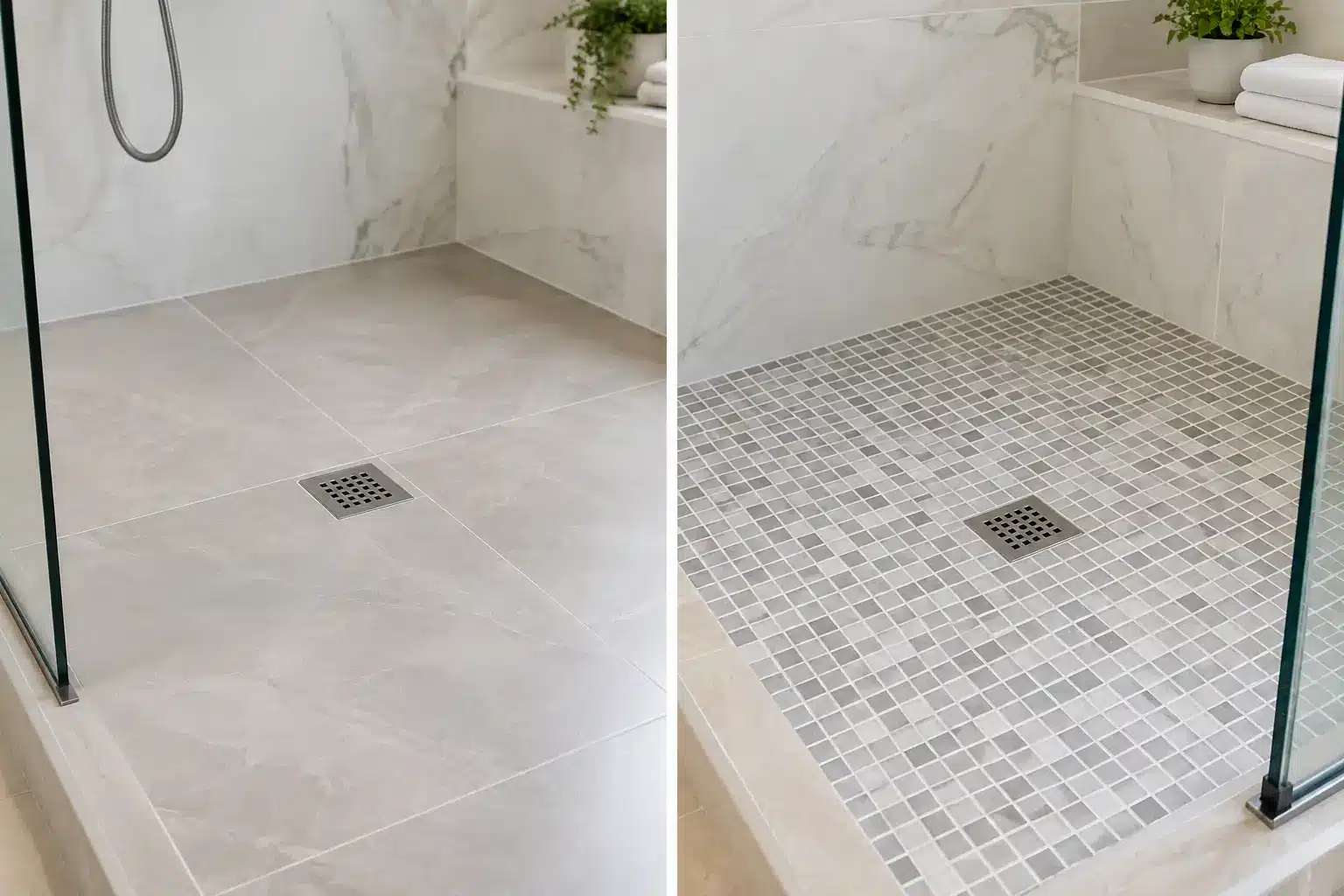
Large-format porcelain can create a refined, continuous look with fewer grout joints. That can make routine cleaning easier, but it raises installation demands. Larger tiles require a flatter substrate, proper mortar coverage, and careful layout to prevent lippage, where one tile edge sits higher than the next. A polished result comes from planning the tile layout before installation, not trying to correct unevenness afterward.
For shower floors, choose a porcelain mosaic or another tile specifically rated for wet floors. Small-format mosaics provide more grout joints, which improves traction and allows the tile to follow the shower slope toward the drain. A large, smooth tile may look dramatic, but it is often not the safest or most practical choice underfoot.
When ceramic is the right bathroom tile
Ceramic remains an excellent option for bathroom walls, decorative backsplashes, and low-impact areas. It offers a broad range of colors, shapes, glazes, and handcrafted looks, often at a lower material cost than porcelain. If you want a glossy subway tile, a distinctive zellige-inspired finish, or a detailed accent wall, ceramic may provide more design options within the budget.
A quality glazed ceramic wall tile can last for decades when installed over an appropriate waterproofed wall assembly. The key is using it where it belongs. Wall tile does not need the same impact resistance as flooring, and a beautiful ceramic can be an effective way to place more of the budget toward a custom vanity, lighting, plumbing fixtures, or a better shower enclosure.
Ceramic floor tile can work in a lightly used powder room or guest bath if it carries a suitable floor rating. Still, for a main bathroom, children’s bathroom, or rental property that will see regular use, porcelain offers more margin for error over time.
Durability is not just about the material
Tile labels can be confusing because porcelain and ceramic describe the tile body, not every aspect of performance. Before making a final selection, review the tile’s intended use, manufacturer rating, finish, and thickness. A thin, glossy wall tile is not a substitute for a floor-rated product simply because it is porcelain.
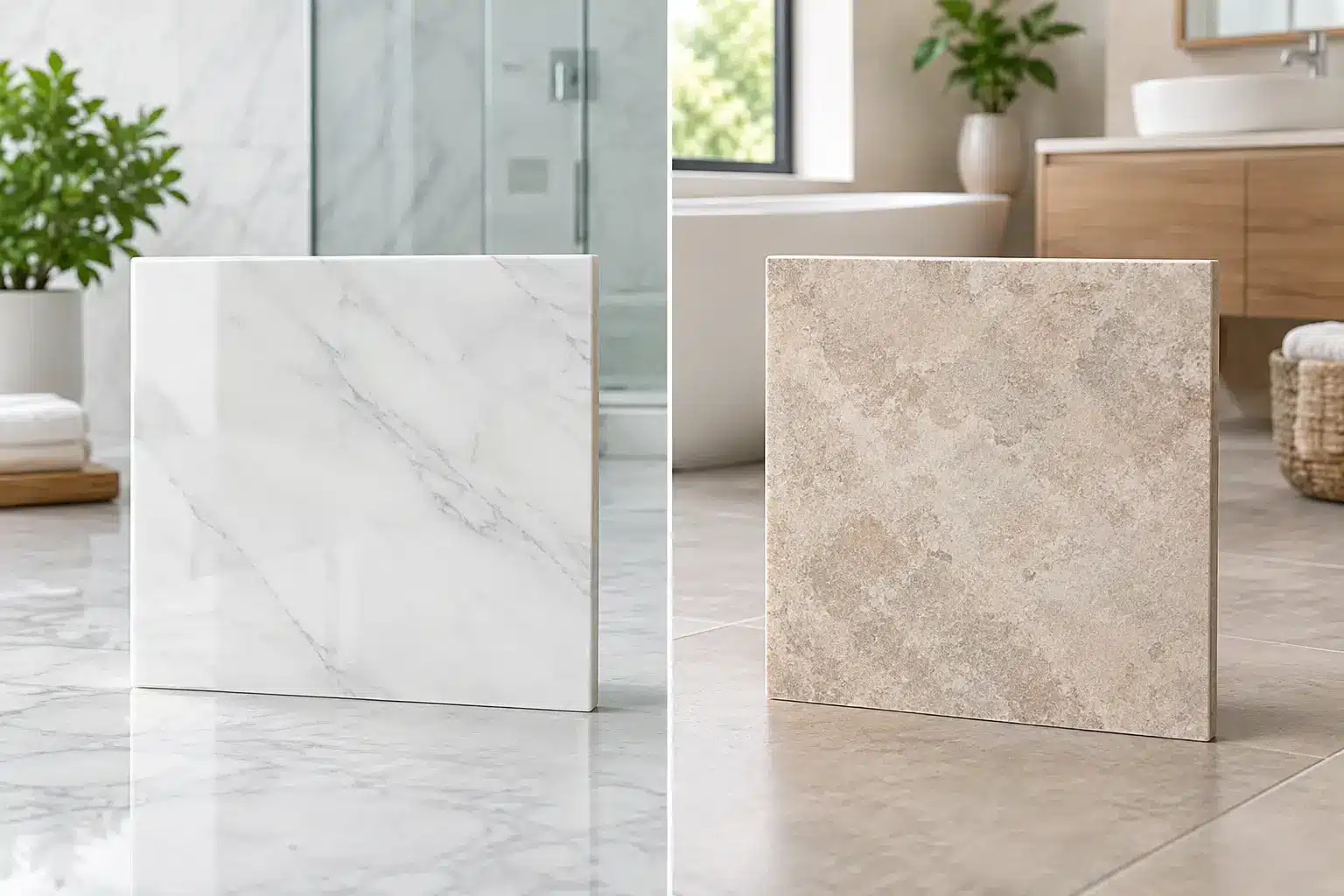
For bathroom floors, consider the tile’s abrasion rating and surface texture. A tile with a higher wear rating is better suited to regular foot traffic. For shower floors and areas likely to get wet, slip resistance matters just as much as hardness. Highly polished tile can be appropriate for a wall or a low-traffic powder room, but a matte or textured finish is usually the safer choice for a frequently used bathroom floor.
Color body is another practical detail. Some porcelain tiles have color or pattern running through the body, while others have a printed surface layer. A through-body or full-body porcelain can make small chips less visible, especially in stone-look or concrete-look finishes. This is helpful in busy bathrooms, though careful use and a quality installation remain the first line of defense.
Installation determines how long tile lasts
The most durable porcelain tile can still crack if it is installed over an unstable or uneven subfloor. Movement, inadequate mortar coverage, poor expansion planning, and insufficient waterproofing can lead to cracked grout, loose tiles, water damage, and costly repairs behind finished walls.
A professional bathroom tile installation begins with the structure. The installer should assess the floor framing, subfloor condition, flatness, and any areas affected by previous moisture. Shower assemblies need a complete waterproofing system, properly sealed corners and penetrations, and a correctly sloped pan. These steps are not visible once the room is finished, but they determine whether the bathroom remains sound.
For large-format porcelain, installers often use leveling systems and back-butter tiles where needed to achieve proper contact with the mortar. Tile cuts should be planned around drains, niches, fixtures, and doorways so narrow slivers do not interrupt the final design. Movement joints also matter, particularly in larger bathrooms or rooms that receive direct sun.
At Precise Building and Restoration, bathroom remodeling is managed as a complete construction process, from design direction and material coordination through waterproofing, installation, and finish details. That oversight helps ensure the tile choice supports the room’s actual use rather than only its showroom appearance.
Cost: look beyond the price per square foot
Ceramic often costs less upfront, especially for wall applications. Porcelain may cost more to purchase and install because it is denser, harder to cut, and sometimes available in larger formats. However, the better value is not always the least expensive tile. A floor that resists moisture and wear for years can justify a higher initial investment, particularly in a primary bath or a high-value home.
Installation labor should never be reduced to a line item to cut without scrutiny. Proper surface preparation, waterproofing, layout, and experienced tile setting protect the materials you have already invested in. If a quote is significantly lower than others, ask what is included for demolition, substrate repair, waterproofing, grout, sealing where required, and final cleanup.
A practical recommendation for most bathrooms
For a primary bathroom floor, shower floor, tub surround, or heavily used family bathroom, choose a floor-rated porcelain tile with an appropriate slip-resistant finish. It gives you the strongest balance of moisture protection, everyday durability, and long-term appearance.
Use ceramic where it adds design value without being exposed to heavy wear, especially on bathroom walls and accent features. This approach can create a more tailored bathroom while placing your budget where performance matters most. The best material plan is often not porcelain everywhere, but porcelain in the hard-working areas and ceramic where its color, texture, or character can take center stage.
A durable bathroom should feel effortless to live with, not precious to maintain. For guidance on tile selection, waterproofing, layout, and a bathroom remodel built to last, call Precise Building and Restoration at 310-606-2222. A clear plan before construction starts is the simplest way to protect both your design vision and your investment.