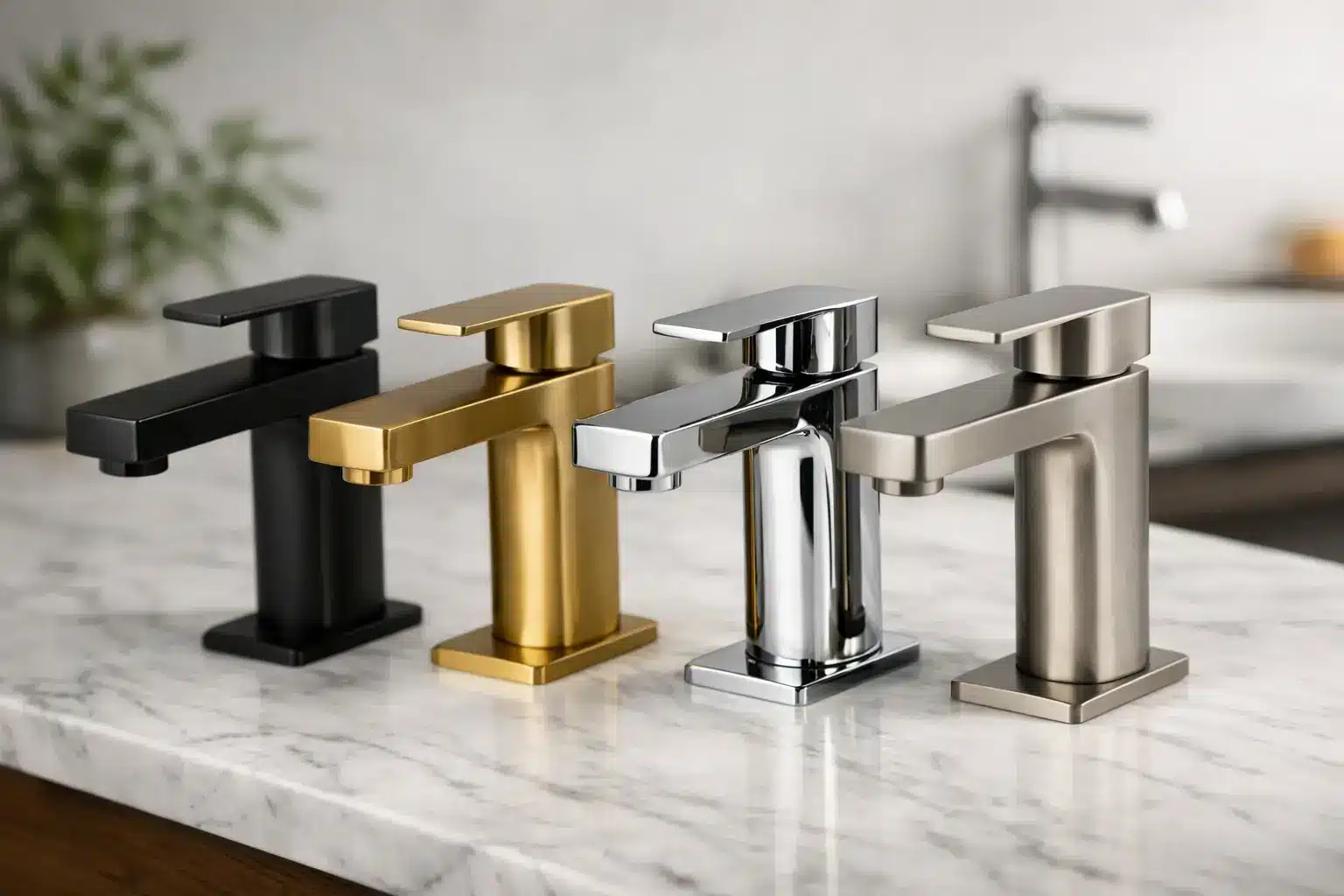
A faucet can look perfect in a showroom and tired two years later. Water chemistry, cleaning habits, direct sun, fingerprints, and the quality of the fixture all affect the outcome. So when homeowners ask, “matte black, brass, chrome, or brushed nickel fixtures: which finish ages best?” the honest answer is that brushed nickel and quality chrome are the safest long-term performers, while matte black and brass can be excellent choices when they suit the room and are maintained correctly.
For a Los Angeles kitchen or bathroom remodel, the best finish is not simply the one that photographs well. It is the one that continues to look intentional after daily use, regular cleaning, and changing design preferences.
Which Fixture Finish Ages Best?
If your priority is a finish that hides routine wear, works with many design styles, and is unlikely to feel dated, brushed nickel is usually the strongest all-around choice. Its soft, low-sheen surface conceals water spots, light scratches, and fingerprints better than polished finishes. It also works comfortably with warm or cool materials, from white oak cabinetry and Calacatta-style stone to darker tile and painted vanities.
Chrome is the durability and value leader, especially when you select a well-made fixture with a quality plated finish. It has remained a familiar choice for decades because it is reflective, easy to match, widely available, and straightforward to replace or repair. Its weakness is visual: chrome exposes water spots, soap residue, and fingerprints more readily than brushed nickel.
Matte black offers strong design impact but requires more thoughtful placement and care. In the right setting, it can look current for many years. In a high-use bathroom with hard water, however, mineral residue and scratches may be more apparent. The difference between an inexpensive painted black fixture and a premium PVD or powder-coated product is substantial.
Brass has the most personality and the most variation. A living, unlacquered brass finish is supposed to deepen, spot, and develop patina. That can be beautiful in a traditional, organic, or collected interior, but it is not the right choice for homeowners who expect a uniform, untouched appearance. Brushed or satin brass with a protective finish can stay more consistent, although the coating and the underlying manufacturing quality matter greatly.
Brushed Nickel: The Most Forgiving Everyday Finish
Brushed nickel earns its reputation because it handles ordinary life well. The subtle texture breaks up reflections, which means small marks do not command attention. In bathrooms used by children, guest baths with frequent turnover, or kitchens where the faucet is in constant use, that forgiveness is valuable.
It also has unusual design flexibility. Brushed nickel can sit beside polished stone, handmade tile, warm wood, stainless appliances, and both black and white cabinetry without looking out of place. That makes it a dependable choice for full-home renovations where finishes must connect across several rooms without becoming repetitive.
The trade-off is that brushed nickel is restrained. If a client wants fixtures to act as a bold design feature, it may feel too quiet. It can also vary from one manufacturer to another, so avoid assuming that every “brushed nickel” shower trim, cabinet pull, and light fixture will match exactly. Confirm samples in the actual room before final ordering.
Chrome: Classic, Clean, and Easy to Live With
Chrome has survived trend cycles for a reason. Quality chrome plating is hard, corrosion-resistant, and generally easier to source in every fixture category, including faucets, shower valves, towel bars, and specialty parts. That availability matters years after a remodel, particularly when a cartridge, trim plate, or accessory needs replacement.
For resale-minded projects, chrome is a low-risk choice. It reads clean and familiar, and it does not push a future buyer toward a specific design era. In a bright contemporary bathroom, polished chrome can reinforce a crisp, tailored appearance that feels fresh rather than dated.
Its limitation is maintenance visibility. On a polished surface, every splash is easier to see. Homes in areas with mineral-heavy water may need more frequent wiping to keep chrome looking its best. This is not a durability problem, but it can become a daily annoyance if a spotless look is important to you.
Matte Black: High Contrast With Higher Expectations
Matte black fixtures can make a bathroom feel architectural and a kitchen feel more deliberate. They pair especially well with light stone, natural white oak, plaster-like walls, and modern flat-panel cabinetry. For homeowners who want definition without adding a bright metallic finish, black is compelling.
The finish’s longevity depends heavily on product quality. Low-cost black fixtures may use a thin coating that chips at high-contact points such as handles, pull-down sprayers, and shower controls. Once a coating is damaged, the underlying metal can become visible, and touch-up repairs rarely disappear completely.
A better-grade fixture can perform very well, but care still matters. Avoid abrasive pads, powder cleansers, and harsh chemicals. Soft water spots can usually be removed with a microfiber cloth and a mild cleaner approved by the manufacturer. In a shower exposed to constant spray, a squeegee and regular wipe-down will make a noticeable difference.
From a style perspective, matte black is more trend-sensitive than chrome or brushed nickel. That does not mean it will age badly. It means the surrounding design needs to be strong enough that the black finish feels like part of a complete material plan rather than a single fashionable detail.
Brass: Timeless Only When It Is Intentional
Brass can be the most enduring finish visually because it has historical range. It works in classic homes, Spanish-influenced interiors, transitional kitchens, and layered contemporary spaces. But “brass” is not one finish. Polished brass, satin brass, antique brass, champagne bronze, and unlacquered brass all age differently.
Unlacquered brass changes from the first day of use. Oils from hands, humidity, water, and air create a varied patina. Some homeowners love that evidence of use because it gives the room warmth and authenticity. Others see uneven spotting and assume the fixture has failed. The decision should be made before installation, not after.
Protected satin brass is more predictable, but it can still show wear at edges and touch points over time. Choose fixtures from reputable manufacturers, compare physical samples, and do not mix brass tones casually. A warm brass faucet next to a cooler champagne-bronze light fixture can look mismatched even when both are labeled as brass.
Finish Quality Matters More Than the Color Name
The label on a fixture is only part of the story. Two faucets in the same finish can age very differently based on the base metal, plating process, protective coating, and quality control. A solid brass faucet body with durable plating is typically a better long-term investment than a lightweight fixture with a thin decorative coating.
For finishes such as black, brass, and brushed gold, ask about the manufacturer’s finish process and warranty. PVD finishes, when properly produced, are known for strong resistance to scratching, tarnishing, and corrosion. They are not automatically necessary for every project, but they are worth considering for heavily used kitchens and primary bathrooms.
Installation also protects longevity. Fixtures should be installed correctly, sealed where required, and paired with compatible cleaners. During a remodel, protecting finished plumbing trim from grout haze, paint overspray, abrasive dust, and harsh post-construction cleaning products is just as important as selecting the right finish.
Choose by Room, Water Exposure, and Design Goals
For a hardworking family kitchen, brushed nickel is usually the easiest recommendation, with chrome close behind if you prefer a cleaner, brighter look. For a primary bathroom designed around warmth and texture, satin brass can be a lasting choice when its tone is repeated thoughtfully in lighting or hardware. For a powder room, matte black can offer maximum visual impact with less exposure to daily water and wear.
In a coastal home or any property with hard water, prioritize durable construction and a finish that will not make mineral spotting feel like a constant maintenance project. Brushed nickel is particularly forgiving here. In a design-forward renovation where every finish is intentional, black or brass may be the better aesthetic decision, provided the client understands the maintenance and variation involved.
The finish that ages best is the one chosen for the way your household actually lives, not for a single inspiration photo. Precise Building & Restoration helps homeowners coordinate fixture finishes with cabinetry, tile, stone, lighting, and long-term maintenance expectations before the work is installed. For clear guidance on your kitchen, bathroom, or whole-home remodel, call 310-606-2222.