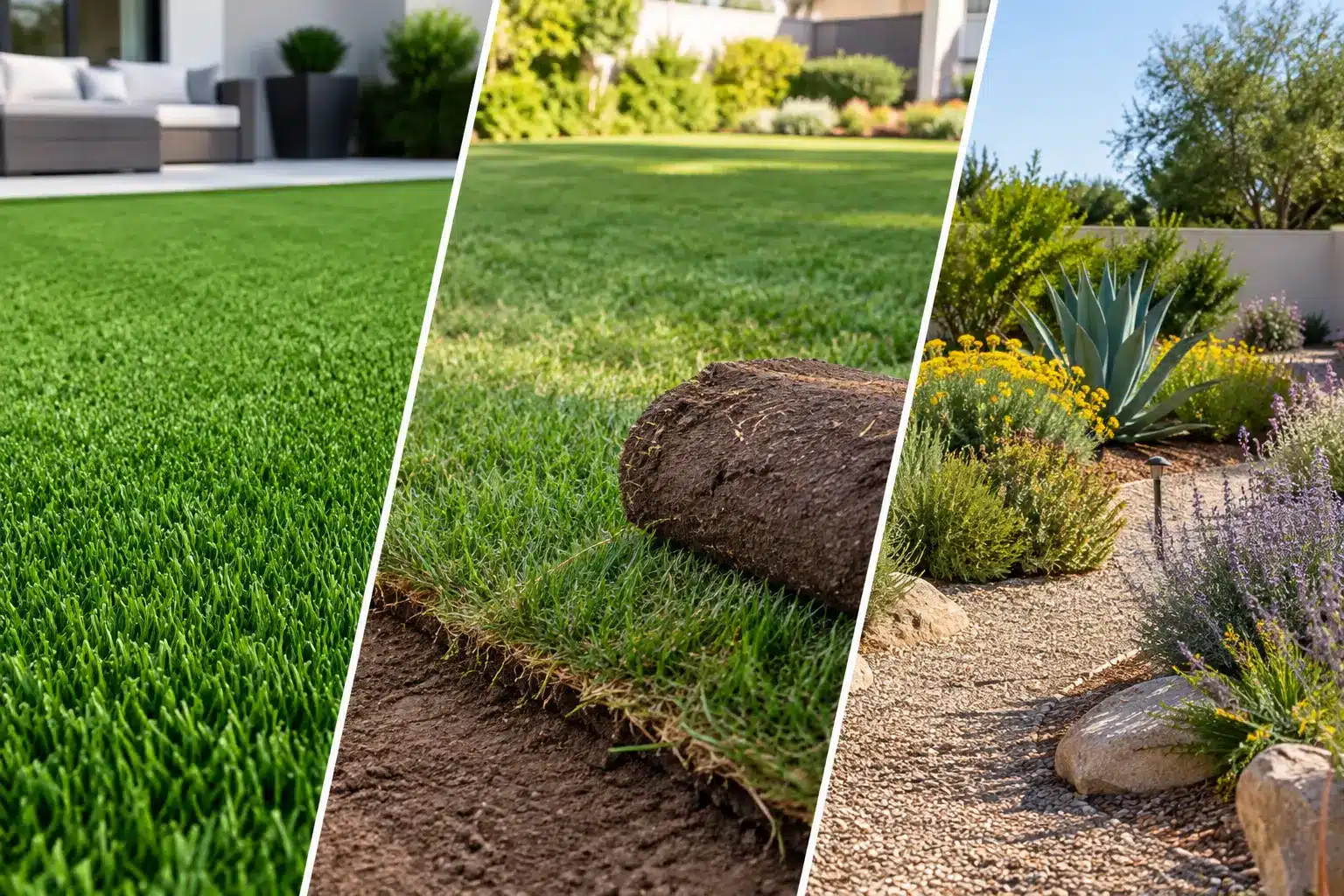
A green lawn can make a backyard feel finished, but in Los Angeles, the wrong lawn choice can also become a source of high water bills, uncomfortable heat, and constant maintenance. When comparing artificial turf vs. sod vs. drought-tolerant landscaping, the best answer is rarely a one-size-fits-all material. It depends on how the space will be used, the property’s sun exposure, your design priorities, and how much maintenance you want to take on after construction is complete.
For a family backyard, a rental property, a poolside lounge area, or a front-yard curb appeal upgrade, the goal should be a landscape that looks intentional and performs well through hot, dry conditions. Here is what homeowners should consider before committing to turf, natural grass, or a water-wise planting plan.
Artificial Turf vs. Sod vs. Drought-Tolerant Landscaping: The Real Differences
Artificial turf, sod, and drought-tolerant planting each solve a different problem. Artificial turf provides consistent green coverage with little irrigation. Sod offers the cooling feel and natural appearance of living grass, but needs regular water and care. Drought-tolerant landscaping uses low-water plants, gravel, stone, mulch, and carefully planned hardscape to create visual interest with far less ongoing demand.
The strongest choice starts with an honest assessment of your yard. A shaded play area has different needs than a full-sun front yard in Brentwood or a pool terrace in Pacific Palisades. A landscape plan should also coordinate with drainage, irrigation, grading, exterior lighting, and hardscape work. Treating landscaping as an afterthought can lead to uneven surfaces, water pooling, exposed irrigation components, and a finished yard that does not match the home’s architecture.
Artificial Turf: Clean Appearance, Important Heat Trade-Offs
Artificial turf is popular because it delivers a permanently green, manicured look without weekly mowing or routine watering. It works particularly well in smaller areas where homeowners want a clean visual finish: side yards, pet runs, putting greens, rooftop spaces, and narrow strips that are difficult to maintain with natural grass.
Quality installation matters as much as the turf product itself. The ground must be excavated and compacted correctly, with a stable base, appropriate drainage, secure seams, and clean perimeter detailing. If the base is not prepared properly, turf can develop low spots, wrinkles, drainage problems, or visible edges over time.
The most significant drawback is surface temperature. Artificial turf can become extremely hot in direct Southern California sun, especially in open yards without mature trees or shade structures. It may be uncomfortable for children, pets, and bare feet during the hottest part of the day. Some products offer cooling technology, but no synthetic surface performs like irrigated natural grass in full heat.
Turf also needs periodic care. Leaves, dust, pet waste, and debris still need removal, and high-traffic areas may need brushing to keep fibers standing evenly. It does not eliminate maintenance; it changes the type of maintenance required. For homeowners who want a green lawn look with limited irrigation, it can be a practical choice, but it is usually best used selectively rather than across every square foot of a large sun-exposed yard.
Sod: Natural, Cooler, and More Water-Dependent
Sod remains the right choice for homeowners who value the experience of a real lawn. Natural grass is softer underfoot, cooler in warm weather, and often better suited for children’s play areas. It can also make a newly renovated backyard feel immediately established rather than waiting for plants to mature.
However, sod is not a low-maintenance option in Los Angeles. It needs a properly designed irrigation system, regular mowing, seasonal feeding, weed control, and ongoing attention to drainage and soil conditions. Inconsistent watering can create patchy growth, while poor grading can leave lawns soggy in one area and dry in another.
The type of grass also matters. Some warm-season varieties are more water-conscious than traditional lawn options, but every living lawn requires water to stay healthy and attractive. Homeowners should factor in long-term operating cost, not only installation cost. A less expensive sod installation can become more costly over time if the irrigation system is inefficient or the lawn demands frequent replacement.
Sod is often most successful when it is limited to a purposeful area. A defined lawn panel beside a patio, pool, or outdoor kitchen can provide the comfort of real grass without turning the entire property into a water-intensive landscape. This approach also creates clearer spaces for entertaining, play, planting, and circulation.
Drought-Tolerant Landscaping: Design-Led and Water-Wise
Drought-tolerant landscaping is not simply replacing grass with rocks. A well-designed low-water yard can feel refined, layered, and appropriate for a high-value home. The best plans combine plants with different heights, textures, colors, and bloom cycles, then frame them with materials that complement the property, such as natural stone, concrete pavers, decomposed granite, or architectural gravel.
Plants such as California natives, succulents, ornamental grasses, agave, olive trees, and low-water shrubs can provide structure without demanding the irrigation schedule of a traditional lawn. The exact palette should be selected for the site’s sun, wind, slope, soil, and desired level of upkeep. A plant that looks excellent near the coast may not perform the same way in a hotter inland neighborhood.
This option typically has the strongest long-term water-saving potential, but it requires thoughtful design. Plants need room to grow, and irrigation zones should be matched to their water needs. Proper mulching, soil preparation, and drainage are essential. A rushed installation with random plant placement can look sparse or unfinished, while a professionally planned landscape gains character as it matures.
For homeowners who want a modern, high-end exterior with less water use, drought-tolerant landscaping is often the most durable overall investment. It is especially effective when paired with outdoor lighting, retaining walls, planters, fire features, and defined entertaining areas.
Cost Should Include the Work Beneath the Surface
Comparing installation quotes by square foot alone can be misleading. Every option may require demolition, grading, drainage improvements, irrigation modifications, soil preparation, edging, hauling, and access planning. Those site conditions often determine the real project cost.
Artificial turf can have a higher upfront cost than basic sod because of excavation, base preparation, and installation detail. Sod may cost less initially, but the ongoing water, mowing, fertilizer, and repair expenses should be included in the decision. Drought-tolerant landscapes vary widely: a simple gravel-and-plant plan may be economical, while a custom composition with specimen trees, stonework, lighting, and irrigation can be a significant property improvement.
The right budget question is not only, “What costs less to install?” It is, “What will this yard cost to own, maintain, and enjoy over the next several years?”
A Blended Yard Is Often the Best Answer
Many successful backyard transformations use more than one of these materials. A homeowner may choose a small sod lawn for children, artificial turf in a shaded side yard or pet area, and drought-tolerant planting around patios and pathways. This creates a more natural result while putting each material where it performs best.
For example, artificial turf may be a poor fit beside a sunny pool deck because of heat, but it can work well for a compact putting area. Sod can be ideal in a play zone, while drought-tolerant plants can soften the perimeter and reduce the total irrigated area. The finished landscape feels more custom because it responds to real use rather than following a single trend.
Before construction begins, make sure the plan accounts for drainage, utility locations, irrigation controls, slopes, mature tree roots, and access for crews and materials. These details protect the appearance of the yard and prevent expensive corrections after finishes are installed.
A landscape should make your property easier to live in, not create another maintenance problem. If you are planning a backyard transformation and want a clear, buildable plan from design through completion, Precise Building and Restoration can help coordinate the details. Call Us Now at 310-606-2222 to discuss a landscape approach that fits your home, your budget, and the way you use your outdoor space.