A vanity can look like a simple finish selection until it has to fit between an off-center drain, a shower curb, a door swing, and a wall that is not quite square. That is why prefabricated vs. custom bathroom vanity: which should you buy? is a decision worth making early, before tile, plumbing trim, and countertops lock the layout into place.
For many Los Angeles bathroom remodels, the best answer is not simply “custom is better” or “prefabricated costs less.” It depends on the room, the design standard you expect, the timeline, and whether the vanity needs to solve a real space-planning problem. A well-selected prefabricated unit can be an excellent value. A well-designed custom vanity can make a difficult bathroom feel intentional, organized, and considerably more polished.
Start With the Bathroom, Not the Cabinet
The first question is whether a standard vanity size genuinely works. Prefabricated vanities commonly come in widths such as 24, 30, 36, 48, 60, and 72 inches. Those sizes work well when the plumbing is centered, surrounding walls are reasonably straight, and the room allows appropriate clearance for doors, drawers, and traffic.
A custom vanity is more compelling when every inch matters. In a compact guest bath, a 33-inch vanity instead of a standard 30- or 36-inch unit may preserve storage without crowding the toilet. In a primary suite, a wall-to-wall cabinet can eliminate filler panels and awkward gaps that collect dust. A custom depth can also make a narrow bathroom more comfortable, especially where a standard 21-inch-deep cabinet would interfere with circulation.
Before deciding, confirm the finished dimensions, not just the dimensions shown on a floor plan. Tile thickness, wall preparation, baseboard details, and countertop overhang all affect the final fit. This is one reason professional field measurement matters: older homes and luxury condos alike can reveal conditions that are easy to miss during a showroom visit.
Prefabricated vs. Custom Bathroom Vanity: Cost and Value
Prefabricated vanities generally have the lower initial price. They are manufactured in repeatable sizes, and many are available with a matching countertop and sink. For a secondary bathroom, rental property refresh, or straightforward remodel with a controlled budget, a quality stock vanity can direct more of the budget toward waterproofing, tile installation, lighting, or plumbing fixtures.
However, the purchase price is not the complete installed cost. A less expensive cabinet may require extra labor if it needs extensive modifications, side panels, filler strips, countertop cuts, or adjustments to accommodate existing plumbing. If those changes are significant, the savings over a semi-custom or custom solution can narrow quickly.
Custom vanities cost more because they involve design coordination, shop drawings or detailed specifications, material selection, fabrication, finishing, delivery, and installation. The value is in the precision. You can choose the exact width, depth, drawer arrangement, wood species or paint color, hardware placement, and countertop integration. For a primary bathroom or a home where finishes must align with custom cabinetry elsewhere, that control is often worth the investment.
The strongest value decision is usually the one that fits the role of the room. Spend for custom where it materially improves use, appearance, or resale appeal. Select prefabricated where standard sizing delivers the same result without compromise.
Storage Is Often the Deciding Factor
A vanity should do more than hide the drain. It should support how the household uses the bathroom each day. Stock cabinets can offer practical drawer and door configurations, but their interiors are fixed. If you need space for hair tools, skin-care products, cleaning supplies, towels, or a dedicated makeup drawer, a custom layout provides more control.
Custom construction is especially helpful around plumbing. Rather than losing a large section of storage to a generic sink cabinet, drawers can be designed with carefully planned cutouts. In a double vanity, each person can have defined storage, reducing countertop clutter and making busy mornings easier.
That said, custom is not automatically more functional. A poorly planned custom vanity with shallow drawers or oversized decorative doors can waste space. The design should begin with what needs to be stored, where electrical outlets are needed, and how drawers will clear nearby doors and fixtures.
Design Flexibility and Finish Matching
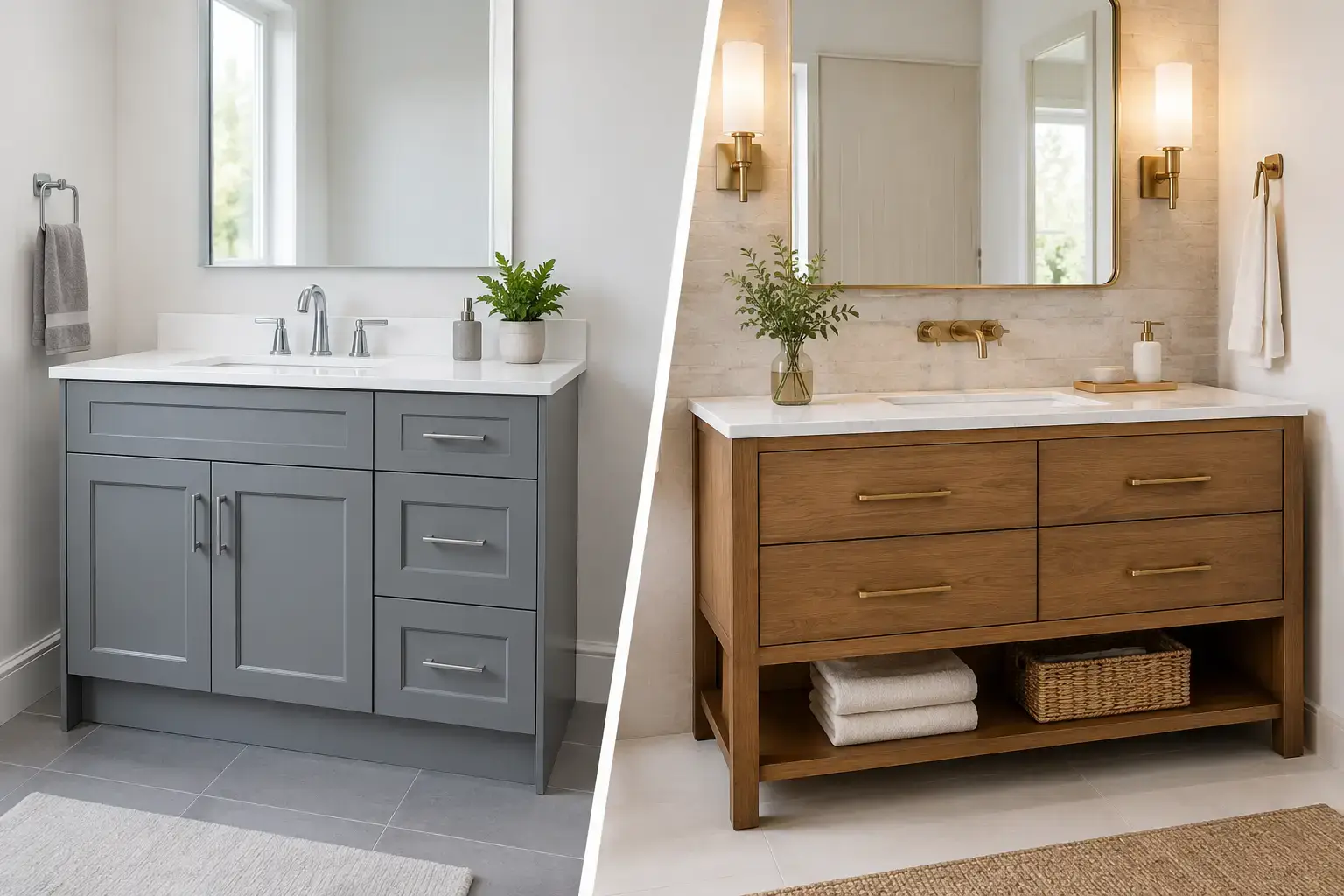
Prefabricated vanities have improved dramatically. Homeowners can find clean-lined oak, painted shaker, fluted, modern slab-front, and transitional styles in a broad range of price points. If your bathroom design is straightforward and you find a cabinet with a durable finish, solid drawer hardware, and a proportion that suits the room, prefabricated can look refined.
Its limitation is selection. A showroom sample may be attractive, but the available finish might not coordinate with your flooring, wall tile, or adjacent built-ins. Matching a specific stain, a warm off-white paint, or a distinctive brass detail is difficult with an off-the-shelf unit.
Custom gives you a more cohesive result. It can align with a home’s kitchen cabinetry, dressing area millwork, or architectural style. This matters in high-visibility primary suites, where the vanity often becomes the dominant furniture piece in the room. It also allows intentional details such as reeded panels, integrated pulls, open shelving, furniture-style legs, or a tailored stone backsplash.
Lead Time and Construction Scheduling
If your bathroom must be completed quickly, availability can favor prefabricated products. A vanity that is in stock can sometimes be delivered within days, although the countertop, sink, and any necessary modifications still need coordination. Always inspect it promptly after delivery. Damage, finish inconsistencies, and missing components can delay installation if discovered late.
Custom vanities require more lead time. Depending on the design and fabricator, production may take several weeks or longer. That lead time needs to be incorporated into the construction schedule early, particularly if the countertop template cannot be completed until the cabinet is installed.
The trade-off is predictability when the project is managed correctly. The vanity dimensions, electrical locations, plumbing rough-ins, mirror placement, and lighting can be coordinated before fabrication begins. For a full bathroom renovation, this planning often prevents costly field changes later.
Do Not Overlook Installation Requirements
Floating vanities are a common request in contemporary bathrooms, but they require adequate blocking and secure attachment to the wall framing. A heavy stone countertop, vessel sinks, or deep drawers can add substantial weight. The wall must be prepared before drywall and tile installation, not after the cabinet arrives.
Plumbing placement also matters. Many stock vanities have limited room behind drawers, while a custom cabinet can be designed around the rough plumbing location. Moving a drain or water lines is possible in many remodels, but it adds cost and may affect the schedule. In condos, building rules and access requirements can add another layer of coordination.
For Los Angeles homes, the right plan should also account for permit requirements when plumbing, electrical, ventilation, or structural work is being altered. Vanity selection is a finish decision, but it should be coordinated with the construction scope rather than treated as an isolated purchase.
When Each Option Makes Sense
Choose a prefabricated vanity when the bathroom accommodates standard dimensions, the design does not require a precise finish match, and you want to protect the budget or reduce lead time. Focus on construction quality: durable cabinet boxes, reliable drawer slides, moisture-resistant finishes, and a countertop that is appropriate for bathroom use.
Choose a custom vanity when the room has unusual dimensions, storage needs are specific, the design calls for an exact look, or a standard unit would leave visible gaps and compromises. It is particularly well suited to primary bathrooms, luxury renovations, and homes where craftsmanship and tailored proportions are central to the finished result.
A hybrid approach can also be smart. You may use a stock cabinet in a powder room or secondary bath while investing in a custom vanity for the primary suite. This puts the budget where it has the greatest daily impact.
The best vanity is the one that works cleanly with the entire bathroom, from waterproofing and plumbing to lighting, stone, and daily storage. If you are planning a bathroom remodel and want clear guidance before materials are ordered, Precise Building and Restoration can help coordinate the design, measurements, construction details, and finish selections. Call 310-606-2222 to discuss a bathroom that feels considered from the inside out.