A Los Angeles roof has to do more than look good from the street. It faces long stretches of sun, seasonal wind, occasional heavy rain, wildfire considerations, and a design standard that can be especially high in neighborhoods from Brentwood to Pacific Palisades. When comparing asphalt shingles vs. tile vs. metal roofing for Los Angeles homes, the right answer depends on your home’s architecture, structural capacity, budget, long-term plans, and local approval requirements.
A roof replacement is also rarely an isolated decision. It can affect attic ventilation, insulation, solar planning, drainage, fascia repairs, and the overall appearance of a remodel or exterior transformation. Choosing material early helps prevent costly revisions once construction is underway.
Asphalt Shingles vs. Tile vs. Metal Roofing for Los Angeles Homes
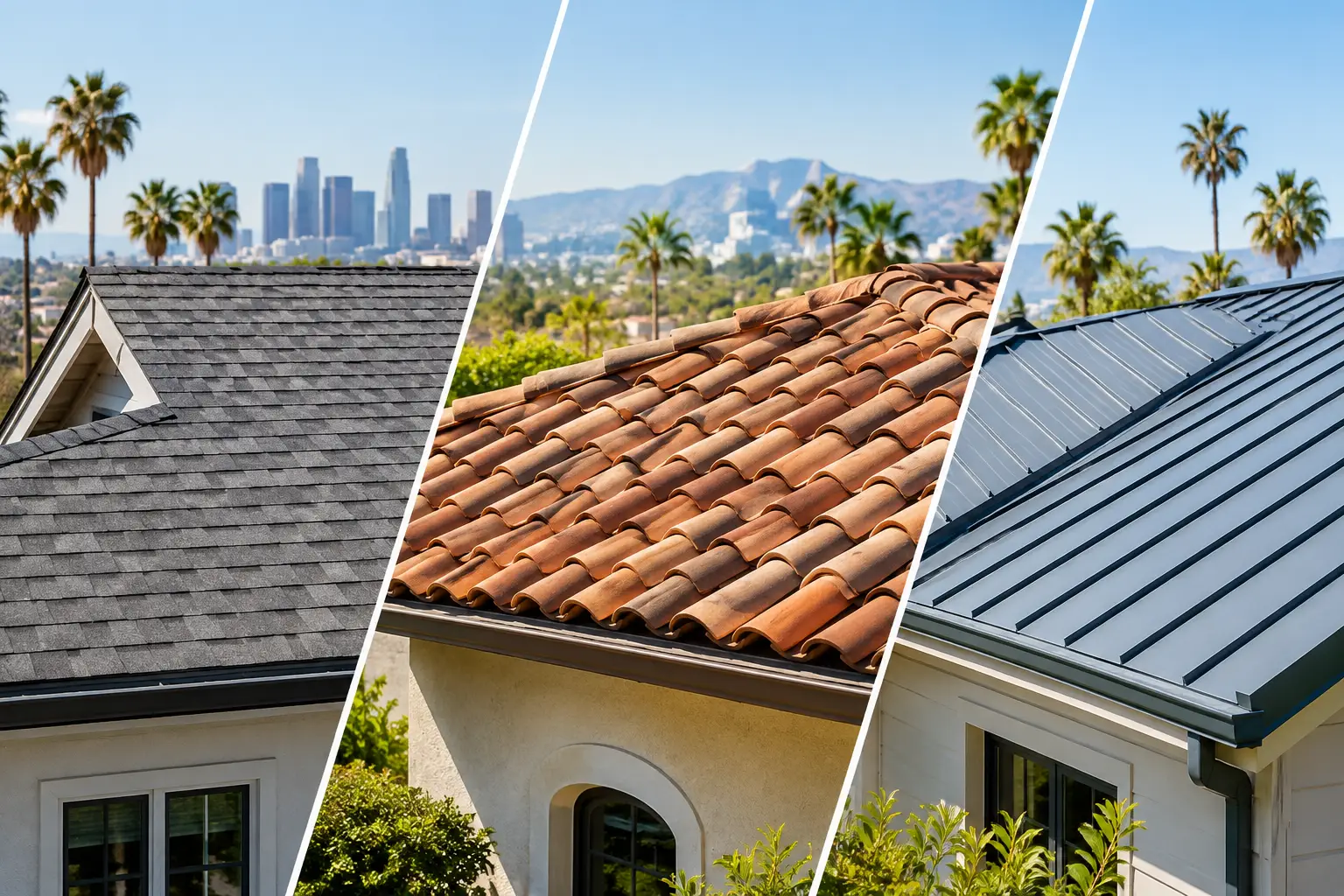
Each material can perform well when it is properly specified and installed. The difference is in the trade-offs. Asphalt shingles are typically the most accessible option, tile delivers a distinctive Southern California look and long service life, and metal offers exceptional durability with a clean, contemporary profile.
The most effective choice is not automatically the longest-lasting or the least expensive. It is the one that fits the existing structure, complements the property, meets applicable code requirements, and makes financial sense for how long you intend to own the home.
Asphalt shingles: practical, versatile, and budget-conscious
Asphalt shingles remain a popular roofing material because they provide a broad range of colors and profiles at a comparatively manageable initial cost. Architectural shingles, which are thicker and more dimensional than basic three-tab products, can create a polished appearance on traditional homes, ranch homes, cottages, and many contemporary renovations.
For Los Angeles homeowners, quality matters. A low-grade shingle roof may save money at installation but can fade, curl, or lose granules sooner under intense UV exposure. Higher-quality architectural shingles generally offer better wind resistance, a more substantial look, and stronger manufacturer warranty options.
Asphalt is also relatively lightweight. That can make it a sensible replacement material for an older home where adding the structural load of tile would require framing upgrades. It is easier to repair in localized areas than many roofing systems, and it can work well for property owners preparing a home for sale or making a targeted improvement without the cost of a premium roof.
Its limitations are straightforward. Asphalt does not usually last as long as tile or metal, particularly in high-heat conditions, and it may not deliver the architectural impact expected on certain luxury properties. Color selection is important as well. Dark shingles can absorb considerable heat, while lighter and more reflective options may support better thermal performance.
Tile: classic Southern California character with structural demands
Clay and concrete tile are deeply tied to the visual identity of Los Angeles. Spanish Revival, Mediterranean, Mission, and many upscale custom homes benefit from the texture, depth, and permanence of tile roofing. Tile can be an excellent long-term investment, especially when the home’s design calls for it.
Clay tile is valued for its color stability and authentic finish. Concrete tile can provide a similar profile in a wider range of colors and shapes, often at a lower material cost. Both options are highly durable, fire-resistant, and well suited to sunny climates when installed with the proper underlayment, flashings, and ventilation details.
The key consideration is weight. Tile is substantially heavier than asphalt shingles and many metal roofing systems. Before selecting it, a contractor should review the roof framing and confirm whether the existing structure can support the load. On a major renovation, this evaluation may be part of a broader structural and permit review. Skipping that step can create unnecessary risk and expense later.
Tile also requires knowledgeable installation. The tiles themselves may last for decades, but the waterproofing system beneath them has its own service life. Broken tiles, compromised flashing, worn underlayment, and poorly detailed penetrations can still lead to leaks. A roof that looks intact from the ground may need more than a few replacement tiles, which is why a careful inspection matters.
For homeowners rebuilding or completing a full exterior renovation, tile often makes sense when architectural authenticity, curb appeal, and long-term ownership are top priorities. It may be less practical when the home needs extensive structural reinforcement or when a lighter, more modern roofline is the desired result.
Metal roofing: durable performance with a modern edge
Metal roofing has become a serious option for Los Angeles homes, particularly for modern custom builds, hillside properties, and remodels with clean architectural lines. Standing-seam metal roofs offer a crisp, tailored appearance, while metal shingles and stone-coated metal products can suit more traditional designs.
A properly installed metal roof is lightweight compared with tile, highly durable, and capable of reflecting a significant amount of solar heat depending on the finish. It can be an especially appealing choice for homeowners who want a long service life, low maintenance needs, and a roof material that supports a more contemporary exterior design.
Metal is also noncombustible, but wildfire performance is not determined by roofing material alone. Vents, eaves, gutters, roof-to-wall intersections, and ember-resistant construction details all matter. Homes in or near high fire severity areas should be evaluated as a complete exterior system rather than relying on one material to solve every risk.
The primary trade-off is initial cost. Premium metal roofing typically costs more than asphalt shingles and may rival or exceed tile depending on the product and roof complexity. Installation quality is critical. Poorly placed fasteners, inadequate underlayment, or incorrect flashing can compromise even an excellent product. Noise is another common concern, though a properly insulated attic and well-built roof assembly significantly reduce sound from rain.
Metal can also expand and contract with temperature changes. Experienced installation accounts for this movement through the right panel design, clips, fastening system, and detailing. This is not an area for shortcuts.
Compare the full roof system, not just the surface material
Roofing estimates can look similar on paper while covering very different scopes of work. Before making a decision, homeowners should understand what is included beneath the visible roofing material. Tear-off and disposal, damaged sheathing replacement, underlayment, flashing, ventilation, drip edge, gutters, skylight detailing, chimney work, and permit requirements can materially affect both price and performance.
This is especially relevant in Los Angeles, where older homes may reveal concealed wood damage, outdated ventilation, or prior repairs once the existing roof is removed. A clear pre-construction scope should identify likely variables and explain how unforeseen conditions will be handled. Transparent planning is far more valuable than a low starting number that excludes essential work.
Energy performance should also be reviewed at the same time. California energy requirements, local conditions, insulation levels, attic ventilation, and the roof’s color or reflectivity can influence the best material selection. If solar panels are planned, coordinate the roofing and solar timeline. Installing a new roof first can avoid removing and reinstalling panels later.
How to choose the right roof for your property
Start with the home itself. A Spanish-style residence may lose much of its character with a roof material that does not match its architecture, while a sleek standing-seam roof can elevate a modern addition or custom home. In some communities, HOA guidelines or historic design requirements can also limit available colors and profiles.
Then consider ownership horizon. If you expect to sell in a few years, a high-quality architectural shingle roof may provide the right balance of appearance and investment. If this is a long-term home and the structure supports it, tile or metal may offer greater value over time.
Finally, account for the roof’s complexity. Multiple valleys, dormers, skylights, chimneys, low-slope transitions, and rooftop equipment all require careful detailing. A simpler roof may make a premium material more attainable, while a complex roof may demand a larger portion of the budget for labor and waterproofing regardless of material choice.
At Precise Building and Restoration, we help homeowners evaluate roofing decisions in the context of the entire property, whether the project involves restoration, a full-home renovation, or a custom build. Clear planning, sound construction details, and direct communication keep a major exterior investment moving in the right direction.
If you are considering a roof replacement or integrating roofing work into a larger renovation, call Precise Building and Restoration at 310-606-2222. A careful assessment now can protect your home, support its design, and prevent avoidable construction decisions later.