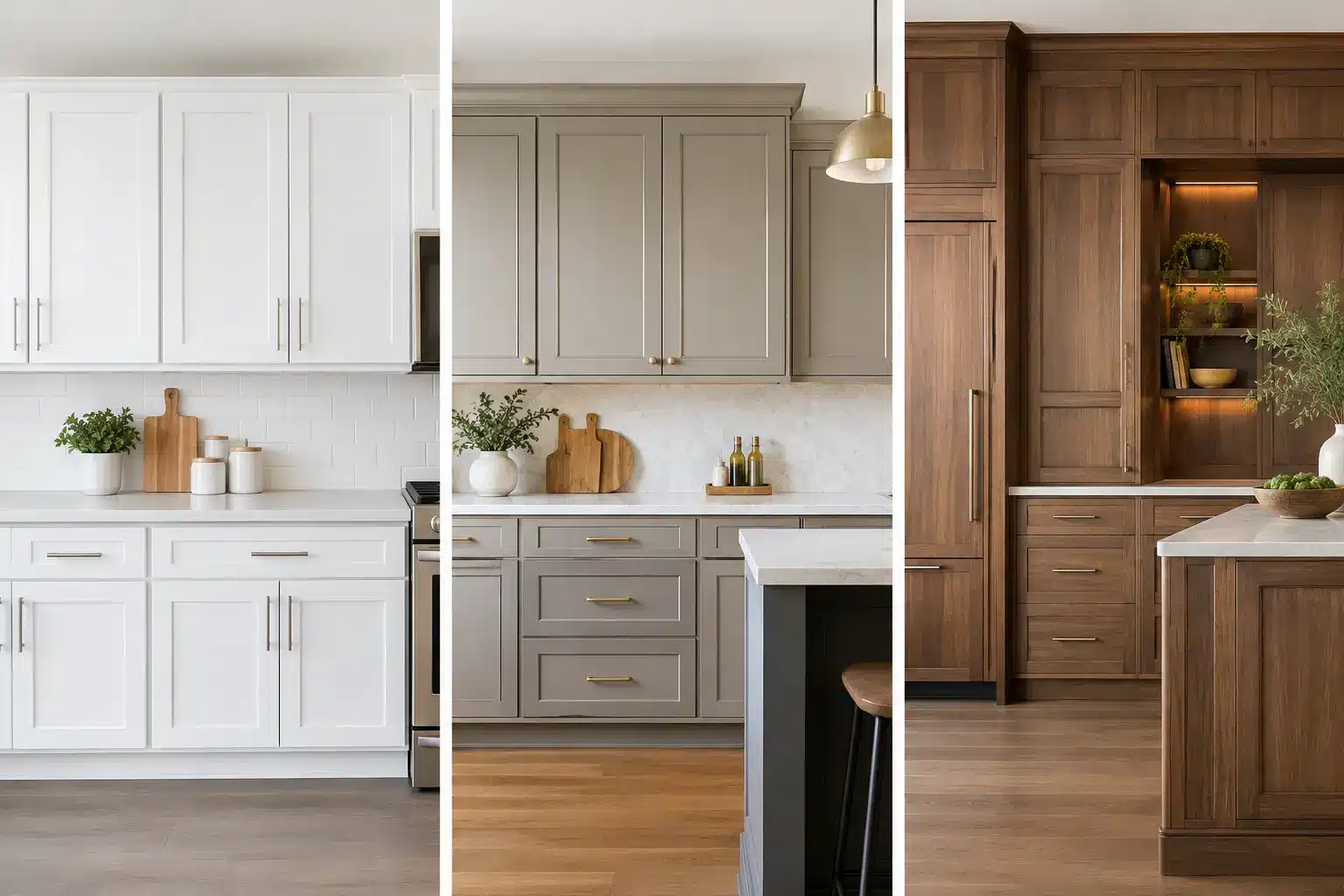
A cabinet decision made early can protect your kitchen remodel schedule. A cabinet decision made casually can affect the layout, appliance placement, finish selections, and budget long after demolition begins. When comparing stock vs. semi-custom vs. custom kitchen cabinets: cost, quality, and lead time, the right answer is rarely about choosing the most expensive option. It is about selecting cabinetry that fits your home, design priorities, and construction timeline.
For Los Angeles homeowners, that decision can be especially consequential. Older homes may have walls that are not perfectly square, luxury properties may call for furniture-grade finishes, and condominium remodels can require careful delivery and installation coordination. Understanding the practical differences before finalizing plans helps keep the project moving with fewer compromises.
Stock vs. Semi-Custom vs. Custom Kitchen Cabinets
The three categories describe how much flexibility you have over cabinet dimensions, materials, finishes, and details. They also affect how quickly cabinets can be ordered, delivered, and installed.
Stock cabinets: fastest and most budget-conscious
Stock cabinets are manufactured in standardized sizes, typically in set width increments and a limited range of heights and depths. They are produced in volume, which makes them the most accessible option in terms of upfront cost and availability.
A stock cabinet line can be a sound choice for a rental property, a straightforward galley kitchen, a garage conversion, or a remodel where speed matters more than highly specific design details. If your kitchen layout works cleanly with standard cabinet widths, stock cabinetry can deliver a polished result without the price or wait associated with made-to-order products.
The trade-off is flexibility. Stock lines usually offer fewer door styles, wood species, paint colors, interior accessories, and trim options. A 33-inch opening may need a 30-inch cabinet and filler panels rather than a cabinet built precisely to fit the space. Those fillers can look intentional when planned well, but they are not the same as a fully tailored installation.
Quality also varies widely among stock manufacturers. Some use durable plywood boxes, solid wood doors, and reliable hardware. Others use thinner materials, lower-grade particleboard, and basic drawer slides. The category alone does not tell you whether a cabinet will perform well. Construction specifications do.
Stock cabinets are often available within days or a few weeks, depending on the supplier, finish, and local inventory. That lead time is appealing, but it should not be treated as a guarantee. Damaged pieces, backordered components, and missed measurements can still delay installation.
Semi-custom cabinets: the middle ground for most remodels
Semi-custom cabinetry starts with a manufacturer’s standard cabinet system but allows more choices in sizing, finishes, door profiles, storage features, and decorative details. Many lines can modify dimensions in small increments or offer reduced-depth, increased-height, and specialty cabinets that are not available in stock collections.
For many kitchen remodels, semi-custom cabinets provide the best balance of design freedom, quality, and budget control. Homeowners can select a style that feels personal – such as a slim shaker profile, natural white oak, painted inset-look doors, or an integrated appliance panel – without paying for every cabinet to be fabricated from scratch.
This option is particularly useful when a kitchen has a few challenging conditions rather than a completely unconventional layout. Perhaps the ceiling height is taller than standard, a pantry must fit beside an existing opening, or an island needs specific drawer storage. Semi-custom options can often solve those issues while keeping the cabinet package within a more predictable range.
Lead times commonly fall between stock and fully custom cabinetry. Depending on the manufacturer and finish, homeowners should generally plan for several weeks to a few months from final approval to delivery. Specialty finishes, custom paint matches, and complex accessory packages can extend that timeline.
The quality range is broad here as well. Look beyond the showroom door sample. Ask about box construction, drawer-box material, joinery, hinge and slide brands, finish durability, warranty coverage, and how replacement parts are handled. A well-built semi-custom line can offer excellent long-term performance when it is properly specified and installed.
Custom cabinets: built around the room, not the catalog
Custom cabinets are designed and fabricated to suit the exact dimensions and requirements of a specific project. This level of control allows for virtually any cabinet width, depth, height, wood species, finish, door profile, storage configuration, or architectural detail.
Custom cabinetry makes the most sense when the kitchen itself demands it. Historic homes, high-end residences, compact kitchens with irregular walls, and spaces with unusual ceiling lines often benefit from cabinets that are built to fit rather than adjusted with fillers. It is also a strong option when the design includes a furniture-style island, integrated refrigeration, concealed appliance garages, specialty veneer matching, or detailed trim that must align with adjacent millwork.
The quality potential is the highest, but custom is not automatically superior. It depends on the cabinetmaker’s standards, shop capacity, engineering, finishing process, and installation team. High-quality custom cabinetry should use stable materials appropriate to the design, durable hardware, precise joinery, and finishes suited to a working kitchen. A beautiful sample is not enough – the full execution matters.
Custom cabinets generally require the longest lead time. Design development, shop drawings, material ordering, fabrication, finishing, delivery, and installation all take time. Homeowners should expect a process measured in months, not weeks. Projects involving specialty wood, hand-applied finishes, or extensive integrated details may take longer.
That timeline can be worthwhile when cabinetry is central to the home’s value and daily use. Still, it requires disciplined planning. Cabinet design must be coordinated early with appliances, plumbing, electrical, lighting, countertops, flooring, and wall conditions to avoid expensive field changes.
What Cabinets Really Cost
Cabinet pricing is not limited to the number on a quote. The installed cost includes design, delivery, assembly when applicable, installation, fillers and panels, trim, hardware, modifications, and coordination with countertop templating. In a full kitchen remodel, plumbing relocation, electrical upgrades, wall repairs, flooring, and appliance requirements can have as much impact on the total investment as the cabinets themselves.
As a general rule, stock cabinets have the lowest material cost, semi-custom cabinets sit in the middle, and custom cabinets carry the highest upfront investment. But the gap can narrow when a stock layout requires extensive fillers, site-built modifications, or multiple workarounds to create the look and function you want.
A semi-custom package may cost more initially yet prevent compromises that would be difficult to correct later. Conversely, a fully custom package may not be the best use of budget when a well-designed semi-custom line meets the layout and finish goals. The objective is not to buy more cabinet than the project needs. It is to avoid under-specifying the component you will open, close, clean, and rely on every day.
How Quality Shows Up After Installation
Cabinets are often judged by their doors, but long-term quality is found in the parts you do not immediately see. Cabinet boxes should be square and securely assembled. Drawer boxes should operate smoothly under weight. Hinges and slides should be adjustable and rated for the intended use. Finished panels, exposed ends, and interior surfaces should hold up to cleaning, humidity, and normal kitchen activity.
Installation quality is equally important. Even premium cabinets can look poor if they are not leveled, securely fastened, properly scribed to walls, and aligned with adjacent finishes. Cabinet installation also sets the stage for countertops. A cabinet run that is out of level can complicate stone templating and create avoidable issues at backsplashes, appliance openings, and islands.
For that reason, homeowners should evaluate cabinetry as part of the complete construction plan. The best cabinet category can still underperform when design, measurement, delivery, and installation are handled by disconnected parties.
Choose Based on Your Project Priorities
Choose stock cabinets when the layout is straightforward, the budget is tightly controlled, and quick availability is a priority. Choose semi-custom cabinets when you want meaningful design choices and better-fit solutions without committing to a fully bespoke process. Choose custom cabinets when the room, architecture, finish requirements, or storage plan demand precision that standard sizes cannot provide.
It also depends on timing. A fast-moving remodel may favor available stock or semi-custom products, while a planned whole-home renovation can accommodate custom fabrication. If you are rebuilding a kitchen after damage or coordinating a larger renovation, the cabinet lead time should be established before construction milestones are promised.
At Precise Building and Restoration, cabinet decisions are coordinated with the full kitchen plan, including layout, permits when needed, appliances, finishes, and installation sequencing. A clear plan at the start gives you more control over the result and fewer surprises during construction. To discuss the cabinet approach that fits your home and timeline, call 310-606-2222.