A backyard can look simple on a wish list: a pool, a covered patio, new hardscape, better lighting, and landscaping that finally fits the home. On an active construction site, those elements must be designed, approved, sequenced, built, inspected, and finished in the right order. So, how long does a complete backyard renovation take? For most Los Angeles homeowners, plan on roughly four to eight months from first design conversation to final completion. Larger or more regulated projects can take nine to 12 months or longer.
The construction phase is only part of the schedule. Design decisions, permitting, material lead times, site conditions, and the scope of work all affect when you can use the finished space. A clear plan early on is the best way to protect both the timeline and the quality of the result.
How Long Does a Complete Backyard Renovation Take in Los Angeles?
A straightforward backyard update without a pool or major structural work may take eight to 14 weeks after plans are finalized. Think new pavers, drainage improvements, a patio cover, lighting, planting, irrigation, and a built-in barbecue with limited utility changes.
A complete backyard transformation with a pool, spa, outdoor kitchen, retaining walls, significant grading, a cabana, or an ADU-related connection often requires six to 12 months overall. That range includes pre-construction work, city review, construction, inspections, and final finish details.
Los Angeles timelines are not determined by square footage alone. A compact hillside yard in Bel Air or Pacific Palisades can require more engineering and access planning than a larger, flat lot in another neighborhood. Coastal properties may also involve additional review considerations. The more a project changes drainage, structures, gas, electrical service, or property setbacks, the more coordination it requires.
A Realistic Backyard Renovation Timeline
Design and scope development: 2 to 6 weeks
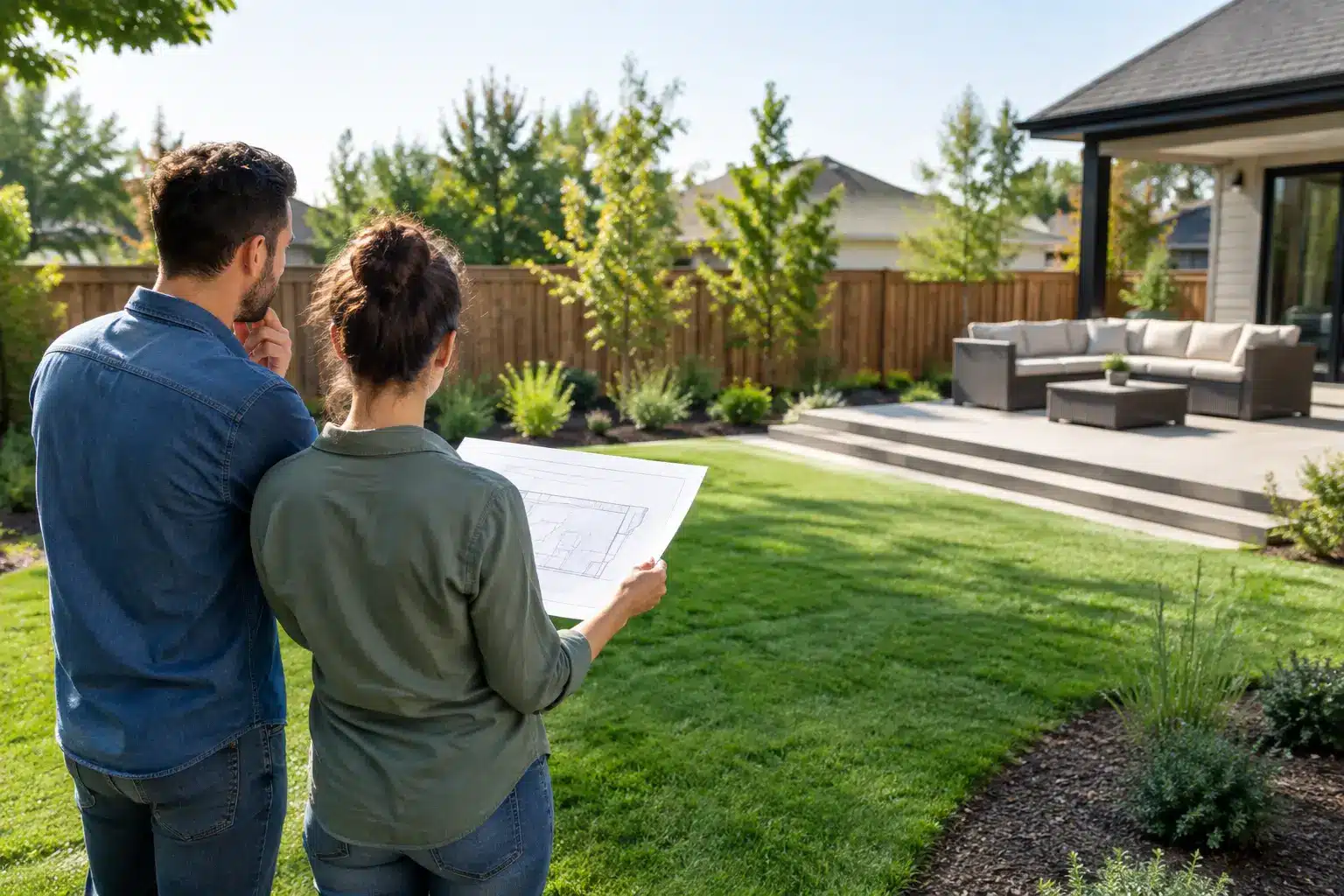
The first stage turns ideas into a buildable scope. This is where homeowners decide how the yard needs to function: entertaining, family use, privacy, outdoor cooking, poolside relaxation, or improved resale appeal. It is also the right time to set priorities if the wish list exceeds the intended investment.
A professional design-build team can develop CAD concepts, identify likely code concerns, review access limitations, and help organize selections before construction begins. Early decisions on layout, materials, appliances, lighting, and finishes reduce the chance of costly changes later.
For a simple hardscape refresh, this stage may move quickly. For a custom pool, detached structure, or multi-level backyard, it can take longer because structural, civil, and pool engineering may be needed.
Permits and city approvals: 4 to 16 weeks or more
Permitting is often the least predictable part of a complete backyard renovation. Some improvements may not require permits, while pools, patio covers, retaining walls, gas lines, electrical upgrades, plumbing, grading, and permanent outdoor structures commonly do.
Plan review time depends on the jurisdiction, the completeness of the submitted plans, correction cycles, and whether the property has special conditions. Hillside, coastal, historic, or high-fire-severity areas can involve additional requirements. A property with limited access or older utility infrastructure may also need more detailed planning.
This is where an experienced licensed general contractor adds real value. Proper plans and coordinated submissions do not eliminate every city delay, but they reduce avoidable corrections and keep responsibility with one accountable project team.
Pre-construction and material ordering: 2 to 6 weeks
Once plans are approved or sufficiently advanced, crews can schedule work, order long-lead materials, verify product availability, and prepare the site. Custom gates, specialty stone, outdoor appliances, pool equipment, tile, cabinetry, and lighting can affect the calendar.
Homeowners sometimes assume material selection can wait until the project is underway. That approach can create gaps in the schedule, particularly with custom finishes. Selecting key materials before demolition gives the construction team a better path to maintain momentum.
Demolition, grading, and underground work: 2 to 5 weeks
The visible transformation begins with demolition and site preparation. Existing concrete, decking, landscaping, old utility lines, or deteriorated structures may need removal. The team then establishes proper grading and drainage before installing new foundations or finished surfaces.
Underground work follows, including plumbing, gas, electrical conduit, pool lines, drainage systems, and irrigation sleeves. These systems are largely hidden once the project is complete, but they are central to a backyard that performs correctly through seasonal rain and daily use.
Unexpected conditions can appear at this point. Roots, buried concrete, unmarked utility lines, unstable soil, or drainage issues may require adjustments. A responsible contractor will explain the condition, the recommended solution, and any effect on schedule or cost rather than covering up a problem to move faster.
Structural construction and major installations: 4 to 10 weeks
This phase may include pool excavation and construction, retaining walls, footings, patio covers, pergolas, outdoor kitchens, fire features, masonry, decking, and hardscape installation. The sequence matters. For example, utility rough-ins must be complete before many surfaces can be installed, while inspections may need to occur before walls are closed or concrete is poured.
A pool can add substantial time, particularly when paired with a spa, custom tile, automation, or complex site access. Concrete curing, waterproofing, equipment installation, inspections, and finish application each require their own schedule. Rushing these steps risks workmanship problems that are far more expensive than a few additional weeks.
Finishes, landscaping, and closeout: 2 to 6 weeks
The final stretch brings the project together: lighting fixtures, appliances, paint or stain, planting, irrigation adjustments, turf, gates, furnishings, final pool startup, and cleanup. It can feel like the project is nearly done long before these details are complete, but finishing work is what creates a polished, usable outdoor environment.
Landscaping is usually scheduled after heavy construction so new plants and finished areas are not damaged by equipment. Weather can affect planting, concrete work, coatings, and other exterior finishes, especially during periods of rain.
What Usually Extends the Schedule?
The biggest delays tend to come from changes made after construction starts, incomplete plans, unapproved materials, and hidden site conditions. Homeowners can avoid much of this by confirming the layout, finish direction, appliances, and budget before demolition.
Access is another major factor. A backyard with narrow side-yard access may require smaller equipment, more manual labor, or special material handling. Busy streets, shared driveways, neighboring properties, and strict HOA rules can also affect daily operations.
Communication matters just as much. When decisions are delayed, crews may have to move to another task or wait for a selection. A well-managed project keeps homeowners informed before a decision becomes urgent and gives them a realistic view of what is happening next.
How to Keep Your Backyard Project Moving
Start with a complete scope rather than collecting separate bids for disconnected pieces of work. A patio may seem independent from landscaping, but drainage, electrical, gas, and future pool plans can all influence how it should be built.
Choose a contractor who can manage design, permitting, trades, inspections, and finishing work under one coordinated process. This reduces the handoffs that commonly cause confusion between designers, permit expediters, subcontractors, and suppliers.
It also helps to make major selections early and reserve a contingency for conditions that cannot be fully known before excavation. A realistic schedule is not one that promises the fastest possible completion date. It is one built around the work required to deliver a durable, code-conscious, well-finished backyard.
A complete backyard renovation should feel planned, not rushed. Precise Building & Restoration can help you evaluate the scope, develop a clear construction path, and manage the details from initial CAD concepts through final site completion. Call Us Now at 310-606-2222 to discuss your backyard project and receive practical guidance on its expected timeline.