A new patio, synthetic lawn, or concrete entertaining area can transform a backyard quickly. But the surface everyone sees is only as reliable as the drainage system beneath and around it. That is why backyard drainage must be planned before pavers, turf, or concrete – not treated as a correction after the final installation is complete.
For Los Angeles homeowners, drainage planning is especially relevant because many properties combine sloped lots, compacted soil, hillside conditions, aging structures, and limited space between the backyard and the home. A beautiful hardscape project should direct water with intention, protect the structure, and remain usable after a storm. Getting that sequence right avoids expensive demolition and gives every finish a better chance to perform as designed.
Why Backyard Drainage Must Be Planned Before Pavers, Turf, or Concrete
Pavers, artificial turf, and concrete all change how rainwater moves across a property. Natural soil absorbs some rainfall, though absorption depends on soil type, compaction, slope, and prior moisture. Finished hardscape and turf systems can reduce that absorption or redirect water toward areas that were never designed to handle it.
Once a surface is installed, correcting the drainage often means removing it. A contractor may need to lift pavers, cut and demolish concrete, remove turf, excavate base material, install drainage components, rebuild the grade, and reinstall the finished surface. That is a far more disruptive and costly process than including drainage during the original backyard design.
Planning first also keeps design decisions honest. A homeowner may prefer a perfectly level patio or a turf area that reaches every edge of the yard. Those choices may be possible, but they need to work with proper slope, drainage inlets, perimeter details, and the existing elevation at doors, walls, planters, and neighboring properties.
Water Does Not Need a Big Storm to Cause Damage
Backyard drainage failures are not always dramatic floods. More often, the warning signs are subtle: water that pools along a patio edge, soggy turf after irrigation, staining on a retaining wall, pavers that begin to settle, or dampness near the rear of the home.
Repeated moisture is the real concern. Water can soften or wash out base materials below pavers, contribute to movement in poorly prepared soil, and create conditions that shorten the life of finishes. Near a house, improper drainage can increase the risk of water intrusion, deterioration at exterior walls, and moisture-related issues around foundations or crawl spaces.
Concrete has its own limitations. It is durable, but it is not a drainage solution by itself. Concrete must be placed with a deliberate pitch so water moves away from the home and toward an approved drainage path. If a new slab is poured too high at a doorway or too flat across a large area, the finished result may look clean on day one while creating a persistent water-management problem over time.
Grading Is the Foundation of the Drainage Plan
Drainage begins with grading, which is the intentional shaping of the site so water flows where it should. Before selecting surface materials, the construction team should assess existing elevations, visible low spots, drainage patterns, roof runoff, irrigation zones, retaining walls, and the location of doors and foundations.
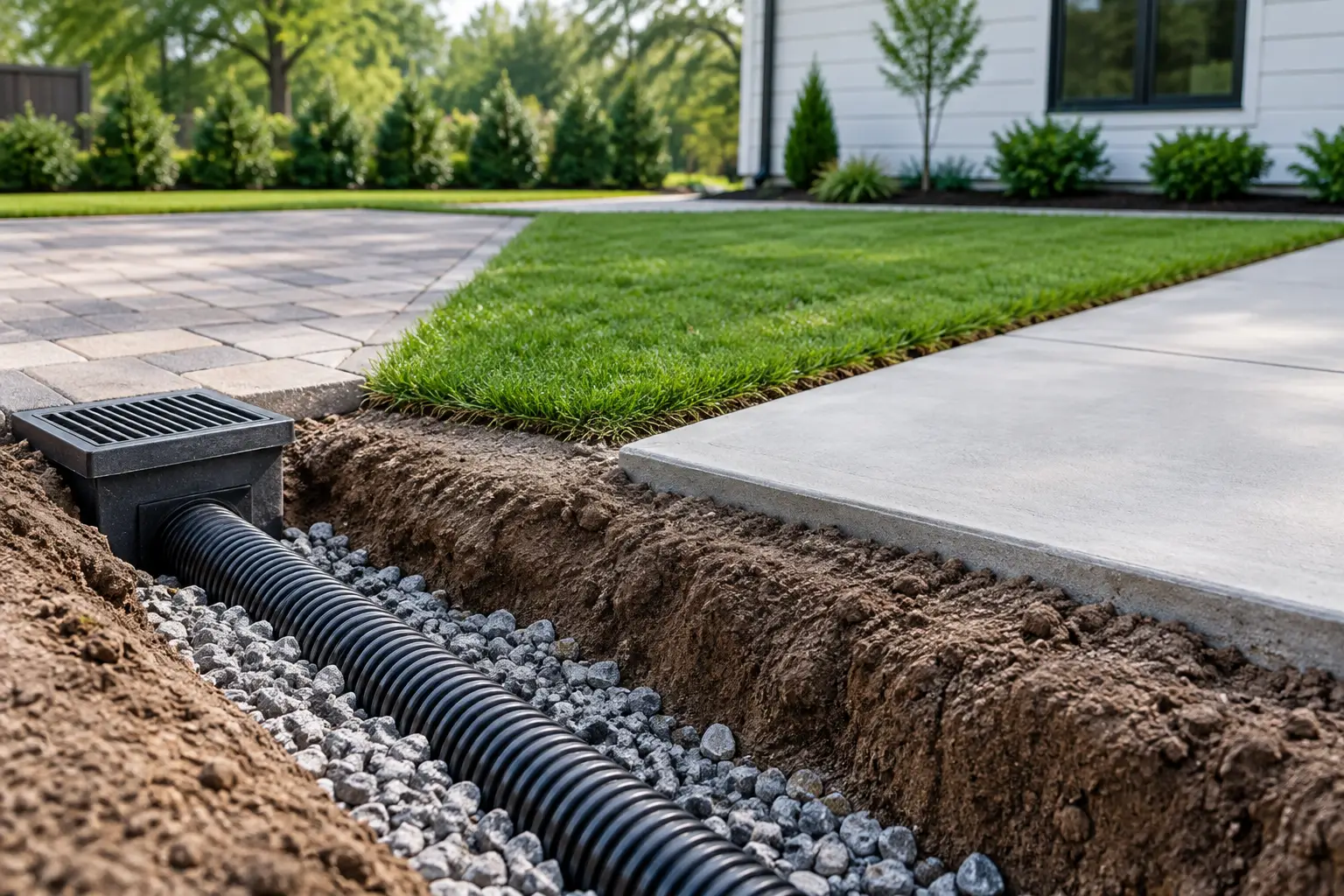
The goal is not simply to make the yard slope in one direction. It is to establish a practical path for water that works with the property. In many backyards, that may involve a combination of subtle surface slope, area drains, channel drains, catch basins, swales, and properly routed drain lines.
The right approach depends on the site. A compact backyard in Santa Monica may require careful coordination around tight property lines and existing hardscape. A hillside property in Bel Air or Pacific Palisades may need more extensive grading and retaining-wall considerations. Homes with clay-heavy or compacted soil can shed water quickly instead of absorbing it, making collection and conveyance even more important.
Finished Elevations Need to Be Set Early
Every backyard surface has a finished elevation – the final height of the pavers, turf, concrete, decking, or planter edge. Those heights must be determined before construction begins because they affect drainage slope and transitions throughout the yard.
For example, a patio surface should not sit so high that it compromises clearance at a door threshold or directs water back toward the house. Artificial turf needs an appropriately prepared base and drainage strategy below it. Pavers need a stable, correctly graded base so water does not collect underneath and cause settlement.
Small elevation mistakes can create large downstream consequences. A difference of an inch or two may determine whether water moves toward a drain, sits against a wall, or enters a low point beside the home.
Each Backyard Material Has Different Drainage Requirements
Pavers, turf, and concrete can all be excellent choices. They simply need different installation details.
Pavers have joints that may allow some water to pass through, depending on the paver system and joint material. That does not mean the base can be ignored. The compacted base must be graded, stable, and designed to move water appropriately. If water becomes trapped below the pavers, the surface can shift, settle, or develop uneven areas.
Artificial turf generally requires a carefully prepared, compacted base with an appropriate drainage layer. It can look like a simple finish, but the subgrade and edge conditions matter greatly. Turf installed over an improperly graded base may develop soft spots, ponding, odors, or premature wear, particularly where pets, irrigation, and runoff are involved.
Concrete is often selected for its clean appearance and low-maintenance appeal. However, it is largely impermeable and requires precise pitch. Drainage channels may be needed where a broad slab meets the home, a pool deck, a retaining wall, or another surface that creates a confined low point.
Roof Runoff and Irrigation Must Be Part of the Conversation
A backyard drainage plan should account for more than rain falling directly on the ground. Roof runoff can send a surprising volume of water into a small area, especially when downspouts discharge beside a patio, planter, or turf zone. That water needs a controlled route that does not undermine hardscape or saturate soil next to the structure.
Irrigation also matters. Overspray and broken sprinkler heads can create chronic wet areas that resemble a grading problem. Drip lines near planters, turf irrigation schedules, and drainage placement should be coordinated so landscaping supports the system rather than overwhelms it.
This is where end-to-end project oversight makes a difference. The landscape layout, hardscape plan, drainage design, and construction sequence should be reviewed together instead of handled as separate decisions by unrelated trades.
Drainage Should Be Designed Before the Jobsite Is Closed Up
The most efficient time to install drain lines, basins, gravel layers, and underground connections is after demolition and rough grading but before base materials and finished surfaces are installed. Access is open, equipment can work efficiently, and the team can verify slopes before the project becomes visually finished.
A well-managed process typically starts with a site review and a clear plan for water movement. If the project includes significant grading, retaining walls, drainage connections, or structural changes, permits and local requirements may also need to be evaluated early. Addressing those details upfront helps avoid last-minute changes once materials have been ordered or crews are ready to pour concrete.
At Precise Building & Restoration, a licensed general contractor can coordinate the design, grading, drainage, hardscape, and finish work as one project. That means fewer handoffs, clearer accountability, and a backyard built with the conditions below the surface in mind.
Do Not Let a Finished Backyard Hide an Unfinished Drainage Problem
The best backyard projects make drainage nearly invisible. Water moves where it should, surfaces remain stable, doors and walls stay protected, and the space is ready to use when the weather clears. That result is not accidental. It comes from setting elevations, planning runoff, and installing the drainage system before the pavers, turf, or concrete make changes difficult.
If you are considering a backyard transformation in Los Angeles, begin with the site conditions before choosing the final finish. Call Precise Building & Restoration at 310-606-2222 to discuss a drainage-conscious backyard plan that protects your home and supports the design you want.