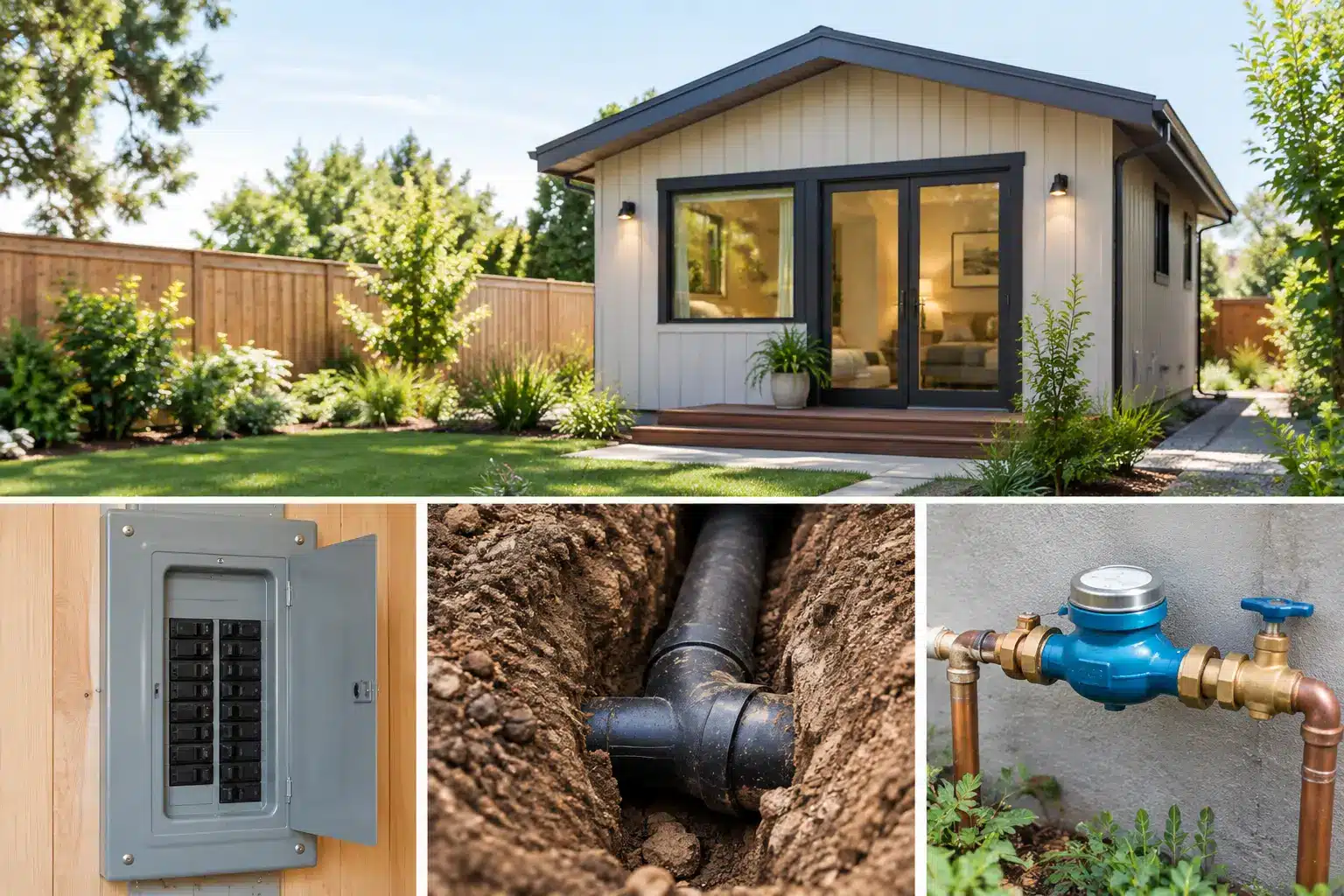
Before a garage wall comes down or an ADU foundation is poured, the most consequential work may be underground or inside your existing electrical equipment. Homeowners often ask, will your ADU require a new electrical panel, sewer line, or water service? The honest answer is that it depends on the capacity and condition of your property’s existing systems, the ADU design, and what city and utility reviews reveal.
A well-planned ADU does not assume the house can simply absorb another kitchen, bathroom, laundry area, water heater, and HVAC system. It verifies the infrastructure first. That early investigation can prevent change orders, permit delays, torn-up finished landscaping, and a new unit that is limited by avoidable utility compromises.
Will Your ADU Require a New Electrical Panel?
Not every ADU needs a new main electrical panel, but every ADU needs a proper load calculation. The calculation accounts for the home’s existing electrical demand and the planned demand of the ADU, including lighting, receptacles, kitchen appliances, HVAC, laundry equipment, water heating, and any electric vehicle charging planned for the property.
Many older Los Angeles homes have 100-amp service, aging panels, limited breaker space, or panels that were never designed for the electrical loads common in a modern all-electric ADU. In that situation, a panel upgrade may be the practical and code-compliant path. A larger service can also make sense when the main house is being remodeled at the same time or when the owner expects to add solar, battery storage, a pool, or EV charging later.
A newer home with a properly sized 200-amp service may not need a service upgrade. It may only need a dedicated feeder from the main panel to a subpanel in the ADU. This is often a clean solution for a detached backyard unit because it gives the ADU organized circuit protection without requiring a separate utility service.
The distinction matters. A new subpanel and feeder are different from replacing the main panel or increasing the electrical service. The scope, cost, coordination, and utility involvement can be significantly different.
Electrical factors that change the answer
The ADU’s energy strategy has a major effect. An ADU with a gas range and gas water heater presents a different load than one using an induction range, heat-pump water heater, heat-pump HVAC, and electric dryer. All-electric designs can be efficient and desirable, but they require thoughtful electrical planning from the beginning.
Distance also matters. A detached ADU at the rear of a deep lot may require a longer trench run for electrical conduit. Hardscape, mature trees, drainage systems, and access constraints can make that work more involved. Planning the route before concrete, landscaping, and finishes are installed protects both the budget and the site.
When an ADU Needs a New Sewer Line
A new ADU bathroom and kitchen must connect to an approved sanitary sewer system. In many cases, the ADU can tie into the property’s existing private sewer lateral. That does not mean the existing line is automatically suitable.
Older properties may have clay pipe, cast iron sections, root intrusion, offset joints, cracks, or a line with limited slope. A camera inspection can reveal conditions that are impossible to see from the surface. If the existing lateral is failing or undersized for the combined use of the main home and ADU, replacing or extending the line during construction is usually more sensible than waiting for a backup after the unit is complete.
For a garage conversion, the location of the new bathroom is particularly important. If the new plumbing sits near an existing sewer connection, the work may be relatively straightforward. If the bathroom is placed far from the house sewer line, the contractor must evaluate the required pipe slope and route. Gravity drainage works best when the layout respects those physical limits.
In some situations, the desired ADU layout does not allow enough slope to reach the sewer by gravity. A sewage ejector system may be considered, but it introduces mechanical equipment and ongoing maintenance considerations. Whenever the site allows it, a conventional gravity connection is typically the simpler long-term approach.
Sewer work is not just about the ADU
A sewer upgrade can affect driveways, patios, walkways, landscaping, and the connection point toward the street. It may also require coordination with local agencies when work reaches the public right-of-way or involves a connection beyond private property. This is why utility scope should be investigated before finalizing the construction budget, not after demolition begins.
For homeowners planning a high-end backyard transformation in areas such as Brentwood, Pacific Palisades, or Beverly Hills, this coordination is especially valuable. Protecting finished hardscape and mature landscape features begins with knowing where utilities run and what condition they are in.
Does Your ADU Need a New Water Service?
Most ADUs do not automatically require a separate water service. A single existing service can often supply both the primary residence and the ADU, provided it has adequate capacity and is configured to meet current code and utility requirements.
The key question is not simply whether water reaches the backyard. It is whether the existing meter, service line, pressure, and distribution piping can reliably serve the combined fixture load. An older galvanized water line, a small meter, low pressure, or a long run to the new unit can create weak flow at showers, faucets, and appliances when the main house is also in use.
A plumbing assessment should consider the ADU’s fixture count, the existing home’s fixtures, pipe material and size, measured pressure, and the route for new hot and cold water lines. A new water service may be necessary if the existing service is inadequate, deteriorated, or if utility requirements call for an upgrade. In other cases, replacing a portion of private piping or adding a properly sized branch line is enough.
Separate metering is another decision that deserves an early conversation. A homeowner may want to track ADU water use independently for a rental unit or multigenerational arrangement. Separate utility meters can add coordination and cost, and they are not always required. The right choice depends on the owner’s operating goals, local rules, and the physical feasibility of the site.
The Best Time to Evaluate ADU Utilities
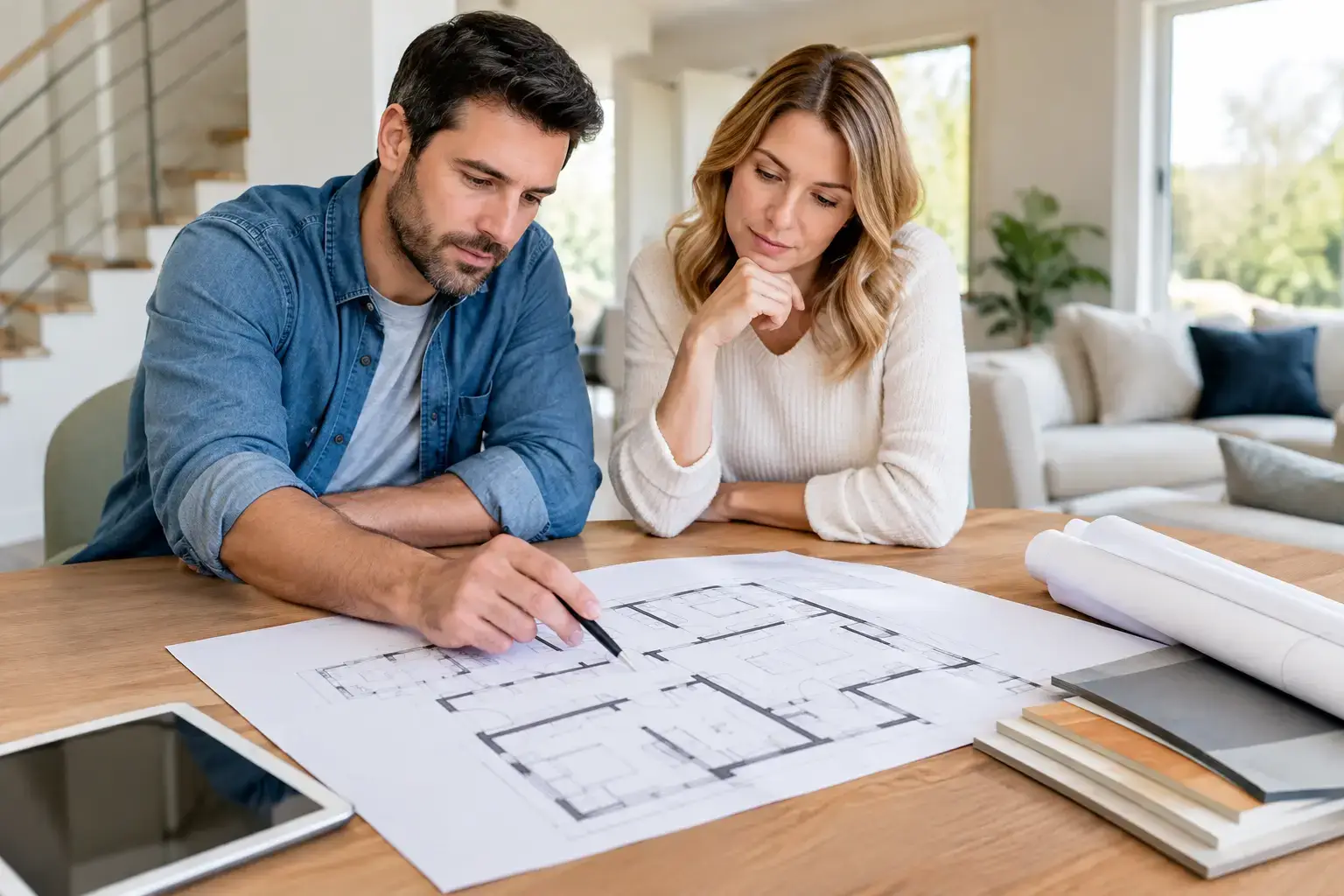
The right time is during design, before permit plans are finalized. A thorough preconstruction review typically starts with the existing electrical panel and service rating, visible plumbing conditions, utility locations, site access, and the proposed ADU floor plan. When needed, it also includes sewer camera work, electrical load calculations, utility record research, and conversations with the applicable city departments or utility providers.
This process can influence the design itself. Moving a kitchen or bathroom closer to existing utility connections may reduce trenching and simplify drainage. Selecting equipment with the electrical plan in mind can avoid an unnecessary service upgrade. Conversely, a homeowner may decide that upgrading the panel or water line now is worthwhile because it supports the property’s long-term value and future improvements.
There is no benefit to underestimating these systems to make an initial budget look smaller. A responsible ADU proposal identifies likely utility work, explains what has been verified, and clearly distinguishes allowances or unknown conditions from confirmed scope.
A Clear Utility Plan Protects the Whole Project
Electrical, sewer, and water decisions affect more than permits. They shape construction sequencing, site restoration, appliance choices, rental readiness, and the reliability of the finished ADU. The goal is not to add upgrades that are unnecessary. It is to build a unit with infrastructure that performs properly from day one.
Precise Building and Restoration can evaluate your existing conditions, coordinate design and permitting, and build an ADU with the utility work planned in the right order. For a clear assessment of your property, call 310-606-2222.