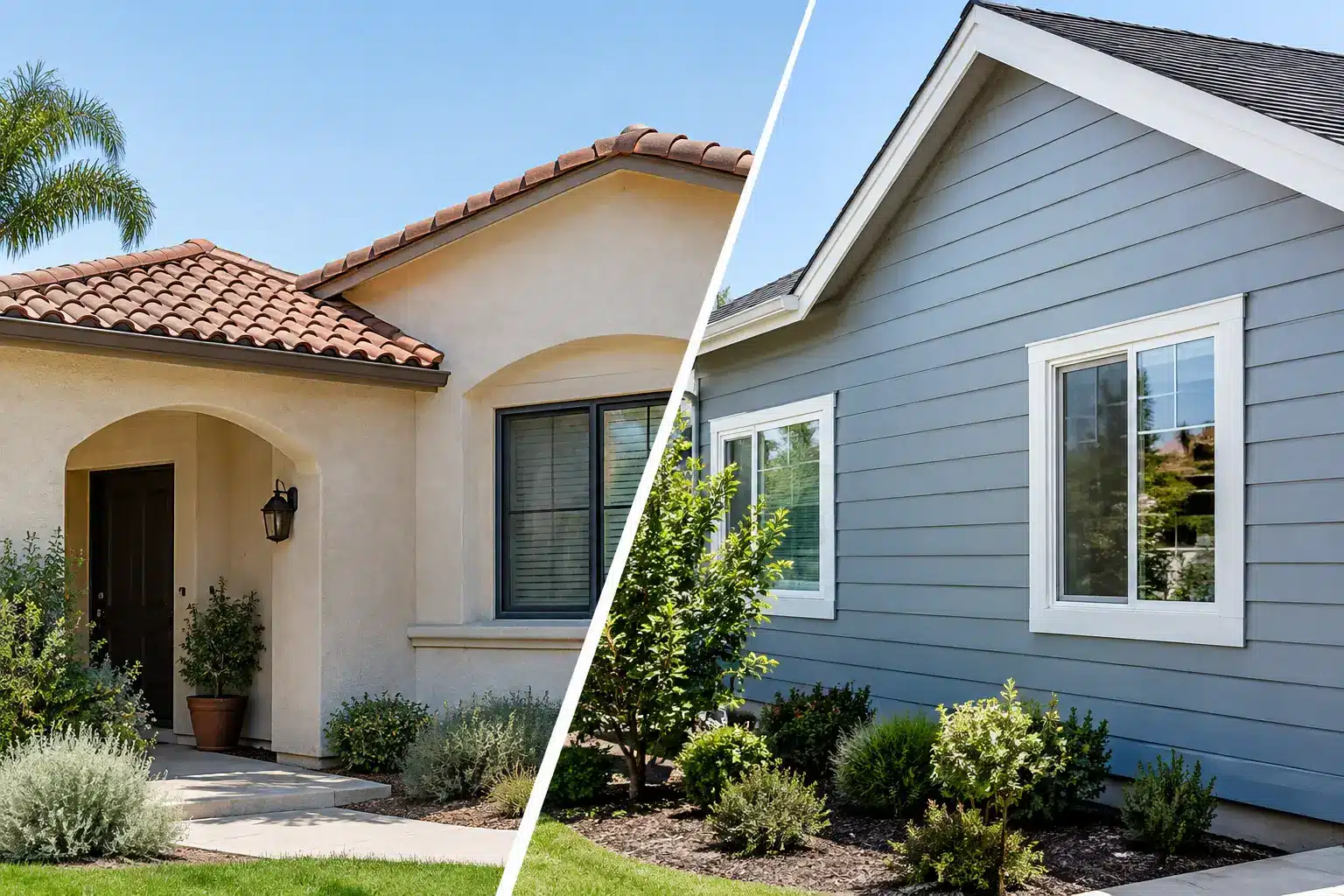
A home’s exterior has to do more in Los Angeles than make a strong first impression. It must handle intense sun, occasional heavy rain, dry-season fire concerns, changing temperatures, and the architectural character of the neighborhood. When weighing stucco vs. siding for a Los Angeles home exterior, the right answer depends on your home’s construction, design goals, maintenance expectations, and the quality of the installation behind the finished surface.
Stucco remains a defining material across Southern California, from Spanish Revival homes in Los Feliz to contemporary properties in Beverly Hills and Pacific Palisades. Siding, however, has become a compelling choice for homeowners who want texture, cleaner lines, or a more transitional and modern facade. Neither option is automatically better. The decision should be made as part of a complete exterior plan, not as a finish selection made in isolation.
Stucco vs. siding for a Los Angeles home exterior
Stucco is a cement-based exterior finish applied in layers over a reinforced base. It creates a continuous, solid-looking surface that works naturally with Mediterranean, Spanish, Mission, and many contemporary California home designs. Its familiar look is one reason it remains a leading exterior choice throughout Los Angeles.
Siding is a broader category that can include fiber cement, engineered wood, natural wood, metal, vinyl, and composite products. For higher-end residential projects, fiber cement, engineered wood, premium wood, and architectural metal are often the most relevant options. Siding is installed in individual boards or panels, giving a home visible shadow lines, texture, and more opportunities to combine materials.
The visual difference is immediate. Stucco tends to read as monolithic and sculptural. Siding adds rhythm and dimension. A clean-lined modern renovation may use smooth stucco on larger wall planes with vertical siding at an entry volume, second story, or backyard addition. This approach can give an older home a more intentional, updated composition without forcing one material to do all the work.
What Los Angeles weather asks of each material
Los Angeles does not have the freeze-thaw cycles that challenge exteriors in colder climates, but local conditions still expose weak construction details quickly. High UV exposure can fade paint and dry out sealants. Wind-driven rain can find gaps around windows, roof-to-wall intersections, and trim. Heat can cause materials to expand and contract. In hillside, coastal, and wildfire-prone areas, the stakes can be even higher.
Stucco performs well when the water management is correct
A properly built stucco system can last for decades. It is noncombustible, visually durable, and well suited to Southern California’s dry climate. It also creates a substantial exterior surface that can help reduce sound transmission, a meaningful benefit on busier streets.
The key phrase is properly built. Stucco failures are rarely just cosmetic. Cracks around windows, discoloration near wall bottoms, or persistent staining can point to moisture entering behind the finish. The visible stucco is only one part of the assembly. Flashing, weather-resistive barriers, lath, drainage provisions, sealants, and properly detailed openings matter just as much.
Hairline cracking can occur naturally over time, particularly as a house settles or moves with temperature changes. That does not always mean a full replacement is necessary. Larger cracks, recurring cracks, soft areas, or evidence of water intrusion deserve a more thorough evaluation before applying another coat of paint or patching the surface.
Siding can offer better repair access and design flexibility
Siding systems can perform exceptionally well when they include a properly designed weather barrier and drainage plane. Individual boards or panels may be easier to replace after localized damage than a large stucco wall. Siding can also make it simpler to introduce insulation upgrades or adjust exterior wall details during a major remodel, addition, or whole-home renovation.
That said, siding has more joints, transitions, and edges than stucco. Each of those locations needs careful installation. Poorly flashed trim, unsealed penetrations, incorrect fasteners, or insufficient clearances from soil and hardscape can shorten the life of the system. On a premium home, the alignment of every board, reveal, corner, and window detail also affects the final result.
For coastal areas such as Santa Monica, Venice, Marina del Rey, and Malibu, material selection and fastening details deserve particular attention. Salt air and moisture can affect certain metals, coatings, and fasteners over time. A material that looks ideal in a showroom still needs to be specified for its exact location and exposure.
Cost: look beyond the price per square foot
Initial material cost is only one part of the budget. Exterior work often reveals conditions that must be corrected before a new finish is installed: damaged sheathing, aging windows, dry rot, missing flashing, outdated electrical penetrations, or poor drainage at the base of the walls.
Stucco can be cost-effective for broad, uninterrupted wall surfaces, especially when a home already has a stucco exterior in serviceable condition. A repair-and-recoat strategy may be appropriate when the underlying wall assembly is sound and the design does not call for major changes.
Siding costs vary widely by material. Fiber cement and engineered wood can provide a refined appearance with predictable maintenance requirements, while natural wood and specialty metal systems may carry a higher material and labor cost. Complex layouts, custom trim, mitered corners, mixed cladding, and high-elevation work can add substantially to the installed price.
The better question is not, “Which material costs less?” It is, “What scope will give this home a durable exterior and support the renovation goals?” If you are replacing windows, changing rooflines, adding an ADU, enclosing a patio, or remodeling the facade, coordinating those scopes at once can prevent expensive rework later.
Maintenance and long-term appearance
Stucco needs periodic inspection, crack repair, caulking at penetrations, and repainting as coatings age. Lighter colors can reduce heat absorption, though every paint system should be chosen for the specific stucco condition and exposure. Avoid treating repainting as a cosmetic-only task. Surface preparation and repairs determine whether the new finish will hold up.
Siding maintenance depends heavily on the product. Painted fiber cement and engineered wood may need repainting over time, while wood requires closer attention to coatings, joints, and moisture exposure. Metal and some composite products can reduce certain maintenance demands, but they are not maintenance-free. Sealants, flashings, and the perimeter of windows and doors still need regular inspection.
For homeowners who want the lowest amount of visible change over time, material color and finish selection matter. A very dark exterior can make fading, dust, and surface imperfections more noticeable under strong Los Angeles sun. Highly textured stucco can hide minor irregularities, while smooth stucco and modern panel siding demand a more exacting substrate and installation.
Fire resistance, permits, and neighborhood requirements
Fire performance should be part of every exterior conversation, especially for homes near hillside and high fire severity areas. Traditional cement stucco is noncombustible. Some siding products offer strong fire ratings, while others may have restrictions or require specific assemblies depending on local code requirements and property location.
Permits may be required when exterior work involves structural repairs, new windows, altered openings, additions, substantial re-cladding, or changes that affect energy compliance and fire requirements. Historic preservation rules, homeowner association standards, and local design review requirements can also influence what is allowed. This is particularly relevant when updating character homes or properties in architecturally sensitive neighborhoods.
A licensed general contractor should evaluate the exterior as a system and coordinate the design, permit path, waterproofing details, and finish installation. Choosing a beautiful material without addressing those layers can create problems that are far more costly than the original cladding decision.
When stucco is the stronger choice
Stucco is often the best fit when you want to preserve a home’s California character, maintain a cohesive look with surrounding architecture, or create a clean, continuous facade. It works especially well for Spanish and Mediterranean homes, as well as contemporary designs with broad simple forms. It can also be a smart choice when an existing stucco exterior is structurally sound and needs restoration rather than wholesale replacement.
When siding is the stronger choice
Siding can be the better option when you want more visual depth, a warmer material presence, or a distinctly modern or transitional exterior. It is also effective for additions, second-story expansions, backyard-facing elevations, and accent volumes where contrast improves the overall composition. Fiber cement and engineered wood can be practical choices for homeowners seeking the look of painted wood with more predictable durability.
Many of the most successful Los Angeles exterior renovations use both materials strategically. Stucco may anchor the main body of the home, while siding highlights a new addition, entry, garage volume, or upper level. The result feels designed rather than decorated.
Make the decision with the full wall assembly in mind
The exterior material is the visible finish, but the long-term performance comes from what is behind it. Before committing to stucco or siding, assess the condition of the existing walls, window and door details, roof drainage, site grading, and planned exterior improvements. A coordinated plan protects the investment, improves curb appeal, and avoids reopening finished work when another issue appears.
A well-designed exterior should look right on the day it is completed and continue performing through years of sun, weather, and everyday use. For clear guidance on your Los Angeles exterior renovation, call Precise Building & Restoration at 310-606-2222.