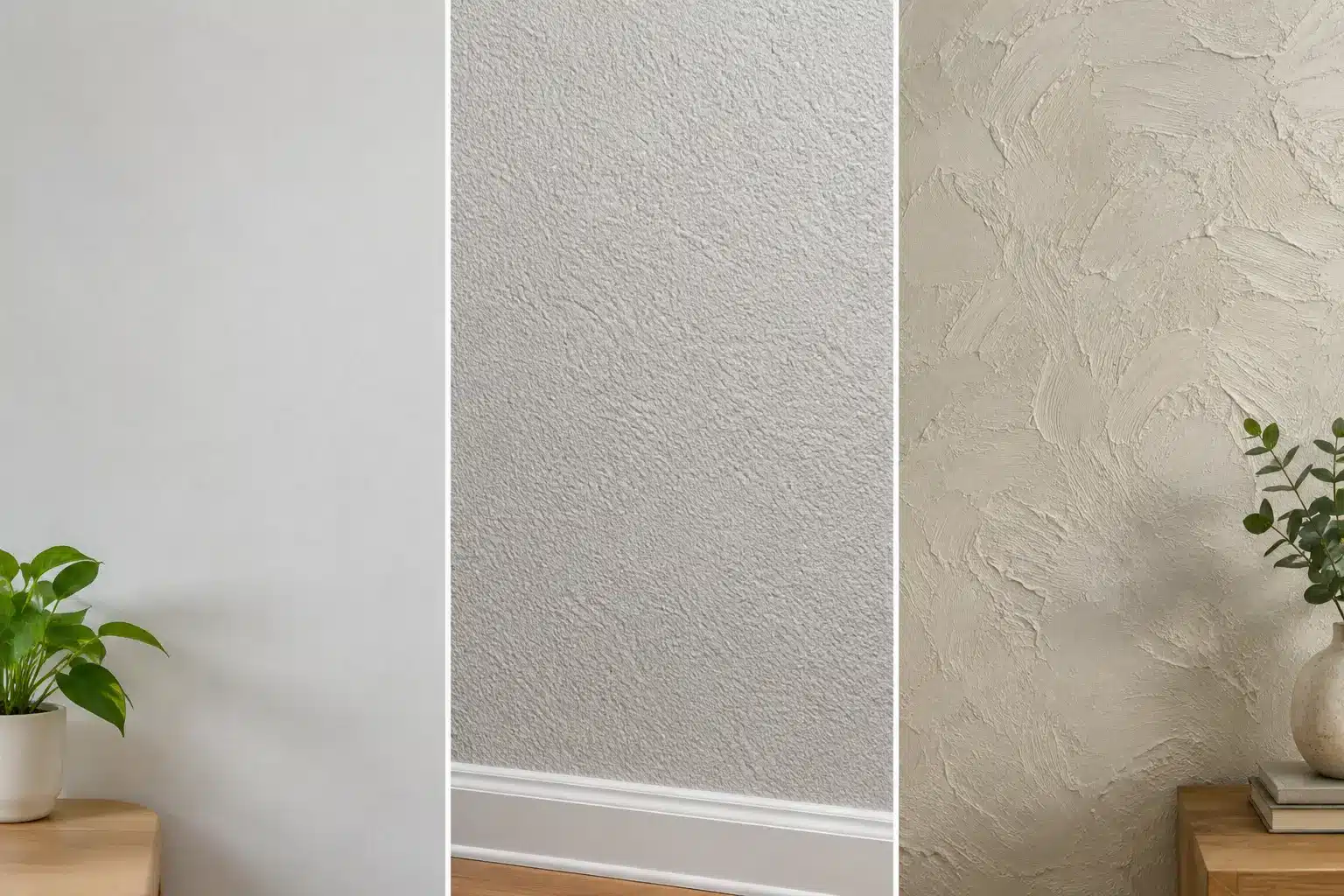
A wall finish can change how an entire room reads before furniture, art, or lighting ever enters the space. Smooth walls vs. orange peel vs. skip-trowel: which drywall finish should you choose? The answer depends on more than personal taste. Light exposure, existing wall condition, paint sheen, maintenance expectations, and the level of detail you want from your remodel all matter.
For Los Angeles homeowners planning a kitchen renovation, bathroom remodel, ADU, or full-home update, drywall texture is often decided late in the design process. That can create avoidable surprises. A finish that looks refined in a sample may reveal every imperfection across a sun-filled living room, while a practical texture may not suit the clean-lined architecture of a contemporary home.
Smooth Walls vs. Orange Peel vs. Skip-Trowel
These three finishes create distinctly different visual effects and require different levels of drywall preparation. None is universally better. The right choice is the one that supports your home’s architecture, your desired paint finish, and the condition of the surfaces being remodeled.
Smooth walls are flat, clean, and nearly texture-free. Orange peel has a light, fine texture resembling the skin of an orange. Skip-trowel is a hand-applied texture with broader, irregular patterns that create visible movement and character.
The decision is easiest when it is made alongside lighting, paint color, trim details, cabinetry, and flooring. Those elements affect whether the wall finish becomes a quiet backdrop or a visible part of the design.
Smooth Walls: Clean, Modern, and Demanding
Smooth walls are the preferred finish for many contemporary remodels, luxury residences, and homes with modern millwork. They create crisp transitions at baseboards, door casings, cabinets, and tile. In rooms with large-format stone, flat-panel cabinetry, or architectural lighting, smooth drywall keeps the visual field calm and intentional.
A true smooth finish requires more than simply applying paint over drywall. The drywall joints, fastener locations, corners, and surface plane must be finished carefully, often to a Level 5 drywall finish. That typically includes a skim coat or equivalent treatment over the board surface to reduce visible joint lines and texture variations.
The trade-off is that smooth walls are less forgiving. Natural light from wide windows, recessed lighting placed close to walls, and glossy or satin paint can reveal waviness, touch-ups, and minor flaws. This is especially relevant in bright Los Angeles homes, where afternoon sun can rake across a wall and expose details that were invisible under standard jobsite lighting.
Smooth walls also require thoughtful maintenance. A scuff, patch, or nail-hole repair is usually more noticeable on a flat wall than on a textured surface. That does not make smooth walls impractical. It simply means the finish should be installed and repaired by crews with strong drywall and paint preparation standards.
Choose smooth walls when your goal is a refined, modern look and you are willing to invest in the preparation needed to achieve it. They are particularly well suited to primary living spaces, open kitchens, high-end bathrooms, and new construction where wall framing and drywall installation can be closely controlled from the start.
Orange Peel: A Practical Finish With a Lighter Texture
Orange peel is one of the most common drywall textures in Southern California homes. It has a subtle, dimpled appearance that adds just enough texture to soften minor drywall inconsistencies without becoming a major design feature.
For many remodels, orange peel offers an effective middle ground. It works comfortably with traditional, transitional, and casual contemporary interiors. It can also make repairs less obvious than a completely smooth finish, which is useful in active family homes, rental properties, hallways, and rooms that may need future access for electrical or plumbing work.
The finish is generally applied by spraying drywall compound in a controlled pattern, then allowing it to dry before priming and painting. Its final appearance can vary considerably. A fine orange peel can look restrained and clean, while a heavier application can feel dated or overly pronounced. Consistency matters, especially when new drywall must blend with existing textured walls.
Orange peel is not maintenance-free, but it is relatively forgiving. Small dings and patched areas can be blended more easily than on smooth drywall when the texture match is done correctly. The surface is also less likely to show subtle waviness under everyday lighting.
However, orange peel may not be the strongest choice for a highly minimal interior. If you are installing sleek European-style cabinets, flush baseboards, oversized porcelain panels, or statement lighting, even a fine texture can interrupt the clean look you are trying to achieve. It is also more difficult to clean than a smooth painted wall because dust and residue can settle in the texture, particularly near cooking areas.
Skip-Trowel: Character, Depth, and Hand-Applied Detail
Skip-trowel is a more expressive finish. A drywall professional applies joint compound by hand with a trowel, leaving intentional raised and flattened areas across the surface. The result is organic variation rather than a uniform sprayed pattern.
This finish can add warmth to Spanish Revival, Mediterranean, rustic, and transitional homes. It often works beautifully in properties where the goal is to preserve architectural character instead of creating a fully modernized envelope. In the right setting, skip-trowel walls can make new construction or an addition feel more established and connected to the original house.
Because it is hand-applied, skip-trowel has more visible artistry than orange peel. That is also why samples and workmanship matter. The texture should look deliberate and balanced, not random, heavy, or uneven. Scale is important: a subtle skip-trowel may complement a living room with plaster-inspired finishes, while an aggressive pattern can overpower a smaller room or compete with detailed tile and stone.
Skip-trowel is generally forgiving of minor surface imperfections and can hide small future repairs reasonably well. Still, matching it after a repair takes skill. A patch can stand out if the trowel movement, compound thickness, or surrounding paint sheen does not match the original work.
For homeowners drawn to a warm, layered interior, skip-trowel can be the right finish. For a contemporary home with crisp architectural lines, it can feel out of place. The question is not whether the texture is fashionable. It is whether it belongs with the home’s materials, proportions, and design direction.
How Lighting and Paint Change the Decision
Drywall texture never exists on its own. Paint sheen and lighting can either minimize or amplify it.
Flat or matte paint is the most forgiving choice for walls because it scatters light and conceals small inconsistencies. Eggshell adds a slight washable sheen and is common in living areas, but it can reveal more surface variation. Satin and glossier finishes reflect more light, making texture, patches, and uneven drywall more noticeable.
Lighting deserves the same attention. Recessed fixtures positioned near walls, wall washers, sconces, and strong daylight can emphasize every ridge or joint. Before committing to smooth walls in a room with dramatic daylight or architectural lighting, it is wise to review the drywall finish level with the contractor and evaluate the walls under realistic lighting conditions.
Matching New Drywall to Existing Walls
In a partial remodel, the best choice is often driven by continuity. If a kitchen opens to an existing dining room with fine orange peel, changing only the new kitchen walls to smooth can create an awkward transition. The more open the floor plan, the more important it becomes to consider the finish across connected spaces.
There are several ways to address this. New drywall can be matched to the existing texture, adjacent walls can be skim-coated for a unified smooth appearance, or texture can be applied throughout the connected area. The right approach depends on budget, wall condition, and how much of the home is being renovated.
For extensive renovations, many homeowners choose to standardize wall finishes throughout the house. That creates a more cohesive result, particularly when doors, trim, flooring, and paint are also being updated. It also reduces the patchwork look that can occur when multiple remodels have been completed over many years.
Make the Choice Before Final Paint
Texture decisions are difficult to reverse once walls are primed and painted. Removing orange peel or skip-trowel usually requires skim coating, sanding, and repainting. Adding texture later is possible, but achieving a consistent result takes careful surface preparation.
Before finalizing the finish, ask to see physical samples in the actual room. View them in morning light, afternoon light, and with the planned interior lighting on. Consider how the finish will meet cabinets, tile, wallcovering, trim, and large windows. A small sample can prevent a costly change order or a result that feels less polished than expected.
A capable design-build team can coordinate this decision early, align it with the paint and lighting plan, and ensure new work transitions properly into existing areas. Precise Building & Restoration helps homeowners make these finish decisions with the same care given to layouts, permits, and construction details.
If you are planning a remodel and want walls that support the design rather than distract from it, call Precise Building & Restoration at 310-606-2222. The right drywall finish is a quiet detail, but it is one you will see every day.