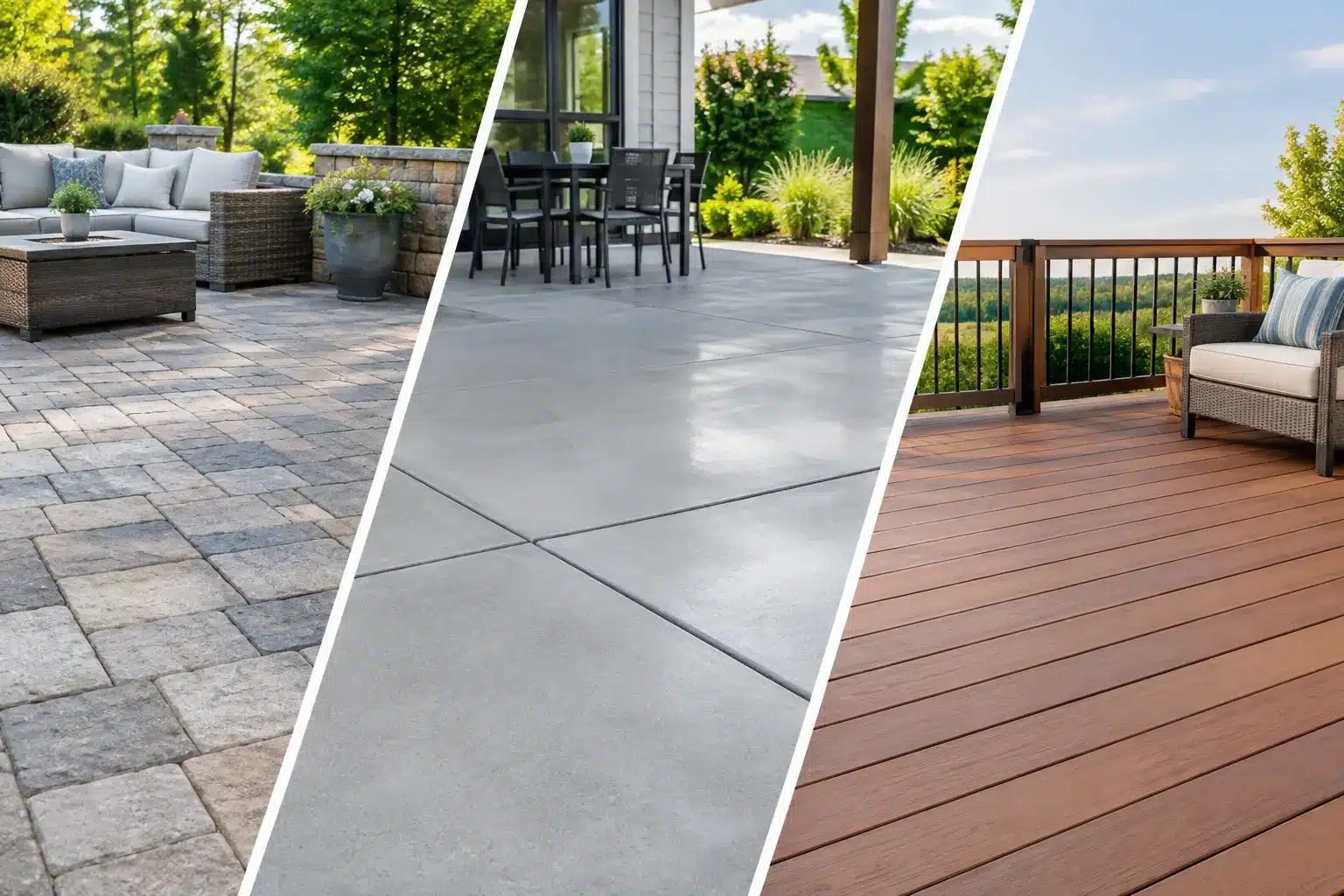
A patio surface has to do more than look good on installation day. It needs to handle summer heat, pool traffic, outdoor dining, pets, planters, drainage, and the gradual movement that comes with real Southern California properties. When homeowners ask, “pavers vs. concrete vs. composite decking: which patio surface is best?” the honest answer is that each material solves a different design and construction problem.
The right choice depends on where the patio sits, how the yard drains, whether the surface is at grade or elevated, the architectural style of the home, and how much maintenance you are willing to accept. A well-planned surface can make a backyard feel like an extension of the home. The wrong one can lead to uncomfortable heat, cracking, staining, drainage issues, or a layout that limits future improvements.
Pavers vs. Concrete vs. Composite Decking: The Real Decision
Start with the site rather than the finish sample. A ground-level entertaining area with stable access and a need for flexible repairs may be ideal for pavers. A large, clean-lined patio with a straightforward shape may favor concrete. An elevated yard, sloped lot, or space where you need to bridge over uneven grade may call for composite decking on a properly engineered structure.
Budget matters, but installed cost is not the only cost. Demolition, grading, drainage, structural framing, access for equipment, retaining conditions, and finish detailing can change the final investment substantially. For Los Angeles homes, it is also wise to consider how the patio will perform in full sun and how its drainage connects with the overall property plan.
Pavers: Flexible, Repairable, and Design-Forward
Pavers are individual units installed over a compacted base, bedding material, and edge restraints. They are available in concrete, natural stone, porcelain, and other finishes, giving homeowners considerable control over color, pattern, texture, and scale.
Their biggest advantage is repairability. If a section settles, plumbing work is needed below the patio, or a paver is damaged, the affected area can often be lifted and reset without replacing the entire surface. This is particularly valuable on properties where soil movement, mature landscaping, or future backyard construction may be factors.
Pavers also create a more tailored look than a standard slab. Large-format porcelain pavers can feel contemporary and refined, while tumbled stone or warm-toned concrete pavers can complement Spanish, Mediterranean, and traditional homes. Patterns, borders, and transitions can define an outdoor kitchen, fire feature, pool deck, or dining zone without making the yard feel overdesigned.
The trade-off is that a paver patio is only as good as its base preparation. Inadequate excavation, poor compaction, weak edge restraints, or improper slope can lead to shifting and uneven joints. Weeds are not usually caused by growth coming up from below, but seeds can settle into joints over time, so periodic maintenance is still part of ownership.
Pavers can range from moderately priced to premium depending on material and pattern complexity. Natural stone and porcelain generally carry a higher material and installation cost, while standard concrete pavers may offer a more accessible entry point. The value comes from their finish options, repair flexibility, and ability to accommodate detailed landscape design.
Concrete: Clean Lines and Broad Design Freedom
Concrete remains a practical choice for many patios because it can cover large areas efficiently and create a smooth, cohesive surface. It works especially well for modern homes, expansive outdoor entertaining areas, and projects where the patio must coordinate with new walkways, driveways, or pool hardscape.
A basic broom-finish slab is durable, simple to maintain, and typically less expensive than premium paver or decking systems. But concrete does not have to look basic. Finishes can include light exposure, sand finish, integral color, decorative scoring, large-format panel layouts, or a refined smooth finish where appropriate. The best concrete patios are planned around proportion, control-joint placement, drainage, and the home’s architecture, not treated as an afterthought.
Concrete’s limitation is that it will crack. That is not automatically a sign of poor workmanship. Concrete shrinks and moves as it cures and responds to temperature changes and soil conditions. Proper reinforcement, subgrade preparation, expansion joints, and control joints help manage cracking, but they do not guarantee an entirely crack-free slab forever.
When a crack becomes significant, repair can be more noticeable than it would be with individual pavers. Large slabs are also less adaptable if you later need to access underground utilities or alter the backyard layout. If your long-term plan includes a pool, ADU, outdoor kitchen utilities, or major planting changes, those elements should be coordinated before the concrete is poured.
Heat is another consideration. Dark concrete can be uncomfortable under bare feet in direct sun, while lighter colors generally reflect more heat. Texture matters as well. A surface that is too smooth may become slippery near a pool, but an aggressive texture can be hard on bare feet and outdoor furniture. The right finish balances appearance, traction, and daily use.
Composite Decking: Best for Elevated or Difficult Terrain
Composite decking is not a ground-level patio material in the same way as pavers and concrete. It is a deck surface installed over a structural framing system. That distinction is critical because much of its cost and performance depends on what is below the boards: footings, posts, beams, joists, waterproofing, railings, stairs, and connections to the home.
For hillside properties, raised backyards, and homes with significant changes in grade, composite decking can be the most effective way to create usable outdoor space without extensive fill or a large retaining-wall program. It can also work beautifully as a transition from interior living areas to a pool, lounge, or view terrace.
Homeowners often choose composite because it offers a polished wood-look surface without routine sanding, staining, or sealing. Quality products resist rot and insect damage, and they can provide consistent color and texture over time. This makes composite appealing for busy households and second homes where ongoing wood maintenance is not desirable.
Still, composite is not maintenance-free. It needs periodic cleaning, and spills should be addressed according to the manufacturer’s recommendations. Darker colors can become very hot in direct Southern California sun, sometimes hotter than homeowners expect from a wood-look material. Board spacing, ventilation below the deck, drainage details, and proper installation are essential for both appearance and longevity.
Composite decking is often the highest-cost option when a new structural deck is required. The result can be well worth it when it solves a grade challenge or creates a premium indoor-outdoor living area. On a flat, accessible yard where no raised structure is needed, however, pavers or concrete may deliver more patio area for the investment.
How to Choose the Best Surface for Your Property
For a flat backyard that needs a durable, refined entertaining surface, concrete is often a strong fit when you want clean geometry, broad uninterrupted areas, and a controlled budget. Choose a quality finish, plan the joints carefully, and make drainage part of the design from the beginning.
For homeowners who want texture, visual warmth, custom patterns, or easier future repairs, pavers are often the better long-term choice. They are especially effective around pools, gardens, and outdoor living areas where the hardscape needs to feel layered rather than monolithic.
For a property with a slope, a raised threshold, or a view that calls for an elevated platform, composite decking may be the clear winner. Its structural requirements make professional planning essential, but it can transform a difficult yard into a functional outdoor room.
The best projects also combine materials. A composite deck can step down to a porcelain paver terrace. A concrete patio can include paver bands or a separate paved fire-pit area. A thoughtful mix can address grade changes, define uses, and avoid forcing one material into a role it does not perform well.
Do Not Overlook Drainage, Permits, and Construction Sequencing
A beautiful patio will not perform if water drains toward the home, pools against a retaining wall, or undermines the base below pavers. Surface slope, area drains, downspout locations, waterproofing at door thresholds, and runoff management should be determined before installation begins.
Permits may also apply depending on the project. A ground-level replacement patio may be straightforward, while elevated decks, substantial grading, retaining walls, electrical work, plumbing, outdoor kitchens, and structural alterations can involve plans and city review. Coordinating these details early prevents expensive removal or revisions later.
For a backyard transformation, the surface should be selected alongside the larger plan – not after the landscaping, utilities, and access points have already been decided. Precise Building & Restoration helps homeowners coordinate design, construction, permitting, and finish work so the final patio supports the entire property vision. If you are planning a patio or complete backyard upgrade, call 310-606-2222 to discuss the surface that will serve your home well for years to come.