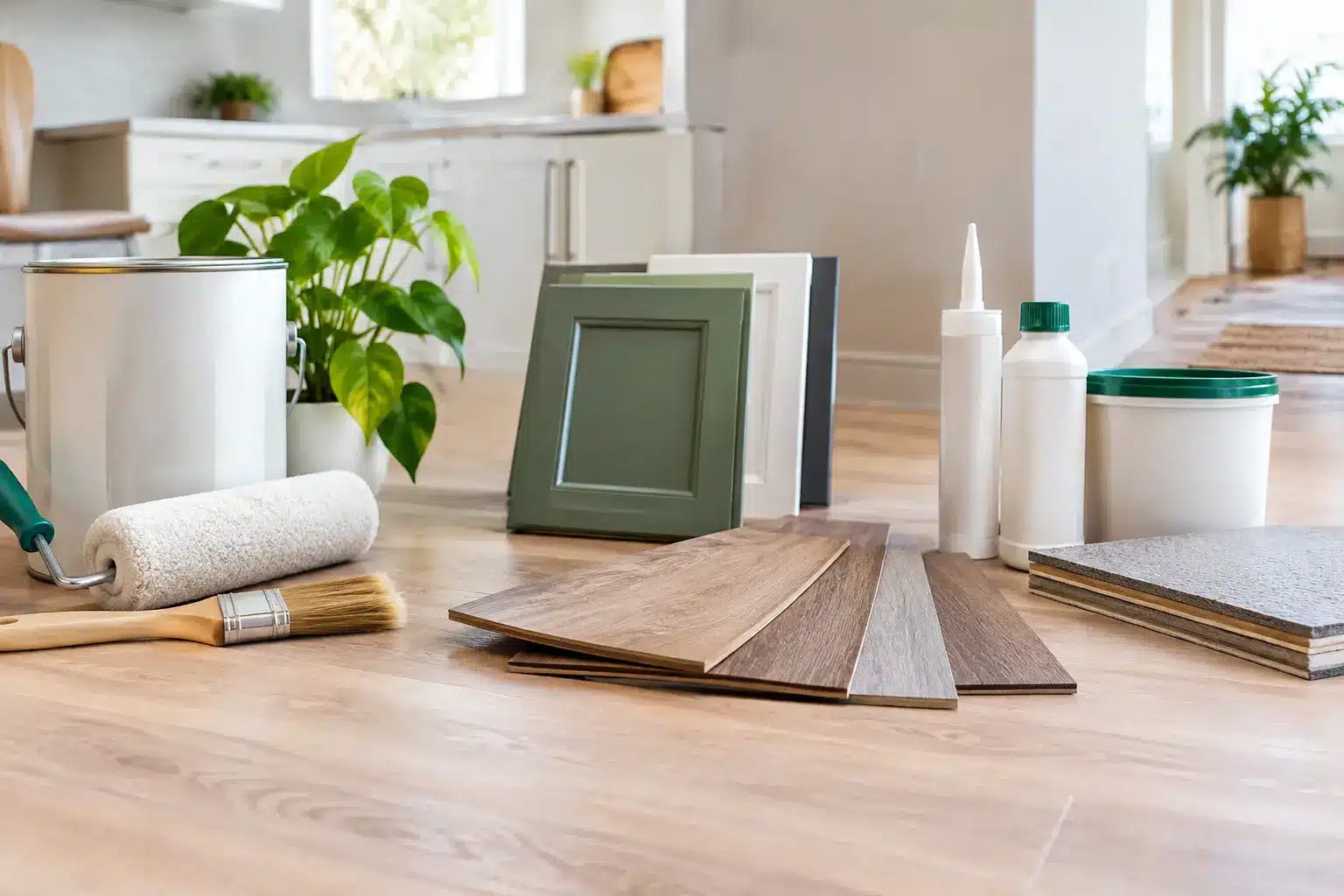
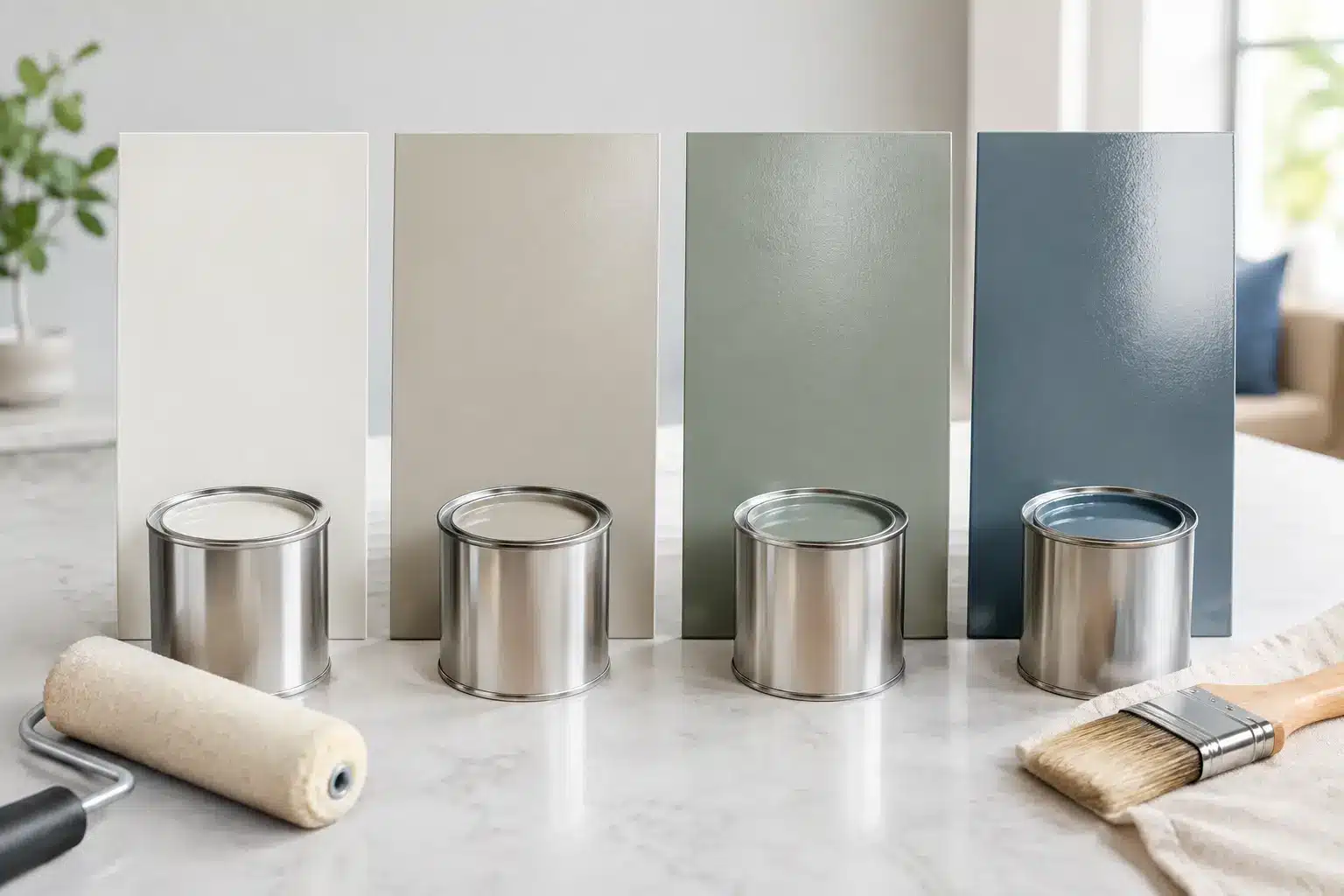
A wall color can be exactly right and still look disappointing if the sheen is wrong. When homeowners ask, “flat, eggshell, satin, or semi-gloss paint: which finish goes in each room?” the answer is not simply based on appearance. It comes down to how the room is used, how much natural light it receives, whether walls need regular cleaning, and how smooth the drywall and trim really are.
Paint finish affects every surface in a remodel. It determines whether a hallway wall can handle backpacks and fingerprints, whether a bathroom ceiling resists moisture, and whether custom millwork looks refined rather than overly shiny. Choosing the right sheen early also helps avoid costly repainting after the home is complete.
What Paint Sheen Actually Changes
A paint’s sheen is the amount of light it reflects. Flat paint absorbs light and disguises surface variation. As sheen increases from eggshell to satin and semi-gloss, the finish reflects more light, becomes more washable, and draws more attention to drywall seams, patches, and texture.
That creates a practical trade-off. Higher-sheen paints generally stand up better to scrubbing, moisture, and frequent contact. But they require better surface preparation because reflected light exposes imperfections. In Los Angeles homes with large windows, skylights, and strong afternoon sun, this distinction can be especially noticeable.
Paint quality matters as much as sheen. A premium washable matte or eggshell can outperform a lower-grade satin paint in many low-traffic spaces. Still, sheen remains the starting point for selecting a finish that suits the room.
Flat, Eggshell, Satin, or Semi-Gloss Paint by Room
Living rooms and formal spaces: Flat or eggshell
For living rooms, dining rooms, and formal sitting areas, flat or eggshell paint is usually the right choice. Flat paint gives walls a soft, elegant appearance and does an excellent job hiding minor drywall imperfections. It works particularly well in spaces with high ceilings, detailed architecture, or expansive walls where a calm, low-reflection finish supports the overall design.
The limitation is maintenance. Traditional flat paint is harder to clean without leaving marks or burnishing the surface. It is best reserved for lower-contact areas, well-prepared walls, and homeowners who value a velvety finish over maximum scrub resistance.
Eggshell is often the more practical choice for an active household. It has a slight, subtle luster that makes it easier to wipe clean while still looking restrained. For most family living rooms and dining rooms, eggshell offers a polished balance between durability and softness.
Bedrooms: Flat or eggshell, depending on use
Primary bedrooms, guest rooms, and low-traffic adult bedrooms are strong candidates for flat paint. The finish feels quiet and upscale, especially with layered lighting, upholstered furnishings, and custom wall details. Flat paint can also make a bedroom feel more restful because it minimizes glare from bedside lamps and morning sun.
For children’s bedrooms, nurseries, and teen rooms, eggshell is often the safer investment. Walls in these rooms tend to collect fingerprints, scuffs, crayon marks, and the occasional furniture scrape. Eggshell provides a cleanable finish without making the room look glossy.
If the walls have visible texture or older repairs, avoid moving too quickly to satin. The extra reflectivity may emphasize conditions that flat or eggshell would conceal.
Hallways, staircases, and entry areas: Eggshell or satin
These are the hardest-working walls in the house. Hallways and staircases see constant traffic, moving furniture, hand contact, and bags brushing against corners. An entry wall may also need frequent cleaning after a rainy day, a busy weekend, or a visit from the family dog.
Eggshell works well when the walls are smooth and traffic is moderate. Satin is the better choice for high-use paths, especially in homes with children, pets, or frequent entertaining. It is more resistant to scuffs and easier to wipe down without damaging the finish.
Satin has a noticeable but still controlled sheen. On properly finished drywall, it gives a hallway a clean, tailored look. On uneven walls, it can reveal flaws, so preparation should never be skipped. The right repair work, sanding, priming, and lighting review before paint are what make a satin finish look intentional.
Kitchens: Satin for walls, semi-gloss for trim
Kitchen walls benefit from satin paint because they are exposed to food splatter, steam, grease residue, and regular cleaning. A satin finish is durable enough for everyday maintenance but not so reflective that it competes with cabinetry, stone, tile, or decorative lighting.
In a high-performance kitchen remodel, paint should support the finishes rather than become another visual focal point. Satin walls tend to work well alongside matte cabinetry, honed stone, glossy backsplashes, and stainless appliances.
For baseboards, door casings, window trim, and painted cabinetry, semi-gloss is a common choice. It is highly washable, holds up against impact, and gives architectural elements definition. Some homeowners prefer satin trim for a softer, more contemporary look, particularly in homes designed with warm neutrals and minimal contrast. That can work beautifully, but semi-gloss remains the more durable option in a kitchen.
Bathrooms and powder rooms: Satin or semi-gloss
Moisture changes the decision in bathrooms. Walls and ceilings need a finish that can tolerate steam, condensation, and regular cleaning. Satin is generally an excellent finish for bathroom walls because it balances moisture resistance with a refined appearance.
Semi-gloss is a smart option for trim, doors, and areas exposed to more direct moisture. In smaller bathrooms with limited ventilation, some homeowners also choose semi-gloss for the walls. It is highly practical, though the added shine can make a compact space feel more reflective and can expose every drywall imperfection.
Bathroom ceilings deserve attention as well. A moisture-resistant satin or a specialty bathroom ceiling paint is usually preferable to standard flat paint, particularly over showers or in bathrooms without strong exhaust ventilation. Proper ventilation is still essential. Paint can resist moisture, but it cannot solve an undersized fan or persistent humidity problem.
Laundry rooms, mudrooms, and utility spaces: Satin
Laundry rooms and mudrooms perform hard work behind the scenes. These rooms deal with damp clothing, detergents, cleaning products, shoe marks, and frequent contact. Satin paint is typically the best fit because it is durable, washable, and less visually demanding than semi-gloss across broad wall surfaces.
A semi-gloss finish on doors, baseboards, shelving, and utility cabinetry adds another layer of protection. If the room includes a pet-washing area or sees unusually heavy moisture, discuss the full wall and ceiling system with your contractor before selecting paint.
Ceilings: Usually flat
Flat white remains the standard for most ceilings because it reduces glare and hides joints, patches, and slight unevenness. This is especially valuable in older homes, additions, and remodeled spaces where ceiling planes meet new lighting, beams, or soffits.
There are exceptions. Bathroom ceilings need better moisture resistance, while decorative wood ceilings, coffered details, and painted beams may call for a different finish. But for most bedrooms, living areas, and hallways, flat is the cleanest and most forgiving ceiling choice.
Do Not Forget Doors, Trim, and Built-Ins
Walls are only part of the finish plan. Doors, baseboards, casing, crown molding, wainscoting, and built-ins receive more physical contact than most wall surfaces. Semi-gloss is the traditional choice because it withstands cleaning and delivers a crisp contrast against flatter walls.
For a more modern, lower-contrast result, satin trim can be a strong alternative. The key is consistency. A home can successfully use eggshell walls with satin trim, or satin walls with semi-gloss trim. What tends to look unplanned is mixing sheens without considering lighting, material transitions, and the condition of each surface.
Let Lighting and Surface Preparation Make the Final Call
Before committing to a finish, test large paint samples on multiple walls and review them in morning light, afternoon sun, and artificial evening lighting. This is particularly important in rooms with west-facing windows, glossy flooring, or statement lighting. The sheen may look understated during the day and far more reflective at night.
Surface preparation should also influence the choice. If drywall has existing waves, old patchwork, or pronounced texture, a lower sheen may deliver the better final result. If the walls are being newly finished as part of a major renovation, the opportunity to use satin in high-contact areas is much stronger because the substrate can be prepared to the required standard.
A well-planned paint schedule protects the investment in your remodel. The right finish should match the room’s real use, the home’s light, and the level of craftsmanship behind the wall. For guidance on selecting finishes that will look polished and perform well long after move-in, contact Precise Building & Restoration at 310-606-2222.