A kitchen can feel dated long before its cabinets actually fail. Doors may be scratched, hinges may sag, and an old stain may make the entire room feel heavier than it should. But if the cabinet boxes are still sound, homeowners face a meaningful decision: cabinet refacing vs. cabinet replacement: which is the better investment? The answer depends less on a single price comparison and more on the condition of your cabinetry, the limitations of your current layout, and what you need the remodeled kitchen to deliver over time.
For Los Angeles homeowners, this choice also affects project scheduling, design flexibility, property value, and the scope of construction in an occupied home. A thoughtful evaluation before selecting materials can prevent a cosmetic update from becoming an expensive compromise.
Cabinet refacing vs. cabinet replacement: the core difference
Cabinet refacing keeps the existing cabinet boxes in place. The visible exterior surfaces receive new veneer or finish material, while doors, drawer fronts, hardware, and often moldings are replaced. The interior cabinet configuration generally remains the same, although limited upgrades may be possible.
Cabinet replacement removes the existing cabinetry and installs new cabinets designed for the room. This approach can change the footprint, improve storage, add an island, relocate appliances, alter cabinet depths, and incorporate custom features such as appliance panels, pull-out pantries, hidden charging drawers, or integrated lighting.
Refacing is primarily a finish and appearance solution. Replacement is a construction and design solution. Neither is automatically better. The right investment is the one that solves the actual problems in your kitchen without paying for changes you do not need.
When cabinet refacing is a smart investment
Refacing can be an efficient choice when the existing cabinet boxes are structurally solid, properly installed, and well suited to your day-to-day use. Quality older cabinets are sometimes built with materials and joinery worth preserving. If the layout already works, updating the cabinet faces can create a dramatic visual improvement without the cost and disruption of a full cabinet installation.
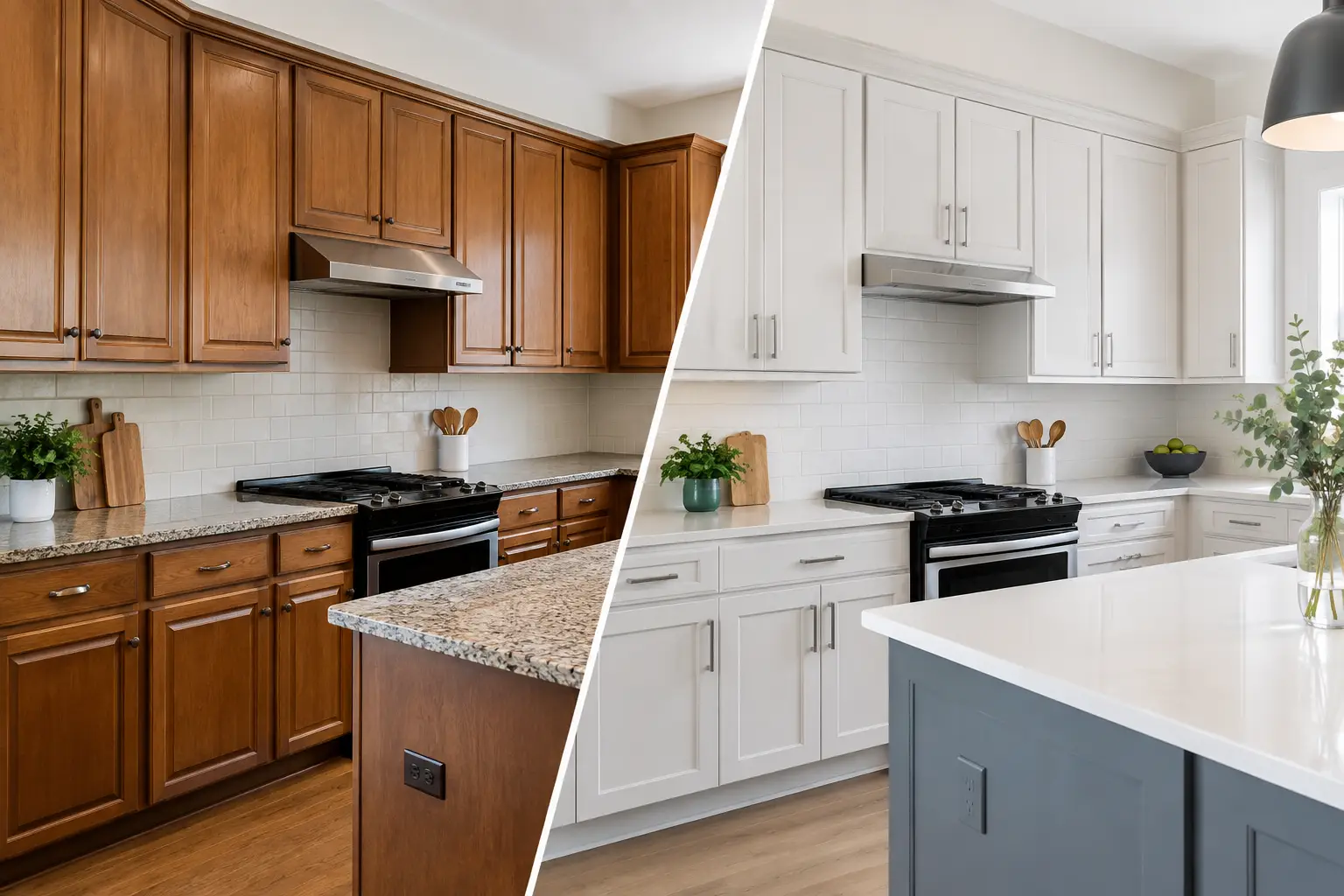
It is especially practical when your priorities are aesthetic: replacing dated raised-panel doors with clean-lined shaker doors, updating a dark finish to a lighter wood tone, adding modern hardware, or coordinating cabinets with new countertops and backsplash. Because the existing boxes remain, refacing can reduce demolition, shorten construction time, and limit the amount of work taking place in the home.
Refacing may also make sense in a condo, rental property, or secondary kitchen where the layout is functional and a polished appearance matters more than a fully custom configuration. It can offer a strong visual return when the surrounding elements, including flooring, counters, paint, and lighting, support the new cabinet finish.
That said, refacing is only worthwhile if it is done correctly. New doors and veneer cannot compensate for water-damaged particleboard, failing cabinet bottoms, warped frames, or boxes that have pulled away from the wall. A professional site review should identify those concerns before a homeowner commits to a refacing plan.
Where refacing can fall short
The main limitation is simple: refacing preserves the existing layout. If you lack pantry space, have narrow drawer banks, struggle with corner cabinets, or need better clearance around an island, new doors will not fix those functional issues.
Refacing also has limits when appliances are changing. A larger range, a built-in refrigerator, a wall oven, or a different dishwasher configuration may require cabinet modifications that are difficult or inefficient to make within an older cabinet system. The same is true when homeowners want to open the kitchen to an adjacent living area, move plumbing, or add an island with seating.
There is also a cost reality to consider. Premium doors, quality veneers, installation labor, decorative panels, trim, hardware, countertops, and finish work can bring refacing closer to the cost of entry-level replacement cabinetry than many homeowners expect. If the difference in price is modest, replacement may provide substantially more value through improved layout, storage, and long-term durability.
When cabinet replacement delivers more value
Replacement is typically the better investment when the kitchen needs to work differently, not simply look different. New cabinetry gives you control over the room from the inside out: cabinet sizes, drawer configurations, storage accessories, finish materials, ceiling-height uppers, appliance placement, and details that make the kitchen easier to use every day.
This approach is often appropriate for older Los Angeles homes where cabinets were designed around outdated appliances and different household routines. Families may need more usable storage, a larger prep area, better traffic flow, or an island that creates a natural connection between the kitchen and living space. In those situations, retaining an inefficient cabinet layout can limit the entire remodel.
Replacement also allows the project team to inspect what is behind the cabinets. That can reveal aging plumbing, electrical issues, drywall damage, uneven walls, or conditions that should be addressed while the kitchen is open. While discoveries can add scope, correcting them during a planned renovation is usually more responsible than covering them and hoping they do not become a future problem.
For high-value homes, custom or semi-custom replacement cabinetry can also support the level of detail buyers expect. Consistent reveals, integrated panels, tailored storage, durable drawer hardware, and a well-planned layout contribute to a kitchen that feels intentional rather than updated in stages.
Cost is important, but value is more than the initial number
Refacing usually costs less than full replacement because it avoids removing and rebuilding every cabinet box. However, the total cost of either option depends on material quality, kitchen size, access conditions, finish selections, countertop work, electrical upgrades, plumbing changes, and the amount of construction required around the cabinets.
A lower initial price does not always equal a better investment. If refacing leaves you with too little storage, awkward appliance clearances, or damaged interiors that require repair later, the savings can disappear. Conversely, full replacement may be unnecessary if the boxes are excellent and the kitchen’s layout already supports how you live.
Consider value through three lenses: how long you expect to own the home, how much the current kitchen limits your routine, and whether the scope aligns with the rest of the property. A homeowner preparing a well-maintained property for sale may choose a refined refacing project. A family planning to remain in the home for another decade may benefit more from replacement cabinetry that solves daily frustrations permanently.
How to assess your existing cabinet boxes
A visual inspection is not enough. Cabinets can look acceptable from the front while showing moisture damage under the sink, weak joints at the corners, worn drawer slides, or cabinet bottoms that have swollen from prior leaks.
Start by checking whether doors and drawers operate correctly, but look beyond hardware adjustments. Inspect the cabinet interiors and undersides for discoloration, crumbling material, peeling laminate, mold, or soft areas. Check whether wall cabinets are secure, whether base cabinets sit level, and whether there are gaps caused by settling or poor original installation.
Then assess the layout honestly. Can multiple people use the kitchen without blocking each other? Is there enough landing space beside the range and refrigerator? Are frequently used items easy to reach? Does the kitchen have adequate trash, recycling, pantry, and cookware storage? If the answers are consistently no, replacement deserves serious consideration even if the cabinet boxes appear serviceable.
Design and permitting considerations in Los Angeles
A straightforward refacing project may involve fewer construction variables than a full kitchen remodel. But replacement cabinetry often coincides with changes to electrical, plumbing, lighting, ventilation, gas lines, walls, or windows. Depending on the scope, permits and city approvals may be required.
This is where planning matters. A properly coordinated design identifies appliance specifications, clearances, outlet locations, lighting plans, plumbing points, and cabinet dimensions before installation begins. Ordering cabinetry before those details are resolved can create avoidable delays and costly field changes.
For a larger renovation, working with a licensed general contractor that can coordinate design, permits, trades, and finish work gives homeowners clearer accountability from the first layout discussion through final installation. Precise Building & Restoration approaches kitchen projects with that end-to-end perspective, helping clients weigh appearance, function, budget, and construction requirements before work begins.
Make the decision based on what your kitchen needs next
Choose refacing when your cabinet boxes are in excellent condition, the layout works, and your goal is a substantial visual upgrade with less demolition. Choose replacement when the cabinets are damaged, the room needs a better layout, appliances are changing, or long-term functionality matters more than preserving the existing boxes.
The best decision is not the one with the lowest number on the first estimate. It is the one that leaves you with a kitchen that fits your home, supports your routines, and holds up to daily use without asking you to live around its limitations.
If you are considering refacing or full cabinet replacement, call Precise Building & Restoration at 310-606-2222 to discuss your kitchen, review the existing conditions, and plan the right level of investment.