A floor can look perfect in a showroom and behave very differently after a few Los Angeles summers, a window-wall of afternoon sun, and the everyday movement of a busy household. When evaluating engineered hardwood vs. solid hardwood for Los Angeles homes, the better choice is rarely about which material is more luxurious. Both can create a high-end, lasting result. The decision comes down to the home’s conditions, the desired look, the subfloor, and how the renovation will be built from the ground up.
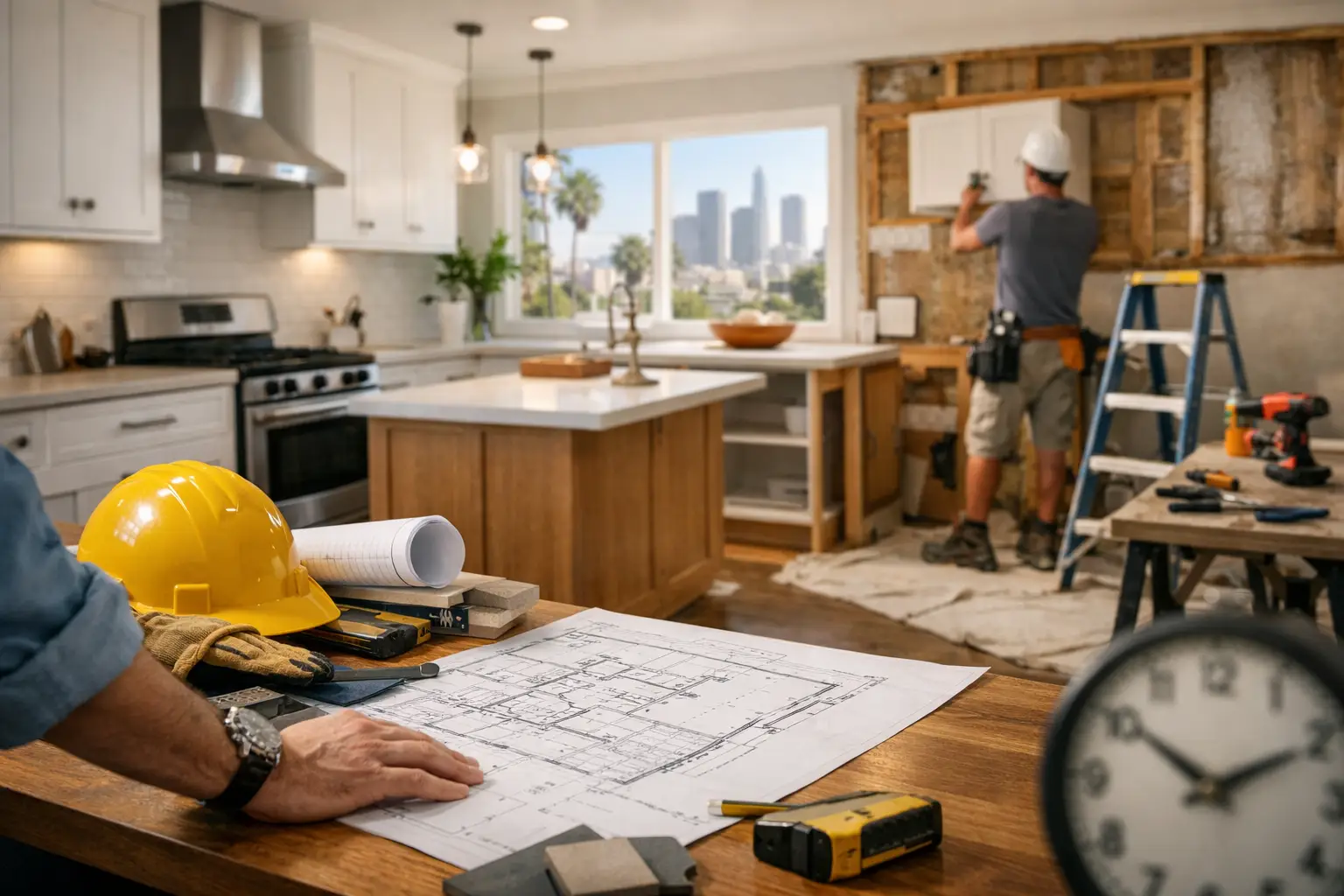
For a full-home remodel, kitchen renovation, ADU, or restoration project, flooring should be selected early enough to coordinate elevations, transitions, cabinetry, doors, and baseboards. That planning protects the finished look and helps prevent costly adjustments once construction is underway.
Engineered Hardwood vs. Solid Hardwood for Los Angeles Homes
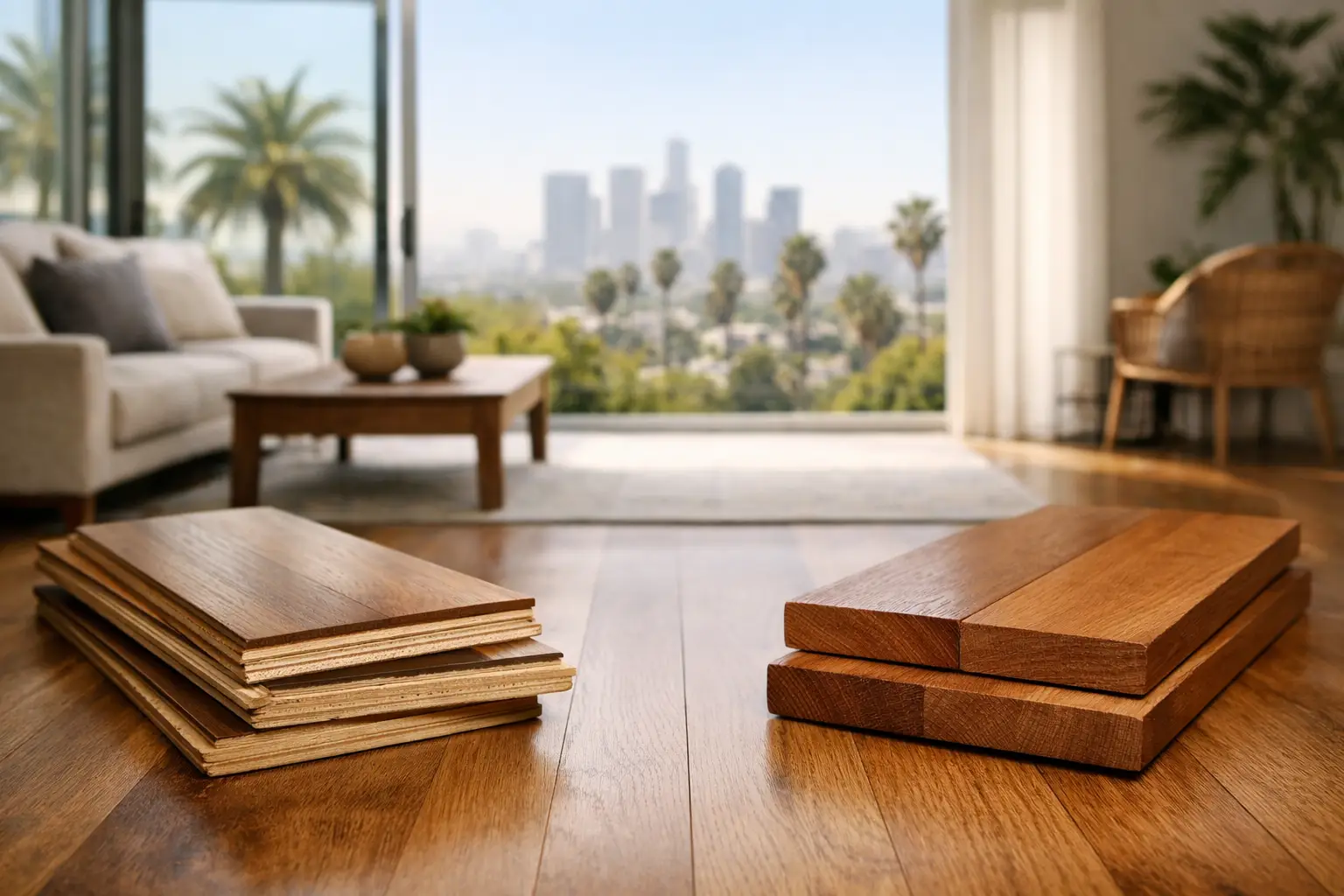
Solid hardwood is exactly what it sounds like: each plank is milled from a single piece of hardwood, such as oak, walnut, maple, or hickory. It has a traditional feel, can be sanded and refinished several times over its life, and develops character as it ages.
Engineered hardwood has a top layer of real hardwood, known as a wear layer, bonded to multiple layers of plywood or a stable core beneath it. It is still genuine wood at the surface, not a printed imitation. Quality engineered products offer the grain variation, warmth, and natural beauty homeowners expect from hardwood, while their layered construction helps control movement caused by changing moisture conditions.
That difference in construction is the central practical distinction. Wood naturally expands and contracts with changes in humidity. Solid boards move more across their width. Engineered boards are designed to be more dimensionally stable, which makes them especially useful in rooms and installations where moisture management, concrete slabs, or wide-plank layouts are part of the equation.
Why Los Angeles Conditions Change the Decision
Los Angeles does not have the severe seasonal moisture swings found in colder climates, but that does not make flooring conditions simple. Coastal homes in Santa Monica, Venice, Marina del Rey, and Malibu can experience marine moisture and salty air. Inland homes may face hot, dry conditions and powerful temperature shifts. A home’s interior environment can also vary significantly based on air conditioning, open windows, plumbing, and direct sun exposure.
Concrete slabs favor engineered options
Many Los Angeles residences, condos, additions, and garage conversions are built on concrete slabs. Engineered hardwood is often the more practical choice in these settings because it can be glued down over properly prepared concrete or installed as a floating floor, depending on the product and project requirements.
Solid hardwood is generally not installed directly over a concrete slab. It typically needs a plywood subfloor and proper moisture protection. That additional assembly can raise the floor height, which affects door clearances, stair transitions, appliances, and connections to adjacent tile or stone. In a remodel with tight existing conditions, those details matter.
Sunlight requires a finish strategy, not just a species choice
Los Angeles homeowners often want expansive glass doors, skylights, and indoor-outdoor living areas. Natural light is a major asset, but direct UV exposure can change wood color over time. Walnut can lighten, while many lighter woods can deepen or warm in tone. Area rugs can leave visible color differences where covered portions of the floor age differently.
Neither engineered nor solid hardwood is immune to sun exposure. The better protection comes from selecting a quality finish, using window treatments when appropriate, and being realistic about natural color evolution. A reputable manufacturer’s finish system and the wood species may matter more than the label on the box.
Moisture protection starts below the flooring
Hardwood is not the right finish directly inside a shower area or any location with repeated standing water. In kitchens, powder rooms, and living areas near exterior doors, it can perform beautifully when the installation is properly detailed and spills are addressed promptly.
Before installation, a professional team should evaluate slab moisture, subfloor flatness, existing floor conditions, and any signs of plumbing or exterior-water intrusion. Flooring failures are often blamed on the material when the actual issue is poor site preparation, an unsuitable adhesive, skipped moisture testing, or a missing expansion allowance.
When Solid Hardwood Is Worth It
Solid hardwood is a strong choice for homeowners who want a traditional, authentic floor with the longest possible refinishing potential. Because the plank is solid wood throughout, it can generally be sanded more times than engineered flooring. This is appealing for long-term owners who expect to update the stain color years from now or restore wear from an active family, pets, or frequent entertaining.
It is particularly well suited to raised-foundation homes with plywood subfloors, bedrooms, formal living spaces, hallways, and other dry areas with consistent indoor climate control. A carefully installed solid oak floor can remain in service for generations.
Solid hardwood also offers design advantages. It can be site-finished for a custom stain match, a continuous look across several rooms, and a tailored sheen level. Site finishing can make sense when a homeowner wants a specific color that complements custom millwork, stone, or cabinetry. It does, however, involve more on-site sanding, dust-control planning, drying time, and coordination than a prefinished product.
The trade-off is that solid hardwood requires more respect for its environment. Wider planks, in particular, need careful acclimation and installation techniques. They can show seasonal gaps or movement if moisture conditions are not managed well. This does not mean wide-plank solid wood should be avoided. It means the installation needs to be designed for the house rather than treated as a simple finish upgrade.
When Engineered Hardwood Is the Better Fit
Engineered hardwood is frequently the more flexible choice for Los Angeles renovation work. It is available in a wide range of species, grades, plank widths, colors, and finishes, including premium European oak looks that fit both contemporary and classic homes.
Its stability makes it well suited for wide planks, concrete slabs, condos, first-floor living spaces, and areas where floor height must be controlled. It can also help simplify transitions in a full-home renovation, especially when the project includes a combination of tile, stone, custom cabinetry, and new interior doors.
Not all engineered hardwood is equal. A low-cost product with a thin veneer may have limited ability to be refinished and may not deliver the same long-term appearance as a premium plank. The thickness of the wear layer, the quality of the core, the manufacturer’s warranty, the finish, and the installation method should all be reviewed before a final selection is made.
For many homeowners, a high-quality engineered floor is not a compromise. It is the more technically appropriate material for the conditions. With a substantial wear layer and professional installation, it can provide decades of service while delivering the real-wood appearance clients want.
Cost, Installation, and Long-Term Value
Material pricing overlaps more than many homeowners expect. Entry-level engineered flooring may cost less than solid hardwood, but premium engineered products can equal or exceed the cost of many solid options. Installation costs also vary based on demolition, subfloor repair, moisture mitigation, pattern direction, stair work, trim details, and furniture protection.
The right question is not simply, “Which floor costs less per square foot?” It is, “Which floor creates the best finished result with the least risk for this home?” A less expensive material can become costly if it requires extensive correction later. Conversely, a more expensive wood floor can be a wise investment when it fits the home’s architecture, maintenance expectations, and ownership timeline.
Maintenance is similar for both. Use felt pads beneath furniture, clean with products approved for the finish, avoid excess water, and address spills quickly. A floor with a matte finish and natural grain variation can be more forgiving of everyday marks than a very dark, high-gloss floor. For active homes, that practical choice often matters more than selecting the most dramatic showroom sample.
Make the Flooring Decision Part of the Build Plan
Flooring is one of the largest visible surfaces in a home, and its success depends on the work beneath it. Before ordering material, confirm the final floor elevations, inspect the subfloor or slab, plan transitions, coordinate cabinet and appliance installation, and account for baseboards and door jambs. These are the details that make a remodel feel deliberate rather than patched together.
Precise Building & Restoration helps Los Angeles homeowners coordinate flooring selections with the broader construction plan, from design support and permitting through finish work and final completion. Whether the project calls for the timeless refinishing potential of solid hardwood or the stability of engineered planks, the best result starts with an honest assessment of the home itself.
If you are planning a renovation and want clear guidance on materials, installation conditions, and finish details, call Precise Building & Restoration at 310-606-2222. The right wood floor should not only look exceptional on installation day – it should continue to suit the way your home is lived in for years to come.