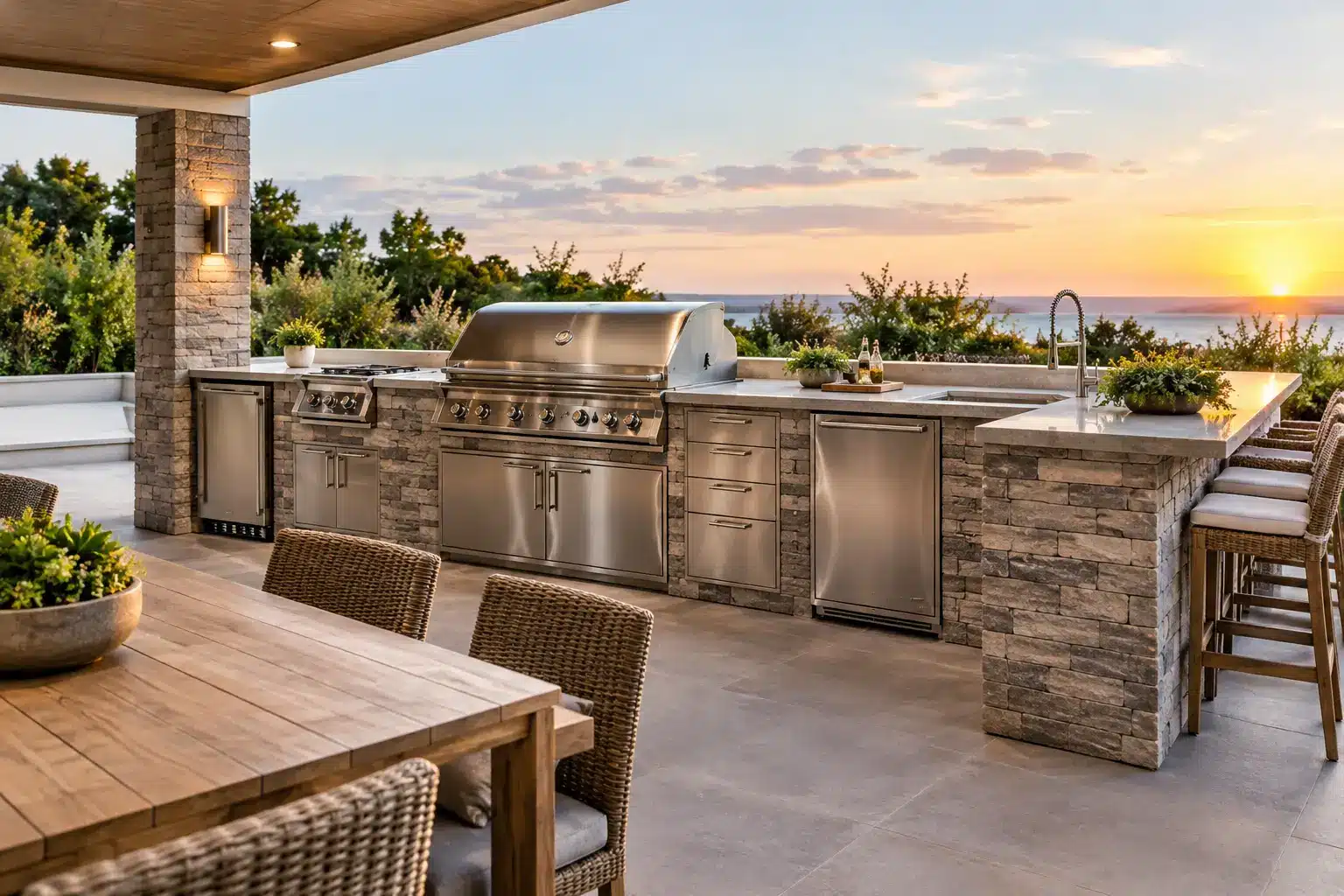
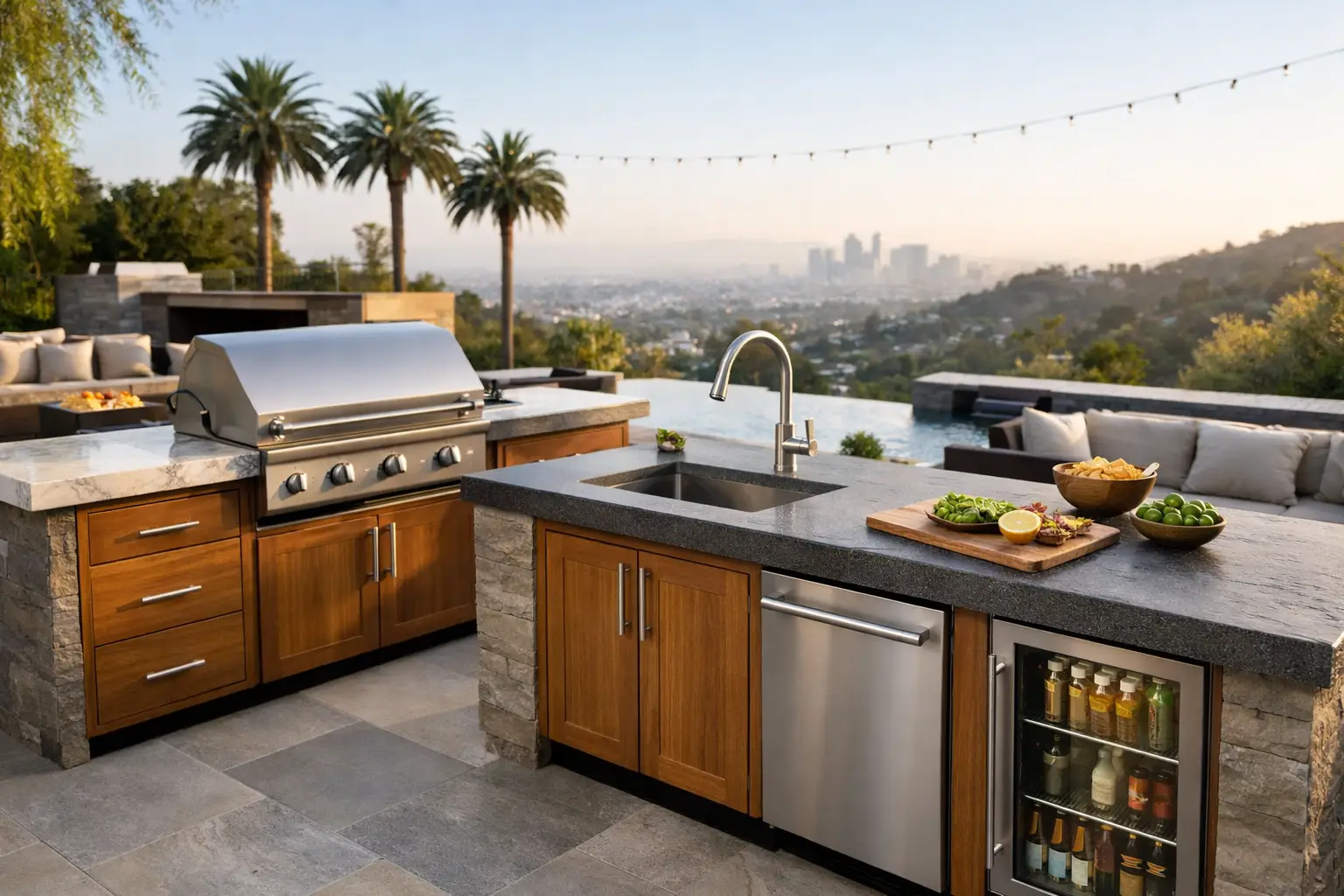
A beautiful outdoor kitchen can lose its appeal quickly when cabinet doors warp, countertops stain, or metal hardware begins to corrode. Choosing the best countertop and cabinet materials for a Los Angeles outdoor kitchen starts with the conditions at your property, not just the look you want. Inland heat, strong UV exposure, coastal salt air, wind-driven moisture, and year-round use all affect how materials perform.
The right selection should feel intentional from every angle: durable enough for regular entertaining, refined enough to complement the home, and practical enough to maintain without constant concern. A material that performs well in a covered patio in Brentwood may need a different specification near the coast in Santa Monica or Marina del Rey.
Start With the Outdoor Environment
Los Angeles does not have one outdoor-kitchen climate. A backyard in Calabasas can experience intense summer heat and dry conditions, while a property closer to the ocean may deal with fog, moisture, and corrosive salt air. Homes in hillside or canyon areas may also need materials that handle dust, debris, and elevated wildfire exposure.
Shade matters, but it does not eliminate the need for exterior-rated finishes. Even a covered kitchen is exposed to reflected light, humidity shifts, airborne contaminants, and temperature changes. Cabinet boxes, door panels, countertop seams, fasteners, and framing all need to be chosen as a complete exterior assembly.
This is why material decisions should be made alongside the kitchen layout, appliance plan, utilities, and roof or pergola design. A high-end countertop cannot compensate for poorly supported cabinetry or inadequate drainage around the island base.
Best Countertop Materials for a Los Angeles Outdoor Kitchen
Porcelain Slab
Porcelain is one of the strongest all-around choices for a modern Los Angeles outdoor kitchen. It is highly resistant to UV fading, staining, heat, and moisture, and it is available in convincing stone, concrete, and solid-color finishes. It also requires very little day-to-day maintenance, which makes it attractive for homeowners who want polished results without resealing a surface every year.
Its limitation is fabrication. Porcelain requires experienced cutting, edge detailing, and support planning. Large-format slabs can look exceptionally clean, but thin material needs proper reinforcement around overhangs, sink openings, and grill cutouts. The finished result depends heavily on the installer’s precision.
Granite
Granite remains a reliable outdoor countertop option because it handles heat and sunlight well when properly sealed. It offers natural variation, substantial visual weight, and a classic appearance that works with Mediterranean, transitional, and contemporary homes alike.
Not every granite performs the same way. Lighter colors and more open-grained slabs may show stains or require more frequent sealing, while some darker stones can become extremely hot in direct sun. A honed or leathered finish can be more forgiving than a polished surface in active entertaining areas, depending on the stone selected.
Quartzite
Natural quartzite offers the movement and depth many homeowners want from premium stone, with generally better outdoor suitability than engineered quartz. It is hard, heat-resistant, and visually distinctive. For a luxury patio kitchen, it can create a strong connection between the indoor kitchen and the outdoor living space.
However, quartzite should be selected slab by slab. Some stones need regular sealing, and some heavily textured or fissured varieties can hold oils, dust, and moisture. A fabricator should assess the specific slab and recommend the right finish, edge detail, and sealer before installation.
Concrete
Concrete can create a tailored, architectural look that suits contemporary homes, poolside settings, and custom backyard transformations. It can be cast in nearly any shape and color, making it especially useful for curved islands, integrated seating, or oversized counters that would be difficult to achieve with slab materials.
The trade-off is maintenance and natural variation. Concrete can develop hairline cracks over time, and it needs a quality sealer to resist food stains and moisture. Those characteristics are not necessarily defects, but they should be part of the design expectation. Homeowners who want a perfectly uniform surface may be better served by porcelain.
Stainless Steel
Stainless steel is practical, sanitary, heat-resistant, and well suited to serious outdoor cooking areas. It works particularly well around grills, pizza ovens, prep stations, and bar areas with a more commercial-inspired style. It will not crack, and cleanup is straightforward.
For coastal homes, specify high-quality marine-grade stainless steel where appropriate. Standard stainless can still develop surface staining or corrosion in salt-heavy environments. Brushed finishes also tend to hide fingerprints and small scratches better than polished metal.
Why Engineered Quartz Is Usually a Poor Choice Outdoors
Engineered quartz is an excellent indoor material, but it is generally not the right countertop for uncovered outdoor use. Its resins can discolor, fade, or weaken with prolonged UV exposure and high heat. Even when a patio is shaded, sunlight and temperature conditions can exceed what many quartz manufacturers allow under their warranties.
If you like the clean look of quartz, porcelain usually provides a more dependable exterior alternative.
Best Outdoor Cabinet Materials for Long-Term Performance
Outdoor cabinetry needs to resist water from every direction: rain, hose spray, condensation, wet hands, cleaning, and moisture rising from the ground. The cabinet material should also support heavy appliances and countertops without swelling or losing alignment.
Stainless Steel Cabinets
Stainless steel cabinetry is among the most durable options for an exposed cooking area. It does not rot, swell, or attract pests, and it pairs naturally with built-in grills, refrigeration, and outdoor bar equipment. It is especially practical for frequent entertainers and homeowners who want easy cleanup.
The quality of the cabinet construction matters. Look beyond the door finish to the internal frame, drawer slides, welds, venting, and adjustable legs. In coastal Los Angeles, marine-grade materials and corrosion-resistant hardware are worth the added investment.
Marine-Grade Polymer Cabinets
Marine-grade polymer cabinets are designed to handle moisture, UV exposure, and humid environments. They will not rust or rot, and they are available in colors and door styles that can feel more residential than stainless steel. This makes them a strong option for coastal properties, pool areas, and casual family backyards.
Their main limitation is aesthetics. While quality polymer cabinetry has improved considerably, it may not offer the same custom furniture appearance as masonry-clad or fully custom metal cabinetry. Dark colors can also absorb heat, so color selection should reflect the amount of direct sun the kitchen receives.
Powder-Coated Aluminum Cabinets
Powder-coated aluminum offers a lighter, contemporary alternative to stainless steel. It resists rust and can be finished in a wide range of colors, from warm neutrals to deep charcoal tones. It is often a good fit for modern outdoor kitchens where the cabinets should complement window frames, pergolas, or exterior trim.
As with any coated metal, the finish quality is essential. Poorly finished products can chip or fade, particularly in high-sun locations. Specify exterior-rated powder coating and hardware designed for outdoor exposure.
Masonry and Stucco Cabinet Bases
For a built-in outdoor kitchen that feels permanent and integrated with the architecture, masonry or steel-framed bases finished in stucco, stone veneer, tile, or porcelain can be an excellent choice. These systems allow for full customization in size, shape, and finish. They can also coordinate beautifully with a home’s existing exterior walls, pool coping, or hardscape.
The details behind the finish are critical. The base needs proper waterproofing, drainage, access panels, appliance ventilation, and noncombustible construction where required. A handsome stucco island with trapped moisture or inaccessible plumbing is not a durable solution.
Match Materials to How You Will Use the Kitchen
A compact grilling station used a few weekends each month does not need the same specification as a full outdoor kitchen with refrigeration, a sink, bar seating, storage, and weekly gatherings. If your priority is low maintenance, porcelain counters with stainless steel or marine-grade polymer cabinets are a dependable combination. If your goal is a highly customized architectural statement, quartzite or concrete paired with a masonry-clad cabinet base may be the better direction.
Color also affects comfort. Black stone and dark metal cabinetry look sophisticated, but they can become uncomfortable to touch in direct afternoon sun. Lighter finishes generally stay cooler and can make a compact patio feel more open. In exposed locations, choose materials with tested UV performance rather than relying on a finish sample viewed indoors.
Construction Details That Protect the Investment
The material itself is only part of the answer. Outdoor kitchens need properly pitched surfaces, protected electrical connections, gas-line coordination, appliance clearances, and adequate ventilation. Countertops need sound support at overhangs, while cabinetry needs a stable, level base that stays above standing water.
For built-in grills and other heat-producing appliances, follow the manufacturer’s clearance requirements and use noncombustible materials where needed. Access panels should be planned before finishes are installed so plumbing valves, gas shutoffs, and electrical components can be serviced without damaging the completed kitchen.
A thoughtful material plan gives your outdoor kitchen the same staying power as the rest of your home. For expert design support, detailed construction planning, and a finish package built for your property, call Precise Building & Restoration at 310-606-2222.