A cabinet door can look flawless in a showroom and feel completely wrong once it is paired with your floors, stone, lighting, and daily routine. When choosing painted vs. stained vs. natural wood cabinets, the right answer is not simply about which option is trending. It is about how you use the kitchen, how much light the room receives, the condition of the existing architecture, and the level of maintenance you are comfortable with over time.
For a significant kitchen remodel, cabinet finish decisions should be made alongside the overall material palette, not after the counters and tile have already been selected. Each finish has real advantages. Each also has limitations that deserve a clear look before fabrication begins.
Painted Cabinets: Clean Lines and Broad Color Choice
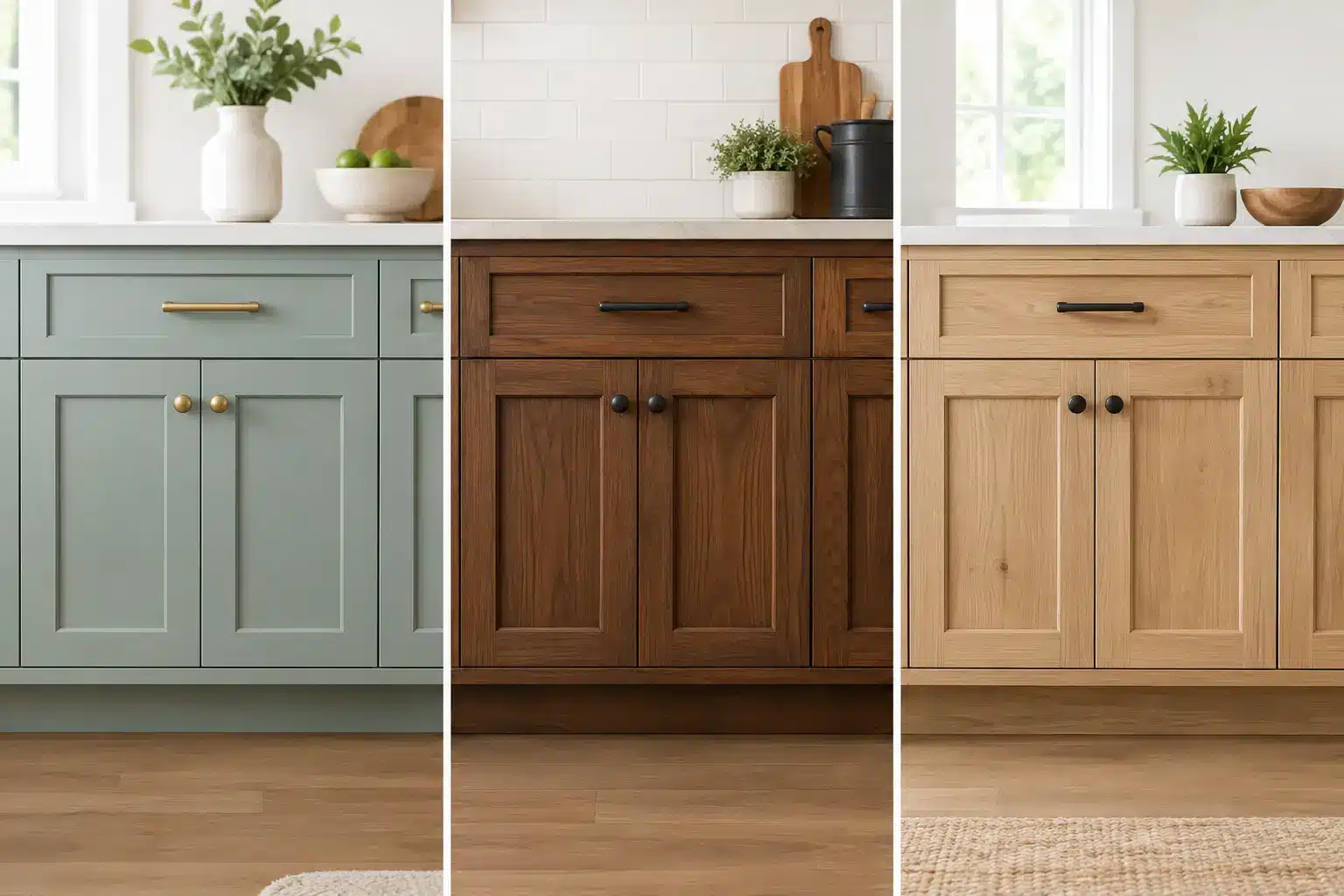
Painted cabinetry offers the widest design range. It can be crisp white, soft warm gray, saturated navy, muted green, black, or a custom color selected to complement a specific slab of natural stone. For homeowners updating traditional Los Angeles homes, painted cabinets can also help create a cleaner transition between original architecture and a more current kitchen layout.
Paint is especially effective on doors with detail. Shaker profiles, inset doors, beaded frames, and more decorative millwork read clearly when they are painted. It also allows a kitchen to use color strategically. A painted island can add contrast while perimeter cabinets stay light, or tall pantry cabinets can visually recede in a deeper color.
The trade-off is that paint is less forgiving of movement. Wood expands and contracts with changes in temperature and humidity. Over time, subtle hairline cracks can appear at joints, particularly on five-piece doors. This is a normal characteristic of painted wood cabinetry, not necessarily a sign of poor construction. A quality cabinet shop, proper finishing process, and climate-conscious installation help reduce the risk, but they cannot eliminate wood movement entirely.
Painted surfaces may also show chips, scuffs, and grime more readily than a stained finish, especially in high-traffic zones around trash pullouts, islands, and lower cabinets. Lighter colors can make cooking splatter visible, while very dark paint tends to reveal dust and fingerprints. Touch-ups are possible, but matching a factory-applied finish years later can require care.
For many clients, those maintenance considerations are worthwhile because paint gives them control. If the goal is a tailored kitchen with a clear color story, painted cabinets are often the strongest choice.
Stained Cabinets: Grain With More Visual Protection
Stained cabinets allow the wood grain to remain visible while shifting its color. Depending on the species and stain, they can range from pale oak and warm walnut to medium brown, deep espresso, or gray-washed finishes. They bring texture to a kitchen without the full variation and character marks that come with a more natural wood look.
This makes stain a practical middle ground. The finish typically disguises minor scratches, dings, and day-to-day wear better than paint because the wood grain already creates visual movement. If damage does occur, it is often less noticeable than a chip through a smooth painted surface. Stained cabinets are also less likely to show joint lines as distinctly as painted doors.
However, stain is not a shortcut to a low-maintenance kitchen. The protective topcoat still matters, and all cabinets benefit from gentle cleaning and prompt removal of grease, acidic spills, and standing water. Door edges near sinks and dishwashers need particular attention regardless of finish.
The bigger design consideration is predictability. Stain absorbs differently across boards, even within the same wood species. Natural variations in grain density, mineral streaks, and board color will influence the final result. A skilled cabinet maker can produce a highly controlled finish, but no stain sample can guarantee that every door will look identical. That variation is often the appeal, but homeowners who prefer perfect uniformity may be happier with paint or a carefully selected engineered veneer.
Stained cabinets work well in transitional kitchens, Spanish-influenced homes, and properties where wood beams, wide-plank floors, or other organic materials are already part of the architecture. They can create warmth without making the room feel overly rustic.
Natural Wood Cabinets: Material-Forward and Timeless
Natural wood cabinetry uses a clear or lightly toned finish to protect the wood while allowing its actual color, grain, knots, and tonal shifts to lead the design. White oak, walnut, rift-cut oak, maple, alder, and ash each create a distinctly different effect. Natural does not mean unfinished. A professionally applied clear coat or conversion varnish protects the wood from normal kitchen use while preserving its character.
Natural wood cabinets are a strong fit for homeowners who want a kitchen to feel grounded rather than overly polished. In contemporary homes, flat-panel white oak or walnut cabinets can add warmth to clean architectural lines. In a more classic property, natural cabinetry can respect the home’s material character while still supporting modern appliances, storage, and lighting.
The main benefit is authenticity. Real wood has depth that paint cannot reproduce. It changes with the light, brings softness to stone and metal finishes, and can make an expansive kitchen feel more inviting. For premium remodels, that material presence often becomes part of the long-term value of the design.
The limitation is variation. Wood darkens or mellows with age and sunlight, and different boards will naturally look different from one another. Walnut can shift in tone, while white oak may display prominent rays and grain patterns. If a cabinet door must be replaced years later, the new piece may not match surrounding doors immediately.
Natural wood can also be more expensive when the design calls for select-grade lumber, rift-cut veneer, book-matched panels, or a consistent grain direction across wide elevations. Those details are worth discussing before the cabinet package is priced. They affect not only appearance but also material yield, fabrication time, and budget.
Painted vs. Stained vs. Natural Wood Cabinets: Which Fits Your Kitchen?
Start with the architectural direction of the home. A bright coastal kitchen in Santa Monica may benefit from pale natural oak or a soft painted finish. A traditional Beverly Hills residence may call for painted inset cabinetry, while a contemporary Bel Air renovation may use natural walnut to balance large-format stone and integrated appliances. The location matters less than the home’s light, proportions, and existing materials.
Next, consider how the kitchen will be used. A busy family kitchen with pets, children, and frequent entertaining may benefit from a finish that masks minor wear. A stained or natural wood finish can be practical in that setting, particularly on lower cabinets. A homeowner who wants a more formal, refined look may accept the additional care required for painted cabinetry.
Color temperature deserves equal attention. Cool white paint paired with warm beige stone can make a room feel disconnected. Red-toned stains may compete with orange or yellow hardwood floors. Natural oak can appear gray, golden, or neutral depending on the topcoat and surrounding light. Reviewing large, finished samples beside the actual countertop, backsplash, flooring, and wall paint is far more reliable than selecting from a small showroom chip.
Door style also influences the decision. Flat-panel doors often suit natural wood and stain because they showcase grain direction and veneer quality. Painted finishes can support almost any profile, from simple slab doors to detailed traditional construction. The finish should reinforce the cabinet style rather than fight it.
Construction and Finish Quality Matter as Much as Color
A beautiful finish cannot compensate for poor cabinet construction. Door alignment, panel stability, edge treatment, hardware quality, and the finish system all affect how cabinetry performs after installation. In a kitchen remodel, the best results come from coordinating cabinet design with appliance specifications, ventilation, plumbing locations, lighting plans, and stone fabrication before construction reaches the finish stage.
Ask to see full-size samples, not only small color chips. Open and close sample doors. Look at the finish from several angles and under warm and cool light. If you choose natural wood or stain, ask how grain variation will be managed. If you choose paint, ask about the finishing process, warranty expectations, and how touch-ups will be handled.
A well-planned kitchen does not chase a finish just because it photographs well. It selects materials that suit the home, the household, and the level of care the owners realistically want to provide. That is how cabinetry continues to look intentional years after the final walkthrough.
For clear design guidance and hands-on kitchen remodeling coordination from concept through finish installation, call Precise Building & Restoration at 310-606-2222.